Mozart’s starling –7th Jan 2016

You might have noticed I have become fixated on starling murmurations of late. I make no apologies, they are far too extraordinary to ignore and soon enough it will be spring and their displays will stop. However, I was beginning to think I was running out of stories to accompany my photographs, until I came across this today:

“Mozart recorded the purchase of his starling in a diary of expenses, along with a transcription of a melody whistled by the bird and a compliment (Fig. 3). … The theme whistled by the starling must have fascinated Mozart for several reasons. The tune was certainly familiar, as it closely resembles a theme that occurs in the final movement of the piano concerto in G major, K. 453. Mozart recorded the completion of this work in his catalogue on 12 April in the same year. As far as we know, just a few people had heard the concerto by 27 May, perhaps only the pupil for whom it was written, who performed it in public for the first time at a concert on 13 June. Mozart had expressed deep concern that the score of this and three other concertos might be stolen by unscrupulous copyists in Vienna. Thus, he sent the music to his father in Salzburg, emphasizing that the only way it could “fall into other hands is by that kind of cheating”. The letter to his father is dated 26 May 1784, one day before the entry in his diary about the starling.

Mozart’s relationship with the starling thus begins on a tantalizing note. How did the bird acquire Mozart’s music? Our research suggests that the melody was certainly within the bird’s capabilities, but how had it been transmitted? Given that our observation that whistled tunes are altered and incorporated into mixed themes, we assume that the melody was new to the bird because it was so close a copy of the original. Thus, we entertain the possibility that Mozart, like other animal lovers, had already visited the shop and interacted with the starling before 27 May. Mozart was known to hum and whistle a good deal. Why should he refrain in the presence of a bird that seems to elicit such behaviour so easily?

A starling in May would be either quite young, given typical spring hatching times, or at most a year old, still young enough to acquire new material but already an accomplished whistler. Because it seems unlikely to us that a very young bird could imitate a melody so precisely, we envision the older bird. The theme in question from K. 453 has often been likened to a German folk tune and may have been similar to other popular tunes already known to the starling, analogous to the highly familiar tunes our caregivers used. But to be whistled to by Mozart! Surely the bird would have adopted its listening posture, thereby rewarding the potential buyer with “silent applause.”

Given that whistles were learned quite rapidly by the starlings we studied, it is not implausible that the Vienna starling could have performed the melody shortly after hearing it for the first time. Of course, we cannot rule out a role for a shopkeeper, who could have repeated Mozart’s tune from its creator or from the starling. In any case, we imagine that Mozart returned to the shop and purchased the bird, recording the expense out of appreciation for the bird’s mimicry. Some biographers suggest an opposite course of transmission – from the starling to Mozart to the concerto – but the completion date of K. 453 on 12 April makes this an unlikely, although not impossible, sequence of events.”

Starling score

Text and music score from: West, M.J. and King, A.P: ‘Mozart’s Starling’, in American Scientist Vol 78 (March-April 1990) Pp 111-112
Elf migration – 6th Jan 2016

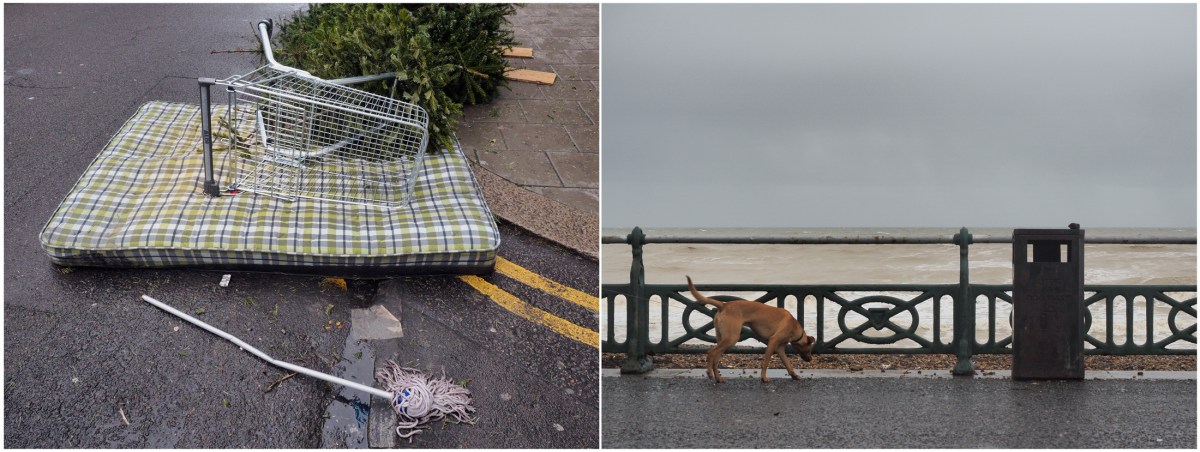
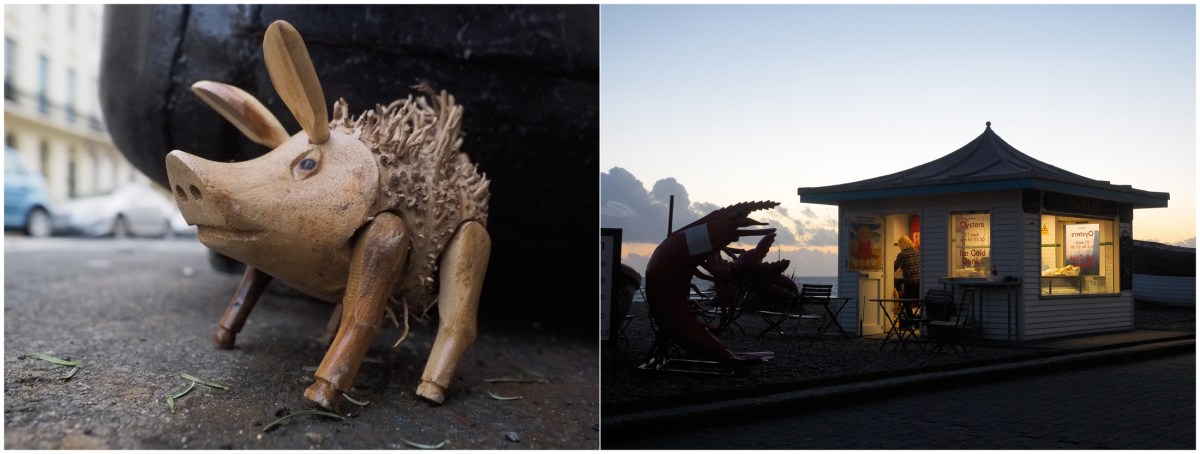
In early January you will sometimes see what look like toys, novelties and unusual objet d’art close to the municipal bins or on doorsteps across our towns. In fact these are not unwanted Christmas presents but the newly hatched offspring of Santa’s elves. A highly unusual and secretive species with an equally unique migration pattern, over the course of several years they will work their way slowly north towards the ice-caves of their parents. During their journey they steal into peoples homes, attempting to perform small tasks and chores for the household. The outcome of these will be more or less successful depending on the developmental stage of the elfling. Through these episodes of contact with humans, they learn all about our daily lives, hopes and desires, this information providing vital updates for the toy factories at the North Pole when they finally complete their long journey.

If looked at, elflings will immediately assume a static pose on the end of a mantelpiece or book shelf, eliciting responses from the homeowners along the lines of “do you remember who gave us that?” following which they will usually find themselves put out into the wild once more to then continue their travels. To make up for lost time, those who have been held up in their journey will hide among items on their way to boot fairs and antiques markets or, in extreme circumstances, strap themselves to the radiator grilles of lorries.

The staple diet of the Christmas elf is cake, trifle and other sweets, so if you see one while out and about, do leave something of this kind close to them; even a square of chocolate will do. They cannot show visible signs of acceptance as, having been spotted, they will have frozen to once more resemble a lifeless object (and indeed you might even find yourself thinking “I wonder who got that for Christmas?”) but they will be grateful for the sustenance. Indeed, word getting around that you are a kind person, next Christmas you may even find yourself foster parent to one of the next generation of Santa’s elflings. If so, once you’ve finished wondering who gave it to you (and who ate the last bit of Christmas cake) please make sure to put the little chap next to the bin rather than inside it, so that it too can begin it’s long journey northward.

Opaque – 4th Jan 2016

First day back at work and several lengthy documents have appeared in my inbox requiring responses within 24 hours. The following paragraph is one I particularly treasure:

“The Chair informed the Panel that scrutiny of the periodic review documents on the online blog by the School Academic Scrutiny Committee (SASC) had not taken place early enough prior to the event for the CDT to undertake the recommendations. The Panel would therefore review the documentation at the Periodic Review event for the course team to take forward the recommendations from both the SASC and the periodic review, and submit the confirmations of recommendations after they had considered all of the suggestions. The recommendations made by the Panel would need to be responded to by the CDT, and the Chair would be responsible for signing off that they had been considered.”

I hardly feel like I’ve been away.

Under the boardwalk –3rd Jan 2016

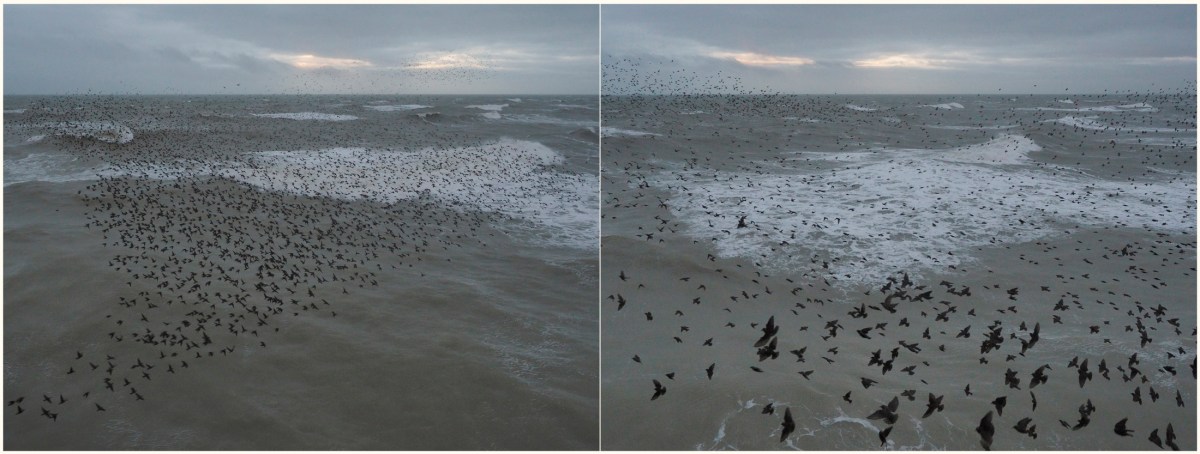
Recently several images have appeared in the press and media showing huge starling murmurations taking place in Rome and Israel. I confess I am jealous. Ours have never been the same since first the hurricane of ‘87 felled most of the trees in central Brighton, and then in 2003 the West Pier, the other most popular starling roost in the area, mysteriously burned down, twice. What is left of our own starling population cannot compete with these more exotic locations and the displays we now see are only a shadow of their former glory. Well, except…

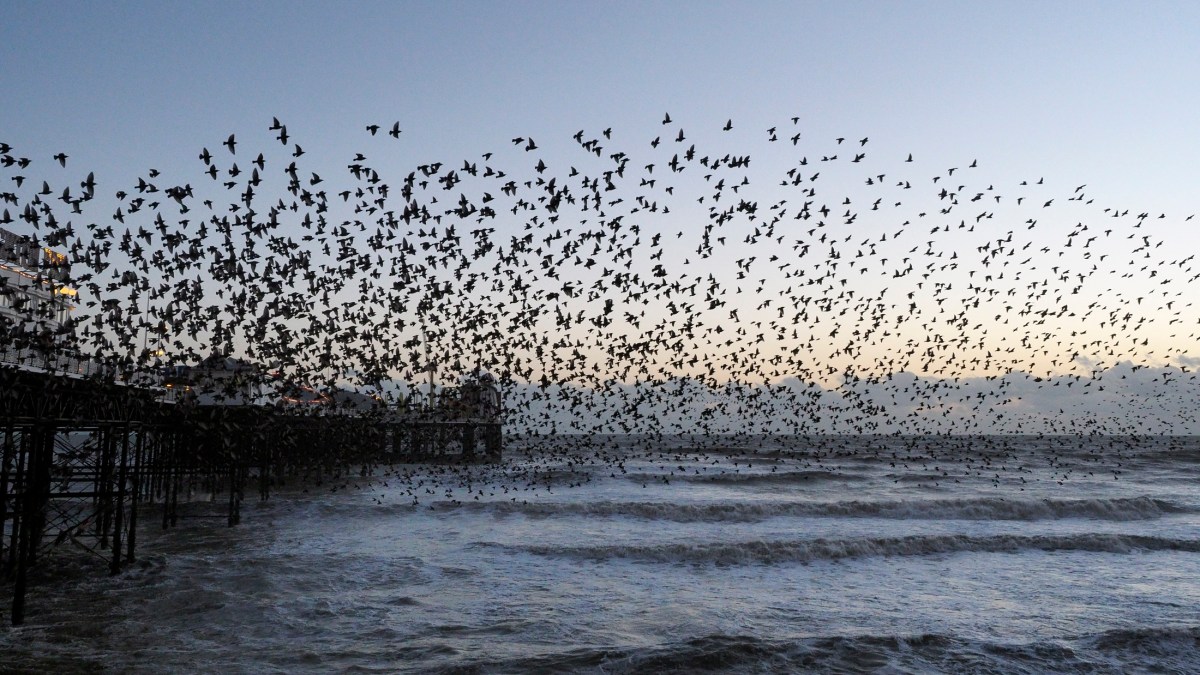
Except in some respects, Brighton remains unique for the observation of starling murmurations. This is because so many of them now use the remaining pier as a congregation point, and because, rather than spending the night on top, as you might suppose, they roost underneath it, just below the boardwalk.

To fully appreciate this variation on the spectacle, go and find a spot on Brighton pier an hour before sunset. Sometimes you might have to wait a while but, unless it’s raining, they will soon come. At first only in small numbers forming modest flocks, these will be joined by other small groups of birds till the murmuration becomes substantial. True, nothing unusual in that, but over the past few years these particular displays seem to have developed along undulating horizontal themes rather than in clouds as you would see elsewhere, and standing on the pier places you above the performance so that you find yourself looking down on a swiftly moving veil hugging the contours of the waves like a giant and ragged silk scarf that tears and reforms continually. When it rises, suddenly you will find yourself almost touching the leading edge of a swarm of thousands, maybe tens of thousands of birds as they speed past, away and back again, and finally, in huge numbers, to dive directly below where you stand to their roosts, only a few feet away on the other side of the decking.

New year’s resolutions – 31st Dec 2015

For any of you for whom January 1st might not be the most convenient day to start your new-year’s resolutions, fear not! Below are some other new-year dates as observed by different religions. Now you don’t have to wait till this time next year to make that promise!

January 1: Gantan-sai – Shinto
January 24-27: Mahayana Buddhist (varies according to region)
February 8: Chinese New Year (Confucian, Daoist, Chinese Buddhist)
March 21: Norooz – Persian/Zoroastrian
March 21: Naw-Rúz – Baha’i
April 8: Hindu
April 22-23: Theravadin Buddhist (varies according to region)
October 2: Muharram – Islam
October 3-4: Rosh Hashanah – Jewish (although if you don’t want wait that long there is also a new year for trees on January 24th: ‘Rosh Hashanah La’Ilanot’)
October 31: Jain

NB: because many new years are dependent on other astronomical factors, usually phase of the moon, this list only applies to 2016 dates (and since I got them off the internet there’s a good chance some of them are made up anyway)

Happy new year!

Way out west – Christmas 2015

From the St Ives tourist association website:

“St Ives enters recorded history with the arrival of St. Ia or Hya, the Irish princess who introduced Christianity to the area in the 5th Century.

The legend tells how Saint Ia, a Virgin Saint of noble birth went to the seashore to depart for Cornwall from her native Ireland along with other saints. Finding that they had gone without her and fearing that she was too young to undertake such a hazardous journey alone, she was grief stricken and began to pray.

As she prayed she noticed a little leaf floating on the water and touched it with a rod to see if it would sink. Lo, as she looked it grew bigger and bigger. Taking this as a sign from God, she climbed aboard the leaf and was straightaway wafted across the Channel, reaching her destination well before the others.”

http://www.stives-cornwall.co.uk/about-our-town/history/