Unfounded – Fri 17th July

It is a barefaced lie that Chow dogs were originally bred as the main ingredient in Chow Mein, which is actually a corruption of the Taishanese ‘chau-meing’ meaning ‘fried noodles’, ‘chau’ meaning ‘fried’ (or stir fried) and ‘meing’ meaning ‘noodles’. However, this does nothing to support the veracity of Vesta Chow Mein, despite the famous brand-dish having far more ingredients than either the traditional steamed or crispy varieties:

“Vesta Chow Mein

Description
SOFT NOODLES WITH CHOPPED AN SHAPED BEEF, VEGETABLES, SOYA MINCE, CRISPY NOODLES AND SOY SAUCE. GENEROUS PORTION CONTAINS DRIED INGREDIENTS. SERVES ONE. EASY COOK. Why not try: Treat yourself to Vesta’s Indian Style Beef Curry.

Ingredients:
Vegetable (38%) (Carrot, Green Beans, Red Peppers, Onion, Peas), Soft Noodle (37%) (Durum Wheat Semolina, Water), Tomato, Crispy Noodles (6%) (Rice Flour, Wheat Flour, Tapioca, Salt, Vegetable Oil, Turmeric, Maize), Chopped and Shaped Beef (5%) (Beef (4.5%), Wheat Gluten, Cereal Fibre (Oat Fibre, Wheat Fibre), Modified Maize Starch, Milk Proteins, Salt, Rosemary Extract), Soy Sauce (2%) (Water, Salt, Glucose Syrup, Molasses, Soya Beans, Wheat, Spirit Vinegar and Barley Malt Extract), Sugar, Dried Soya Mince (1%) (Defatted Soya Flour, Colours (Sulphite Ammonia Caramel, Riboflavin), Iron Sulphate, Thiamin, Vitamin B12), Glucose Syrup, Salt, Hydrogenated Vegetable Oil, Parsley, Maize Starch, Garlic, Flavour Enhancers (Monosodium Glutamate, Sodium 5′ Ribonucleotide), Yeast Extract, Citric Acid, Flavourings, Colour (Ammonia Caramel), Natural Flavouring.” (1)

(1) http://www.mysupermarket.co.uk/
Easy peasy – Weds 15th July

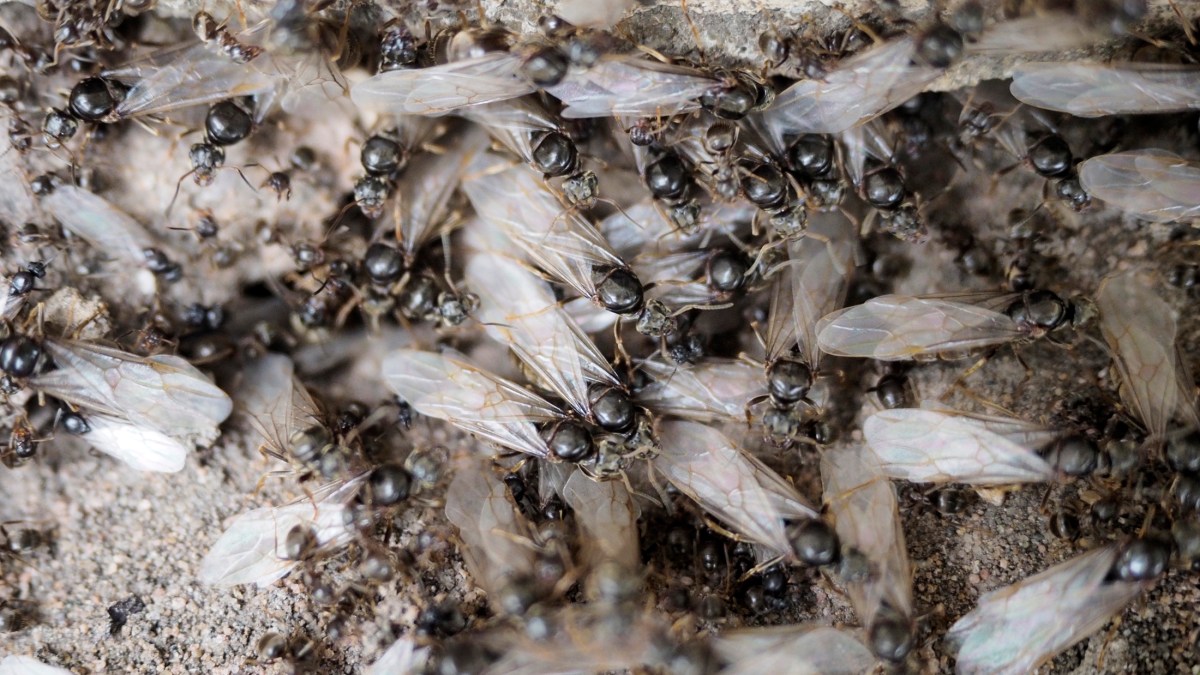
The thing about new words is that, regardless of how bad, pointless, or stupid they sound, regardless of convincing etymology or respect for correct usage; once uttered, they exist. True, some will soon fade and pass out of human knowing, but then whole languages disappear once their words have been pronounced for the last time, only a few fragments remaining transmogrified into new words, or occasionally reappearing in obscure papers penned by linguists. Meanwhile other words will rise, apparently from nowhere, and sweep whole countries like an epidemic. Some of us will delight in these novelties, others will howl indignantly at these perceived assaults on convention. Whatever your reaction, ignoring them is as effective as turning your back on a hungry wolf and, on the whole, I think it’s better to keep an eye on them. Those that survive earn their stripes simply through persisting, but some old ‘new’ words were dubious from the start.

Where did ‘mushy’ come from? How long will it last?

Legal confetti – Sun 12th July

I don’t think I know of anyone who actually enjoys doing their end of year accounts but, occasionally, something comes up in the process that stops you searching for yet another displacement activity. The following passage from an insurance company letter, found just after finishing another miniature sculpture made of blu tak, is one such instance:

‘Our standard legal confetti, located on the left of this letter, can be used for information and guidance so you can see how we reference these changes ourselves’

Legal confetti? I have fallen in love with the phrase. It immediately brings to mind ceremonial wigs on hooks in high ceilinged rooms, expansive desks strewn with articles and licences, muffling the surface like snow or, indeed, confetti, or perhaps the baroque language found in every legal document, the whereins and hereinafters; blizzards of verbiage set to confuse any hapless traveller in search of truth, meaning or resolution. The term seemed so right I immediately went in search of its definitive meaning, only to find that there is no such thing; the phrase is a complete invention. This of course delighted me even more.

I then wondered if the word confetti itself might hold a clue to this expanded usage, and found:

Confetti (n.) 1815, from Italian plural of confetto “sweetmeat,” via Old French, from Latin confectum, confectus (see confection). A small candy traditionally thrown during carnivals in Italy, custom adopted in England for weddings and other occasions, with symbolic tossing of paper.
(Online Etymology Dictionary)

and:

…early 19th century (originally denoting the real or imitation sweets thrown during Italian carnivals): from Italian, literally ‘sweets’, from Latin confectum ‘something prepared’, neuter past participle of conficere ‘put together’ (see confect).
(Google)

At first glance, neither of these seemed to offer any hope of meaning in relation to legal practice, but then, thinking about it a bit more I wondered: From the first definition we find the ‘symbolic tossing of paper’ while the second offers ‘something prepared’ and ‘put together’. If we now add the word ‘Legal’ to these meanings, we could arrive at the idea of:

Something symbolic in place of substantiality, prepared specifically for the purpose of offering to participants at moments of legal import.

Or more succinctly, perhaps:

Something purely symbolic to be tossed at clients.

Bingo!

Who is the author of this simple phrase, so light, joyful even, and yet profound? Are they young? Perhaps a bored poet forced into the field out of a simple need to pay the rent, or out of a need to prove to the parents of their beloved that they are more than just a wastrel? Are they someone far older, close to retirement and so wise to the world they no longer fear anything? Whoever they are, their talents are clearly wasted in their current occupation and I look forward to hearing of their emergence as a great story-teller or dramatist one day in the near future. I hope they come across this piece, just so they know they have been recognised and, I hope, understood.

Bubbles – Fri 10th July

Foam: in physical chemistry, a colloidal system (i.e., a dispersion of particles in a continuous medium) in which the particles are gas bubbles and the medium is a liquid. The term also is applied to material in a lightweight cellular spongy or rigid form. Liquid foams are sometimes made relatively long-lasting—e.g., for fire fighting—by adding some substance, called a stabilizer, that prevents or retards the coalescence of the gas bubbles. Of the great variety of substances that act as foam stabilizers, the best known are soaps, detergents, and proteins. Proteins, because they are edible, find wide use as foaming agents in foodstuffs such as whipped cream, marshmallow (made from gelatin and sugar), and meringue (from egg white). The foam used to combat oil fires consists of bubbles of carbon dioxide (liberated from sodium bicarbonate and aluminum sulfate) stabilized by dried blood, glue, or other cheap protein-containing materials. Beer foam is believed to be stabilized by the colloidal constituents present, which include proteins and carbohydrates.

http://www.britannica.com/science/foam

Paradise – Thurs 9th July

“O’re the smooth enameld green
Where no print of step hath been,
Follow me as I sing,
And touch the warbled string.

Under the shady roof
Of branching Elm Star-proof,
Follow me,
I will bring you where she sits,
Clad in splendor as befits
Her deity.
Such a rural Queen
Arcadia hath not seen.”

MIlton ‘Arcades’ 1633

The Birth of Venus – Mon 6th July

It seems obvious to say that one of the most important things about photography is knowing where to point your camera. But implicit in this is that, in doing so, you are therefore always excluding a lot of other things. I’m just as guilty of this as any other photographer. I don’t see how you could do otherwise, given that the camera viewfinder gives you a rectangle that only allows so much of the world to be present in any particular shot. But doing this inevitably creates a certain view of the world out of which narratives breed. It always make me laugh hearing the old phrase ‘the camera never lies’ as, even without the panoply of digital correction and retouching techniques now available, omission itself is another kind of falsehood. Photographers never tell the whole truth.

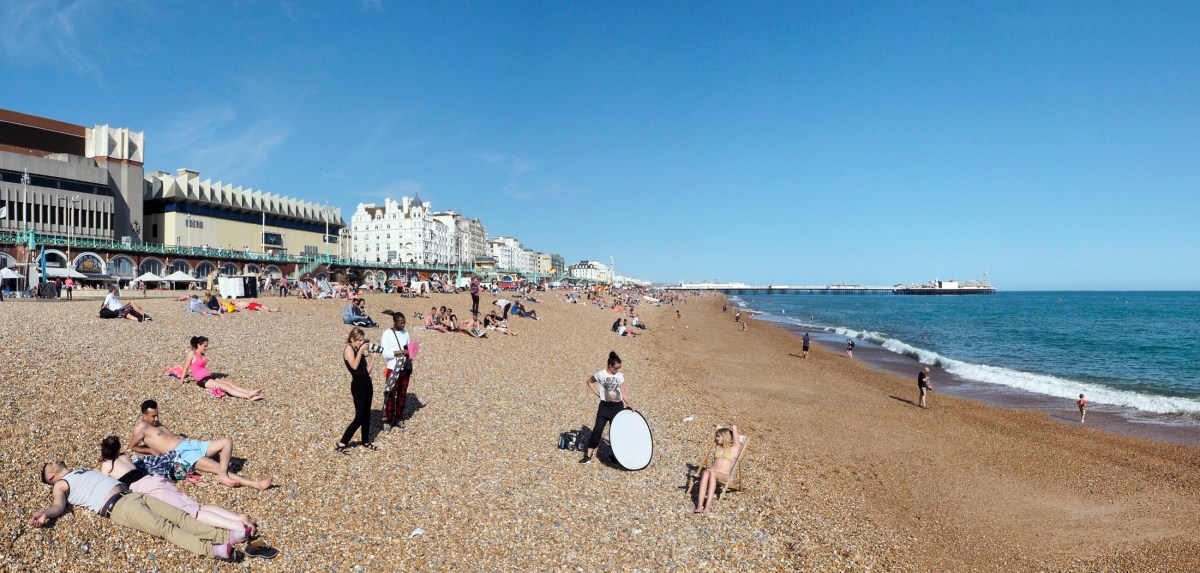
So anyway, today I was delighted to find a photographic crew engaged in just such an act of exclusion down at the spot I’ve started taking my panoramas from. They were there for quite a while; so was I.

Judging by the length of the lens I’d say the shots they were looking for would be close, probably only a head and shoulders with a bit of the sea in the background, no horizon, compressed, narrow depth of field. Also, judging by the cost of the lens (Canon L series lenses have all the self-effacing diffidence of a Maserati) and all the other paraphernalia: circular reflector, several expensive bags full of other mysterious goodies, plus the fact there was three of them to take a picture of one girl, heavily made up to look natural, I’d say this was a professional outfit taking pictures destined for a teen fashion magazine or perhaps a catalogue.

I was also struck by the difference between the girl in front of the lens, and those behind it constructing the shot: their attitude of control, concentration and intent; her passivity. They could have just as well have been taking a picture of a vase of flowers, or a car.

I wanted to ask: Which magazine? What for? Is it a lifestyle shot, makeup suggestions, or for advertising swimwear? I wanted to ask the girl what she thought of all this? But by the time I’d finished taking my photographs the woman with the reflector (I think she was the one managing the shoot) had started to look pretty grumpy so I decided I’d better not push my luck.

If anyone reading this comes across the final picture, do let me know. I’d love to find out how the world looked from their point of view.

Wake – Sun 5th July

Sometimes for sport the men of loafing crews
Snare the great albatrosses of the deep,
The indolent companions of their cruise
As through the bitter vastitudes they sweep.
Scarce have they fished aboard these airy kings
When helpless on such unaccustomed floors,
They piteously droop their huge white wings
And trail them at their sides like drifting oars.
How comical, how ugly, and how meek
Appears this soarer of celestial snows!
One, with his pipe, teases the golden beak,
One, limping, mocks the cripple as he goes.
The Poet, like this monarch of the clouds,
Despising archers, rides the storm elate.
But, stranded on the earth to jeering crowds,
The great wings of the giant baulk his gait.

Charles Baudelaire
‘The Albatross’ (in ‘Les Fleurs du Mal’)
Translated by Roy Campbell, 1952