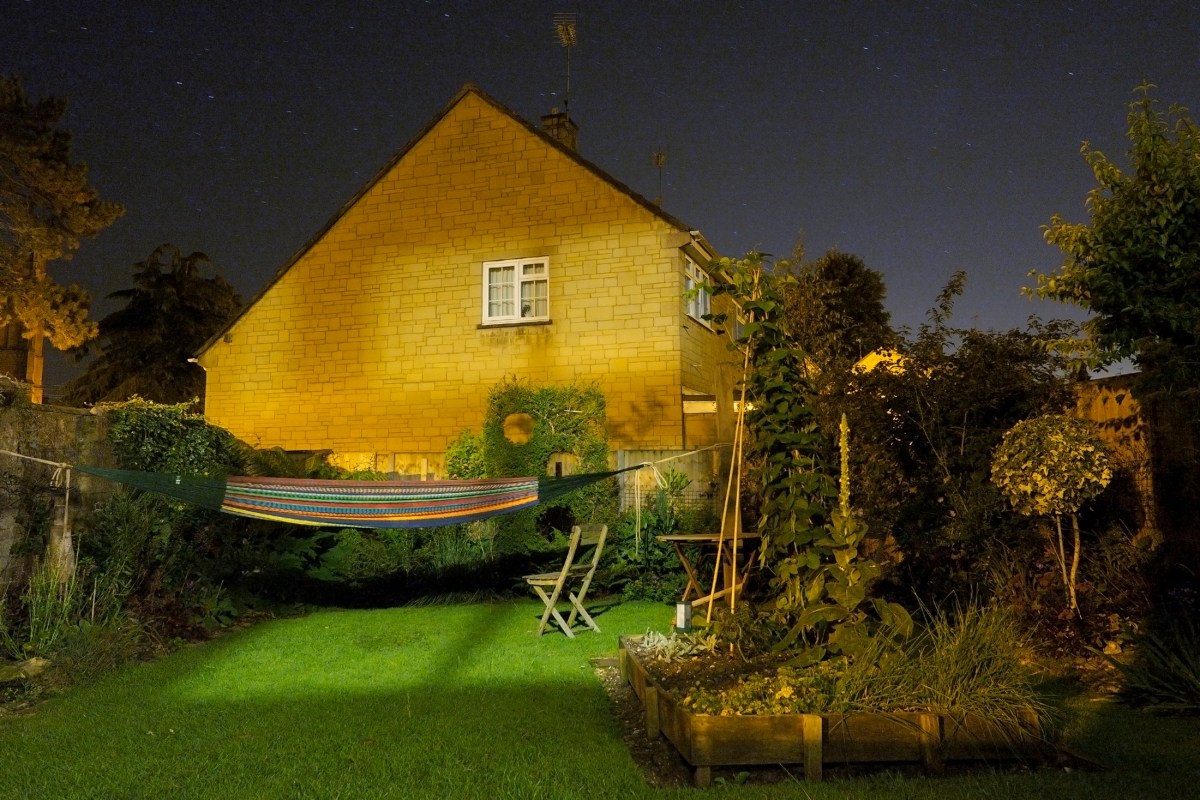
Promise – Mon 14th Sept

“There’s a country spread out in the sky,
a credulous carpet of rainbows
and crepuscular plants:
I move toward it just a bit haggardly,
trampling a gravedigger’s rubble still moist from the spade
to dream in a bedlam of vegetables.”

Pablo Neruda, Dream Horse

Juggernaut – Sun 13th Sept

The last time I came across a Jugganath was many years ago in a temple back yard in Chennai, so it was a treat to see one on Hove prom today, pulled by a large gathering of Hare Krishna devotees. Jugganath is the name of a particular form of Vishnu, but we are more familiar with the word through its association with the huge wooden chariot that transports the deity. This name, anglicised to ‘Juggernaut’ has become synonymous with not only monstrous trucks, but anything vast and relentless. Even without the rather fanciful stories brought back from India by early European visitors, of religious fanatics throwing themselves in ecstasy under the wheels of this lumbering beast, it’s not hard to see this giant as being unstoppable.

Juggernaut isn’t the only word from the Indian subcontinent to have been incorporated into English. Quite apart from those you’d expect, like the mystical: Karma and Nirvana, or those words associated with food, like: Basmati and Dhal, there are plenty more. Here are a few favourites of mine:

Bangle, Beryl, Blighty, Bungalow, Chutney, Cushy, Dekko, Jungle, Karma, Loot, Palaver, Pundit, Pukka, Pyjamas, Sorbet, Shampoo, Thug, Toddy, Typhoon, Veranda.

Oddly enough though, ‘Curry’ is not Indian in origin. Well, I say that, the subject is still hotly debated. But while on the one hand, the word has been suggested as being an Anglicisation of the Tamil word ‘Kari’ (கறி) meaning ‘sauce’, or, according to other sources, ‘gravy’ and ‘stew’ – the word in this form first encountered in the mid-17th century by members of the British East India Company – on the other hand, the word ‘Cury’ is known to be Middle English in origin, one proof of this being that it is one of the title words in the first English cookbook: ‘The Forme of Cury’ written in the late 14th Century during the reign of Richard II.

Or maybe in a fabulous instance of synchronicity the word arose, in relation to cooking, in both places at once? Who knows? But I would suggest that if you go into a restaurant in India asking for a curry, you’ll get a very old fashioned look from the catering staff.

Mondrian green – Sat 12th Sept

And while we’re on the subject of the colour preferences of artists: According to Michel Seuphor, the Belgian artist and writer, the only flower he ever saw in Mondrian’s studio was one made of plastic, with leaves which the artist had painted white “to banish the green which reminded him too much of nature”.

Subjective colour – Fri 11th Sept

Goethe’s colour theory differs in a number of respects to Newton’s writings on light. One such distinction lies in Goethe ascribing aesthetic values to the colours of the rainbow, thus: magenta (purpur) and red (rot) are seen as ‘beautiful’ (schön); orange (gelbrot) as ‘noble’ (edel); yellow (gelb) as ‘good’ (gut); green (grün) as ‘useful’ (nützlich); blue (blau) as ‘mean’ or ‘common’ (gemein); and purple (blaurot) or violet (violett) as ‘unnecessary’ (unnöthig). For a while now I have been curious as to why Goethe considered ‘violett’ and ‘blaurot’ to be ‘unnecessary’ and whether this choice of words itself had an effect on the subsequent development of artistic practice. Following some digging around, I ask you to consider the following:

The word ‘magenta’ didn’t exist as a colour term at the time of Goethe’s writing his ‘Theory of Colours’ (original German title’ Zur Farbenlehre’ published in 1810). Indeed the pigment was only invented in 1859 and so the word ‘magenta’ has only been used in more recent translations of the work, as the correct colour to be found next to red but before violet on the colour wheel. In his book the word Goethe used for this colour is ‘purpur’ looking, to English eyes, remarkably like purple. At the other end of the spectrum, Goethe’s words: ‘violett’ and ‘blaurot’ are both close approximations of, yes, purple. To labour the point, on modern colour wheels violet (or purple) and magenta are next to each other, but in Goethe’s wheel, ‘blaurot’ and ‘purpur’ are adjacent. It may be that, due to the quality of pigments available at the time, and lacking the differentiation provided by magenta as a pigment, Goethe saw these colours as actually being too similar, one therefore becoming to him unnecessary.

J M W Turner was heavily influenced by Goethe’s ‘Theory of Colours’, the ideas it promoted having such an effect on the artist that he made reference to the work in the titles of several of his paintings. Turner’s lectures on colour, being delivered around 1827, suggest that he might have been familiar with the book at that time, prior to its English translation in 1840. Interestingly, Turner ignored purple in his own colour wheels produced for these lectures, removing the hue completely from the diagrams and giving half of the spectrum over to yellow in compensation.

Furthermore, you never see purple in any of Turner’s paintings. According to some sources, this is because he simply hated the colour, but what if Turner’s reason for this act of chromicide was due to his incomplete understanding of a yet to be properly translated book, in which the word ‘unnecessary’ took on a greater significance than Goethe had intended? It should also be noted that Turner died seven years before Magenta was first produced.

Did a simple mistranslation affect the entire oeuvre of one of England’s greatest artists? Whatever the reason, thank heavens for that. I too detest purple, with a vehemence brought about by years of teaching art students who, whenever they want to be seen as ‘self-expressive’ use buckets of the stuff usually swirling around in shapes that, diplomatically, can only be described as mystical orifices. Can you imagine a roomful of purple, violet and magenta Turners? The thought makes me feel quite sick.

Lemon – Mon 7th Sept

Why is lemon yellow called ’lemon’ yellow? I have a lemon in front of me and it looks decidedly more like cadmium or chrome yellow in colour. Grapefruits are closer to lemon yellow so why don’t we say ‘grapefruit yellow’? And come to think of it, ginger isn’t ginger, is it?

Para-normal – Sun 6th Sept

In his novel ‘The turn of the screw’, Henry James describes the special horror of beholding a ghost in daylight (see entry for Tues 17th Feb). The spirits should belong to the hours of darkness, the time when we should be sleeping, when we let go of the rules of logic. Seeing them beyond these confines adds further to the terror of their encounter. Not only are they there, but they have invaded our territory.

The boundaries of darkness are not the only ones we erect to keep the other world at a safe distance. When we imagine the supernatural, they not only belong to the hours of darkness, but we envision them against a backdrop of ancient buildings, ruins, graveyards, behind the scenes at the fairground, the depths of the woods and the wild moors; places we shouldn’t be. I have wondered if we worship our gods in Churches and temples, perhaps as much to keep them safely out of our everyday lives as to honour them with sacred sites.

The horror of the 1982 film ‘Poltergeist’ while transgressing these boundaries by placing the action within a normal suburban setting, at the last moment gives into convention by revealing the cause of this malevolent infestation: that the housing estate where the story takes place is the site of an old graveyard, and the spirits are, therefore, only reclaiming their land. As the last few remains of the housing development are swallowed up by the ground, paradoxically we know that normality has been restored.

Zombie movies, while more often set in the realm of the everyday, and as much in daylight as at night, still fall back on convention: so what if they can eat our brains or turn us into one of them with a scratch or bite, everyone knows we can finish off the walking dead by shooting them in the head. In this respect Zombie movies are more like alien stories: all of these unknowns have weaknesses we can overcome through courage and technology.

So, what about the idea of suburban ghosts? There are films and stories based on these (e.g. the 70s television series ‘Randall and Hopkirk (deceased)’; ‘Truly Madly Deeply’: ‘The Sixth Sense’; ‘Ghostbusters’…) but in each of these cases the ghost is anything but sinister and, more likely than not, either a comic or tragic figure. Carlos Castaneda perhaps comes closest to the idea of the strangeness of the other existing in our own surroundings when he describes a conversation between himself and Don Juan, the Yaqui sorcerer at the centre of his narratives. While walking through a busy street, Don Juan tells Castaneda that most of the people around him are ghosts and that they walk beside us in every situation. Yet this story still has no real horror in it, perhaps because, if this is the case, how can you be terrified of something that is such a part of normal life?

Babes in the wood – Sat 5th Sept

Things to think about while wandering in the Gloucestershire woods:

What’s that called?
Can I eat it?
Will I find a fossil?
Is that a path?
Where am I?
What was that sound?
Are there still wolves in England?
Has anyone ever seen a unicorn?
Is that a cottage?
Did anyone hear that tree fall?
I’m hungry.

Horse feathers – Weds 2nd Sept

The little fat babies with wings we see depicted in old paintings (and more recently reappearing in animated films such as Disney’s ‘Fantasia’) are not cherubs but ‘putti’. Cherubs are Biblical angels purported to have four faces (of different animals) and several sets of wings. Cherubs are supposed to be terrifying, in this respect making them more akin to Harpies, Valkyrie and some of the deities in the Hindu pantheon.

No, Putti (plural, from ’putto’ singular, the name deriving from the Latin, meaning ‘small boy child’) were non-Christian spirits, said to be able to influence human lives as messengers of the gods (though distinct and more lowly than Hermes or Mercury, who probably had more important things to deliver). This tradition dates back to ancient Rome and Greece. Their role as messengers may explain their connection with notions such as the arrival of love, however, putti are just as likely to appear in funerary works as those based on romance (e.g. Raphael’s Sistine Madonna) so they don’t always bring good news.

Nor are putti cupids. Indeed the whole notion of a cupid is a nonsense as Cupid is of course the name of a deity, according to myth either the son of Venus or, alternatively, her companion.

So next time you are in a shop searching for tokens of a romantic nature make sure you ask for a card with putti on it rather than cherubs. This will be of enormous help to the shop assistants.