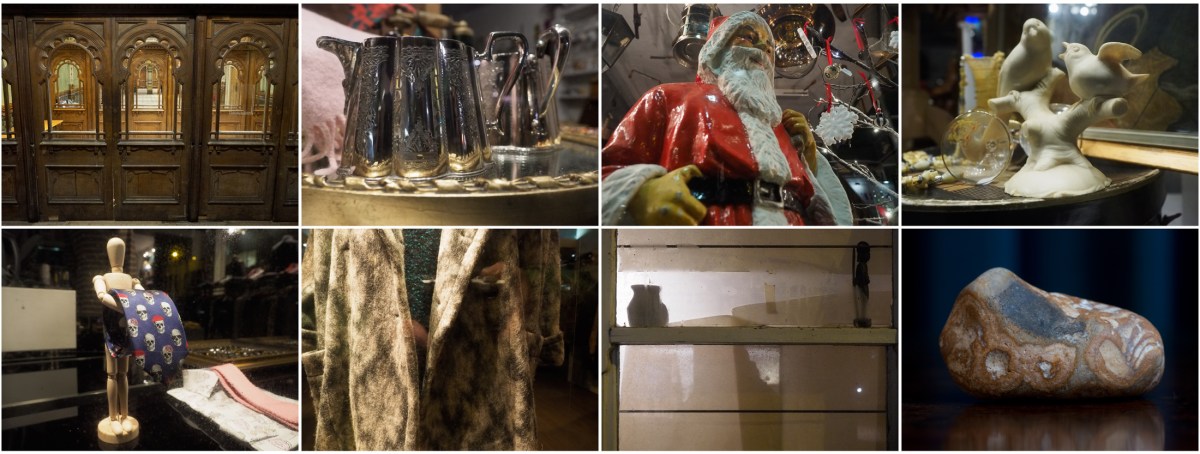
Nation of hoodies –20th Nov 2015

“Across the country, violence, vandalism, theft and disorder are an everyday menace, created by faceless gangs of youths with little fear of ever being caught.
Streets, trains, buses and shopping centres have become no-go zones for terrified citizens who have been intimidated by hoodies for too long.”

Daily Express
Mar 30th, 2008

Sea dogs 18th Nov 2015

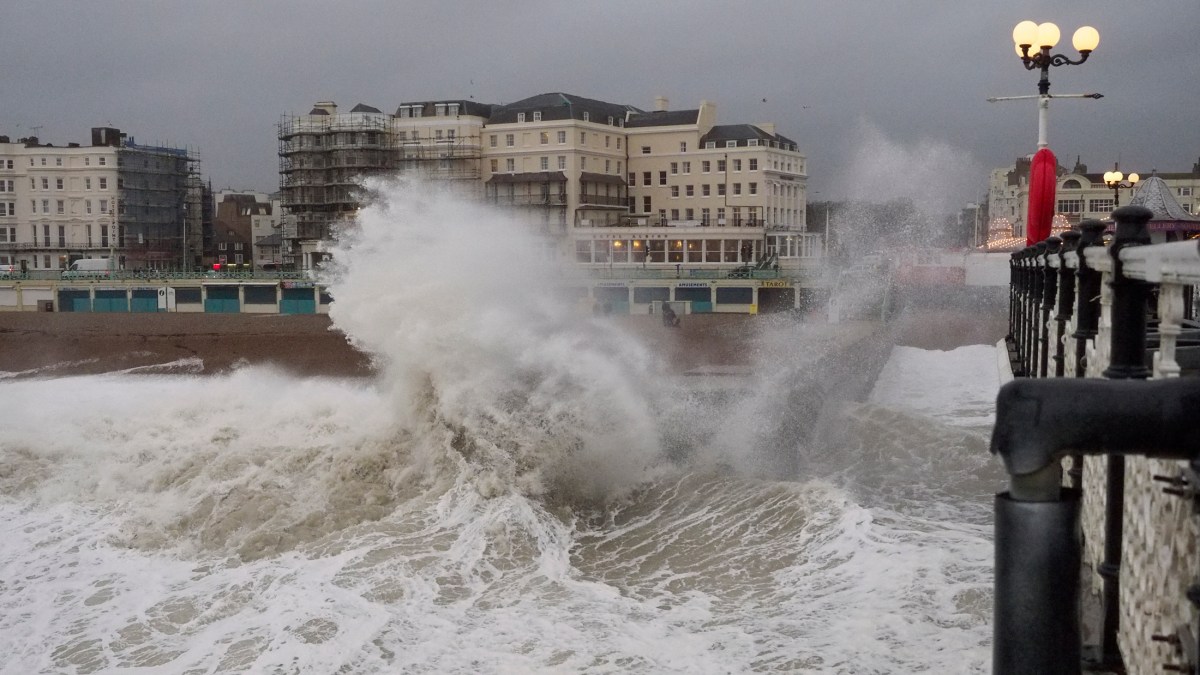
Today I spent some time on the pier watching the sea. We’re in the end of a hurricane and the waves were coming in higher than usual under the weathered boards, sometimes only a few yards away from where the starlings sleep. Occasionally small groups of them took flight towards the marina, perhaps in search of somewhere less perilous to roost, the wind buffeting them as they sped across the grey-green water.

Waves crashed in, some mountainous, some merely huge. I began to notice it was not the tallest ones that made the biggest explosions as they hit Albion Groyne, but those that seemed lower, faster, more angry. Yet despite their speed they never seemed to catch up with the waves in front. It was as if they deliberately distorted time, creating the excuse to race and rage in the hunt for their predecessors; low-hunched wolves with foaming mouths hurling themselves at the shore.

Yummy mummy… – 16th Nov 2015

Ever since the birth of art, fashion, bodily adornment, tribal differentiation, ritual decoration… we as a species have looked for different colours in the world around us to brighten things up a bit. You name it, we’ve used it, dyes and pigments from roots, vegetables, flowers, ground mud, blood, crushed insects and seashells, squid ink, anything that’ll stain will do, and if the stain lasts, so much the better. We still use a lot of these ancient colours. However, Mummy Brown isn’t one of them.

Particularly prized by the Pre Raphaelites, Mummy Brown, as the name suggests, is a colour made out of the ground remains of Egyptian mummies. The rich brown comes from the chemicals used in the processes of embalming, as practiced in the ancient world, principally bitumen, which substance was considered responsible for the blackening of the remains of these ancient cadavers. The trade dates back centuries, with records of its export and use cropping up from several sources, including Samuel Pepys, in the 16th century, when production was at its peak.

Unsurprisingly, the colour began to fall out of favour towards the beginning of the 20th Century, in part due to greater respect for the field of archaeology, but as much to do with artists realizing where the pigment came from. Edward Burnes-Jones, on discovering that Mummy Brown was not just a fanciful name, immediately had his tube of the stuff interred, with some small ceremony, in his garden. Rudyard Kipling, a friend of Burnes-Jones, followed suit, burying his supply in his yard to try and right the wrongs of its sacrilegious use.

Nevertheless, the pigment remained in production until 1964 when the last supplies of the material used for its production ran out. According to the then managing director of Roberson’s artists colour makers: “We might have a few odd limbs lying around somewhere, but not enough to make any more paint. We sold our last complete mummy some years ago for, I think, £3. Perhaps we shouldn’t have. We certainly can’t get any more.”

This discovery has somewhat tainted my visits to art galleries as I now wonder how many of them are, literally, public mausoleums, but in researching this article, I have also discovered one more startling fact: that these ground remains were not only used as pigment, but were also employed (and consumed) for medicinal purposes…

References:

http://www.artinsociety.com/the-life-and-death-of-mummy-brown.html
http://www.smithsonianmag.com/smart-news/ground-mummies-were-once-ingredient-paint-180950350/
http://www.ancient-origins.net/ancient-technology/mummy-brown-16th-century-paint-made-ground-mummies-001716

Plongeur – 15th Nov 2015

“I began to protest, but he cut me short. ‘A PLONGEUR with a moustache —nonsense! Take care I don’t see you with it tomorrow.’
On the way home I asked Boris what this meant. He shrugged his shoulders. ‘You must do what he says, MON AMI. No one in the hotel wears a moustache, except the cooks. I should have thought you would have noticed it. Reason? There is no reason. It is the custom.’
I saw that it was an etiquette, like not wearing a white tie with a dinner-jacket, and shaved off my moustache. Afterwards I found out the explanation of the custom, which is this: waiters in good hotels do not wear moustaches, and to show their superiority they decree that PLONGEURS shall not wear them either; and the cooks wear their moustaches to show their contempt for the waiters.”

George Orwell, ‘Down and Out in Paris and London’ 1933

Wholesale – 11th Nov 2015

“To found a great empire for the sole purpose of raising up a people of customers may at first sight appear a project fit only for a nation of shopkeepers. It is, however, a project altogether unfit for a nation of shopkeepers; but extremely fit for a nation whose government is influenced by shopkeepers.”

Adam Smith, The Wealth of Nations 1776

Stage lighting – 10th Nov 2015

Every year there’s a point when you know it’s no longer possible to carry out the walk home from work in daylight, and the temptation is to shut out the gloom and the rain, taking the quickest route home. But if you can get the timing right, there’s a point where you have both the blue remains of evening and an explosion of artificial suns from street lights, windows of offices and homes, shop displays, traffic signs and the headlamps of cars. Even by the beach the glow of the city pushes back the darkness of the sea and a walk along the shuttered seafront shops and bars is like stumbling onto an empty stage set.

Ancestral vices – 9th Nov 2015

“They fuck you up, your mum and dad.
They may not mean to, but they do.
They fill you with the faults they had
And add some extra, just for you.

But they were fucked up in their turn
By fools in old-style hats and coats,
Who half the time were soppy-stern
And half at one another’s throats.

Man hands on misery to man.
It deepens like a coastal shelf.
Get out as early as you can,
And don’t have any kids yourself.”

Philip Larkin ‘This Be The Verse’ 1971

Collective nouns – 7th Nov 2015

The starlings have been back for a few weeks now. Not in the numbers you used to find, but it’s still good to see them – a reminder of the vastness of Europe, of distant shores, of rites older than our mark upon the world. Their English collective noun when flying together is ‘murmuration’ a wonderful word that goes beyond merely naming, to evoke the whirring sussuration their collected wing beats make as the fly overhead; a thousand breaths and heartbeats sounding in unison.

And this got me thinking, as you do, of other collective nouns for animals, so here’s a list. Please note, this is highly edited, not including many of the more familiar and indeed unfamiliar terms, just my particular favourites:

A shrewdness of apes
A cede of badgers
A sloth of bears
A drift, or grist, of bees
A sedge of bitterns
A sounder of boars
A bellowing of bullfinches
A wake of buzzards
A caravan of camels
A destruction of cats
A peep of chickens
An intrusion of cockroaches
A gulp of cormorants
A covert of coots
A sedge of cranes
A float of crocodiles
A murder of crows
A parcel of deer
A convocation of eagles
A memory of elephants
A charm of finches
A school (or shoal) of fish
A stand of flamingoes
A business of flies
A skulk of foxes
A skein of geese
A cloud of grasshoppers
A charm of goldfinches
A rasp of guineafowl
A flick of hares
A boil, or kettle, of hawks
An array of hedgehogs
A bloat of hippopotami
A cry of hounds
A cackle of hyenas
A mess of iguanas
A clattering of jackdaws
A scold of jays
A fluther, or smack, of jellyfish
A kindle of kittens
A deceit, or desert, of lapwings
An exaltation of larks
A tittering, or charm, of magpies
A trip of mice
A labour of moles
A barrel, cartload, or wilderness, of monkeys
A scourge of mosquitoes
A watch of nightingales
A parliament of owls
A bed of oysters
A pandemonium of parrots
An ostentation of peacocks
A crowd of people*
A bouquet of pheasants
A drift of pigs
An unkindness of ravens
A crash of rhinoceroses
A building, or parliament, of rooks
A draught of salmon
A fling of sandpipers
A herd of sea urchins
A hurtle of sheep
An escargatoire, walk, or rout, of snails
A host, or tribe of sparrows
A phalanx of storks
A lamentation of swans
A scream of swifts
An ambush of tigers
A knot of toads
A hover of trout
A nest of vipers
A rout of wolves
A fall of woodcocks
A descent of woodpeckers
A herd of wrens
A dazzle of zebras

(*Come to think of it, there must be scores of collective nouns for different gatherings of people depending on kind and purpose. Maybe I’ll put those together in another post, another time…)