“It is of great use to the sailor to know the length of his line, though he cannot with it fathom all the depths of the ocean.”
John Locke

“It is of great use to the sailor to know the length of his line, though he cannot with it fathom all the depths of the ocean.”
John Locke
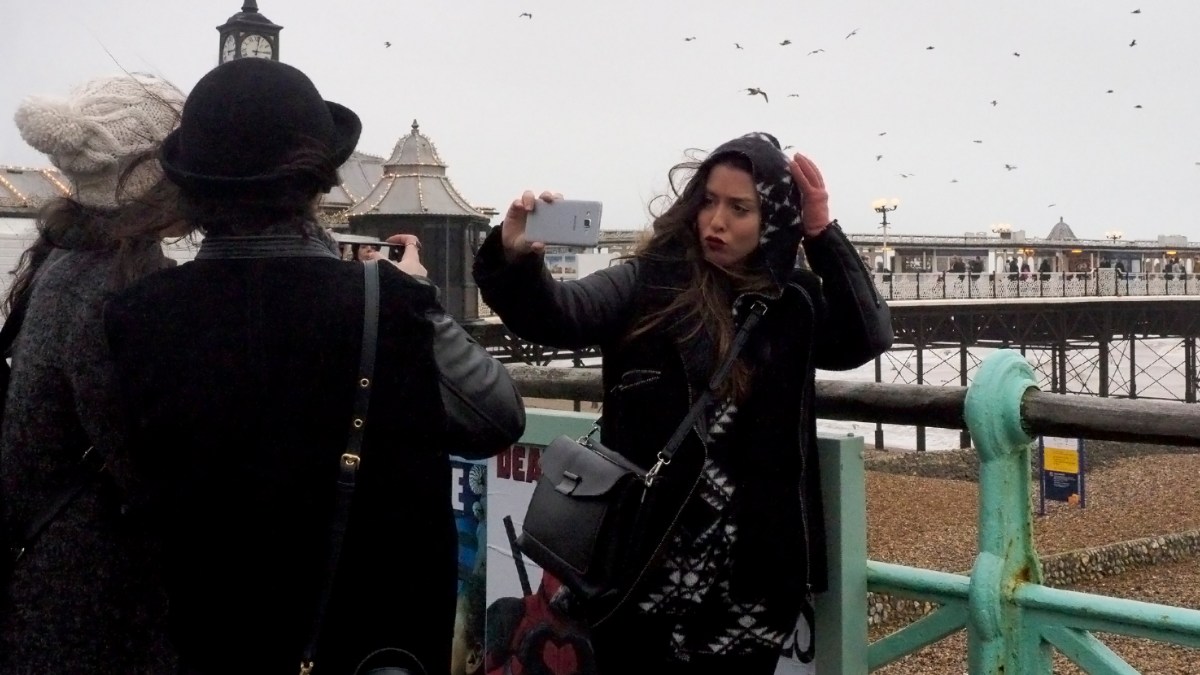
Apple trees are called apple trees because they are the trees that produce apples, obviously. But isn’t this the wrong way round? Shouldn’t ‘apples’ refer to the trees and their fruit called apple-fruit? After all without the tree there would be no fruit. This is also the case with roses. When we say ‘rose’, we think of the flower first, the bush after; we talk about rose bushes, we don’t say “please have this bouquet of rose-flowers”. True, cauliflowers reverse this naming system, but even here I realise I’ve never heard someone mention the cauli as the definitive name for the plant, apart from, occasionally, as a diminutive.
Is this a clue to the way we think as English people? Historically, have we always placed more importance in the produce than the producer – we name the bit we have a use for – and is this how the naming of things evolved?
What about ‘oak’? To me, this name immediately brings to mind a mighty and ancient tree, one whose fruit has a completely different name: acorns (although ‘acorn’ sounds like it is related as a word, i.e. oak-corn?). The early Indo-European and Celtic (Goidelic, Brythonic?) etymology of ‘oak’ seems to be, simply, ‘tree’, suggesting that the specific species we now refer to as ‘oak’ was originally named as the most tree-like of trees; highly appropriate given the stature of the tree in European culture. But as soon as I’ve written this, I realise that for as many of us, ‘oak’ is just as likely to bring to mind big solid bits of furniture. And I have read another ancient meaning of the word ‘oak’ as simply being: ‘good’, because the tree was good for making things out of, and it also burned well – so we’re back to use again.
Matsuo Bashō, the 17th century Japanese poet, wrote under several pen-names until, in 1680, he was presented with a gift of Bashō trees, a particular species of banana. These plants he loved so much that he eventually renamed himself ‘Bashō’ after them. Several years later he wrote this:
“The leaves of the Bashō tree are large enough to cover a harp. When they are wind-broken, they remind me of the injured tale of a Phoenix, and when they are torn they remind me of a green fan ripped by the wind. The tree does bear flowers, but unlike other flowers, there is nothing gay about them. The big trunk of the tree is untouched by the axe, for it is utterly useless as building wood. I love the tree, however, for its very uselessness… I sit underneath it, and enjoy the wind and rain that blow against it.” *
–
* Matsuo Bashō quoted in and translated by Nobuyuki Yuasa’s introduction to the Penguin Classics edition of ‘Matsuo Bashō, The Narrow Road to the Deep North and Other Travel Sketches’ Translated by Nobuyuki Yuasa, Penguin Books, 1966
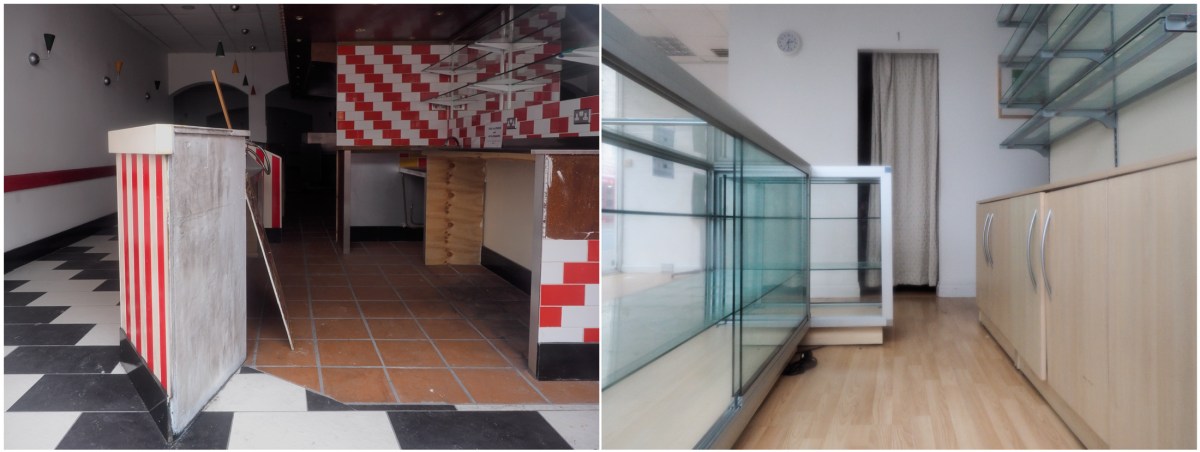
The one on the left is a closed down burger bar. The one on the right used to be a shop selling natural remedies and offering alternative therapies. Before these businesses, they were something else. Afterward, they will, again, be something different.
Perhaps in the same way that, in the days of early Christianity, churches were built on the sites of former temples and places of pagan worship to ‘cleanse’ these places of their former use, yet nevertheless something holy and ancient would still persist, does something of the spirit of past occupants colour these new ventures? Would fast food sold from a burger bar opened on the site of a health clinic be mysteriously better for you? (Eat all you like and never put on a pound!) Would a health shop opened on the former site of a burger bar be doomed to failure? Can we ever know these things?
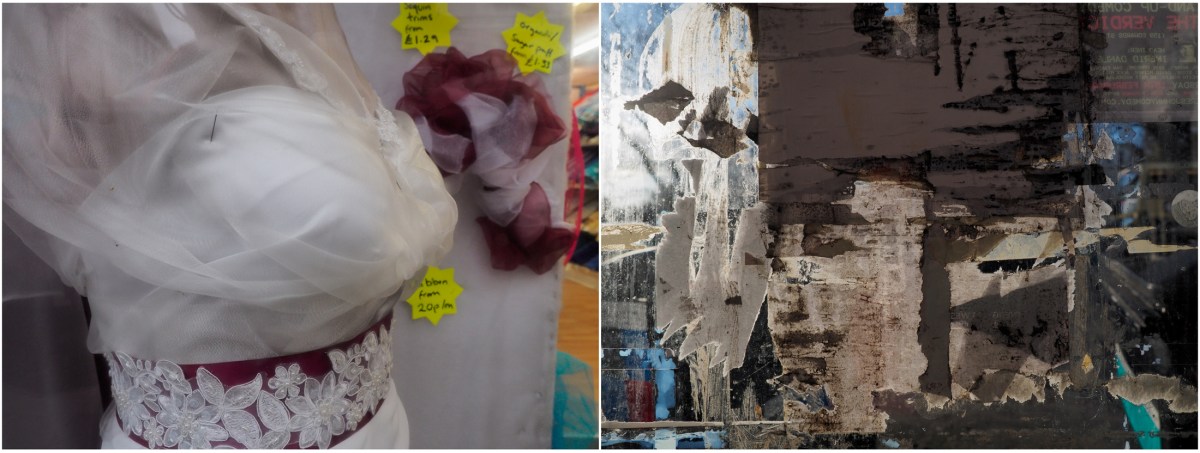
Left hand picture: rather obvious illustration of Roland Barthes ideas on the relationship between the punctum and studium in photography.
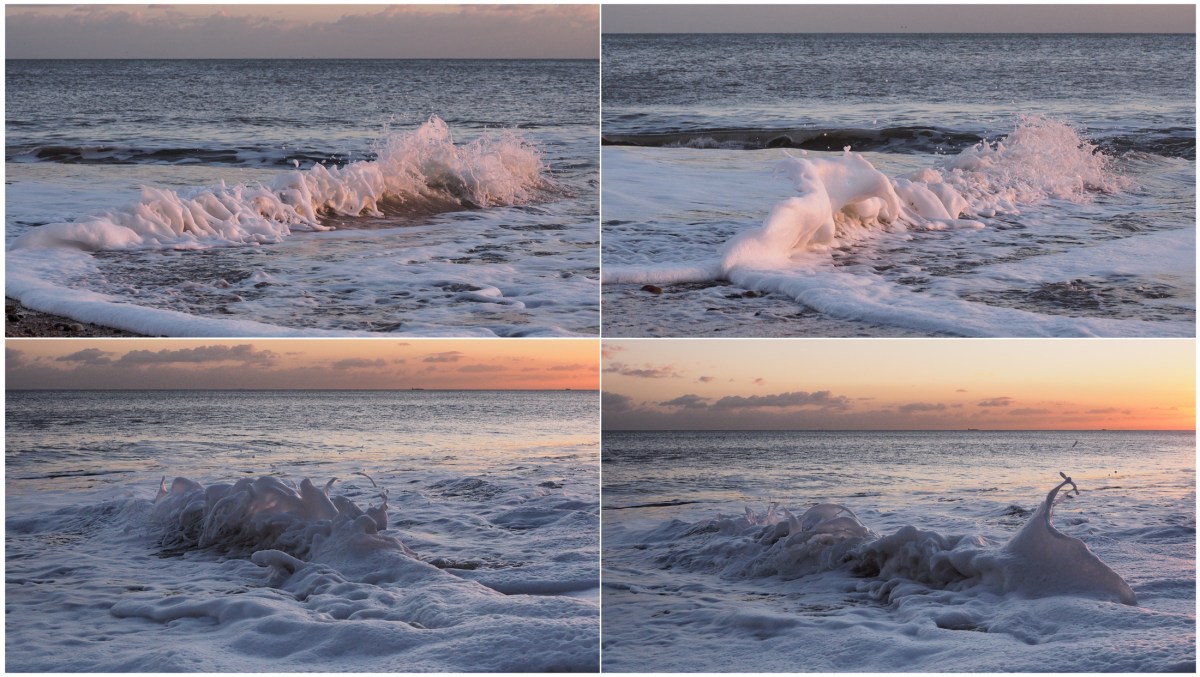
“The first excrescence did not pop. It was already some two foot six in diameter and still swelling fast.
“It must pop soon,” she muttered.
But still it did not. It kept on expanding until it must have been all of five feet in diameter. Then it stopped growing. It looked like a huge, repulsive bladder. A tremor and a shake passed through it. It shuddered jellywise, became detached, and wobbled into the air with the uncertainty of an overblown bubble.
In a lurching, amoebic way it ascended for ten feet or so. There it vacillated, steadying into a more stable sphere. Then, suddenly, something happened to it. It did not explode. Nor was there any sound. Rather, it seemed to slit open, as if it had been burst into instantaneous bloom by a vast number of white cilia which rayed out in all directions.”
John Wyndham ‘The Kraken Wakes’ 1953
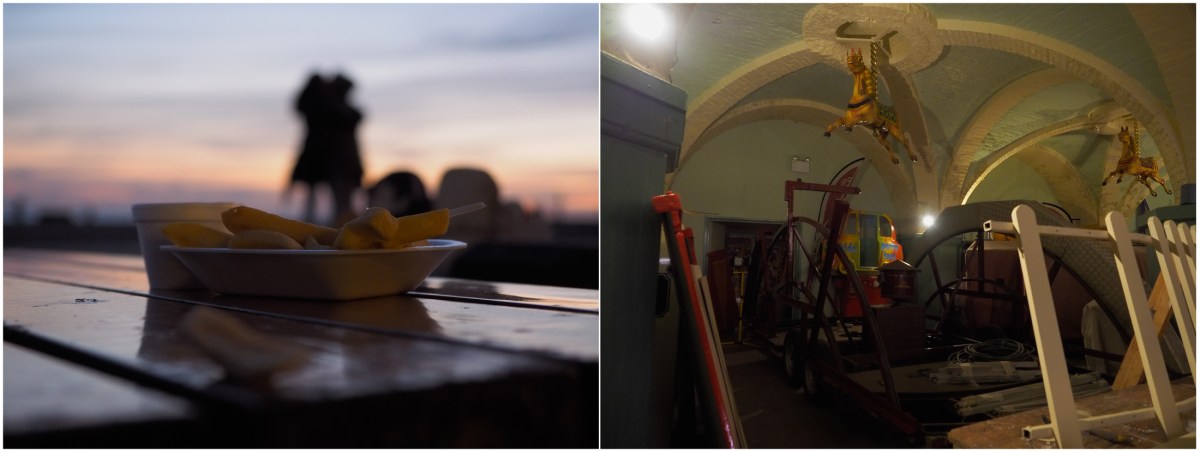
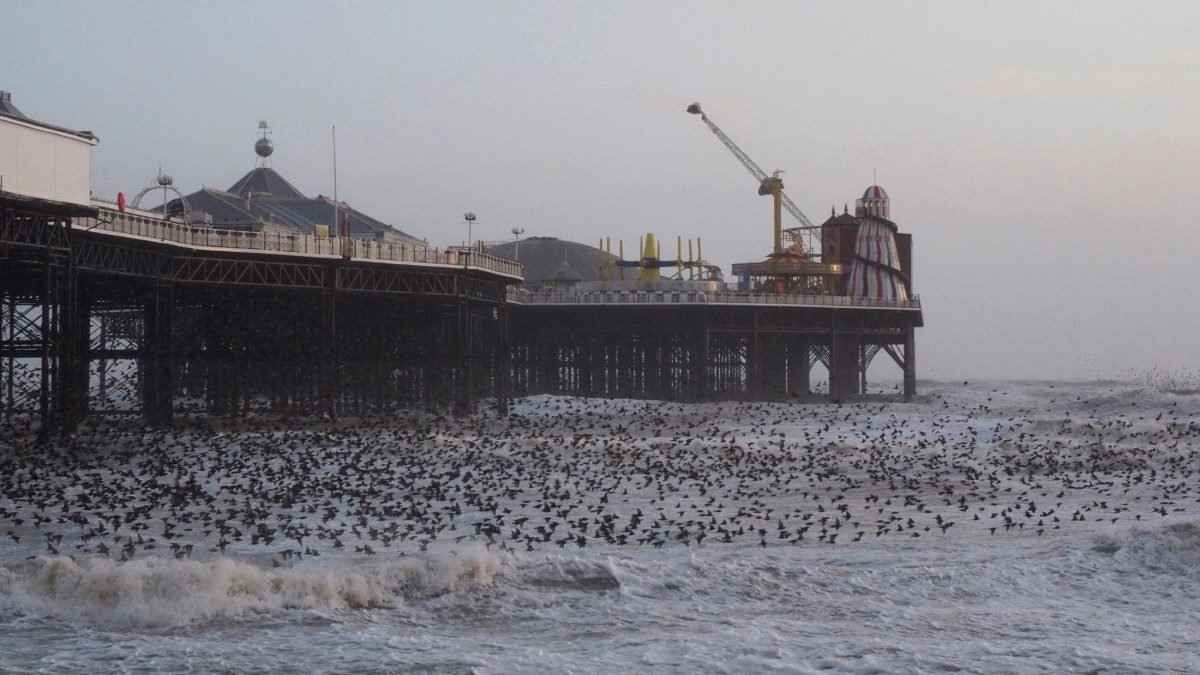
All I wanted to do was get a picture of this abandoned plate of chips backlit by the sunset, and these lovers came and stood right behind it and snogged for what seemed like hours. Eventually I gave up and included them in the shot. It was only then that I realised why, today, I had stumbled across several men with pained expressions kneeling on pebbles in front of their girlfriends (it must really hurt kneeling on pebbles) and a larger number than usual of lost balloons drifting through the streets. Well well, it’s Valentine’s day, again. Where does the time go?
More to the point, I have now discovered where the fairground hibernates in winter.
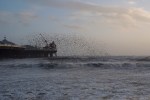
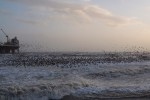
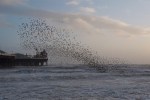
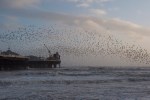
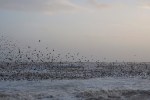
Today ‘Storm Imogen’ hit us on the South coast, so today is also the day when I find out if my theory is right about the altitude of starling murmurations. The light is already failing when I get to the beach and I wonder for a moment if it’s just too windy at 60+mph winds for them to do anything but fly straight to roost, but then I realise the sea is covered in a black carpet. It’s as if I’m watching a fast and granular oil slick spreading back and forth across the water. The waves aren’t that high. I think because of the direction of the wind they’ve been almost flattened out, but the starlings are flying so near the sea that the lowest ones still get lost behind the wave crests. How do they do it without falling into the sea, and with so many brothers and sisters flying so close above them? Yet I’ve never once seen one washed up on to the beach. It isn’t the most extravagant of starling displays, but to fly at all in such high winds, let alone so precipitously, when only a few inches lower would spell certain death to non-swimming birds so tiny, still takes my breath away.









As I was walking all alane,
I heard twa corbies makin a mane;
The tane unto the ither say,
“Whar sall we gang and dine the-day?”
“In ahint yon auld fail dyke,
I wot there lies a new slain knight;
And nane do ken that he lies there,
But his hawk, his hound an his lady fair.”
“His hound is tae the huntin gane,
His hawk tae fetch the wild-fowl hame,
His lady’s tain anither mate,
So we may mak oor dinner swate.”
“Ye’ll sit on his white hause-bane,
And I’ll pike oot his bonny blue een;
Wi ae lock o his gowden hair
We’ll theek oor nest whan it grows bare.”
“Mony a one for him makes mane,
But nane sall ken whar he is gane;
Oer his white banes, whan they are bare,
The wind sall blaw for evermair.”
Anon , Scotland, 17th C

I think I’m getting the hang of this now. It’s generally accepted that starlings hate flying in rain, so that’s one factor that affects their aerial ballet. But I’m now also beginning to realise that the higher the wind, the lower they fly too. When I say lower, I mean that, taking the entire murmuration, while the lowest part of it will always be close to the sea at times, the maximum height varies according to wind speed. So, on days like the foggy one we had on (…), or on other days when there is hardly even a breeze and the light is clear, the murmuration will spread and contract vertically. But the more the wind gets up, the flatter the formation.
I hear there’s another storm on the way, a big one by our standards. If I’m right, when it hits us, if the starlings fly at all, they’ll be almost surfing.








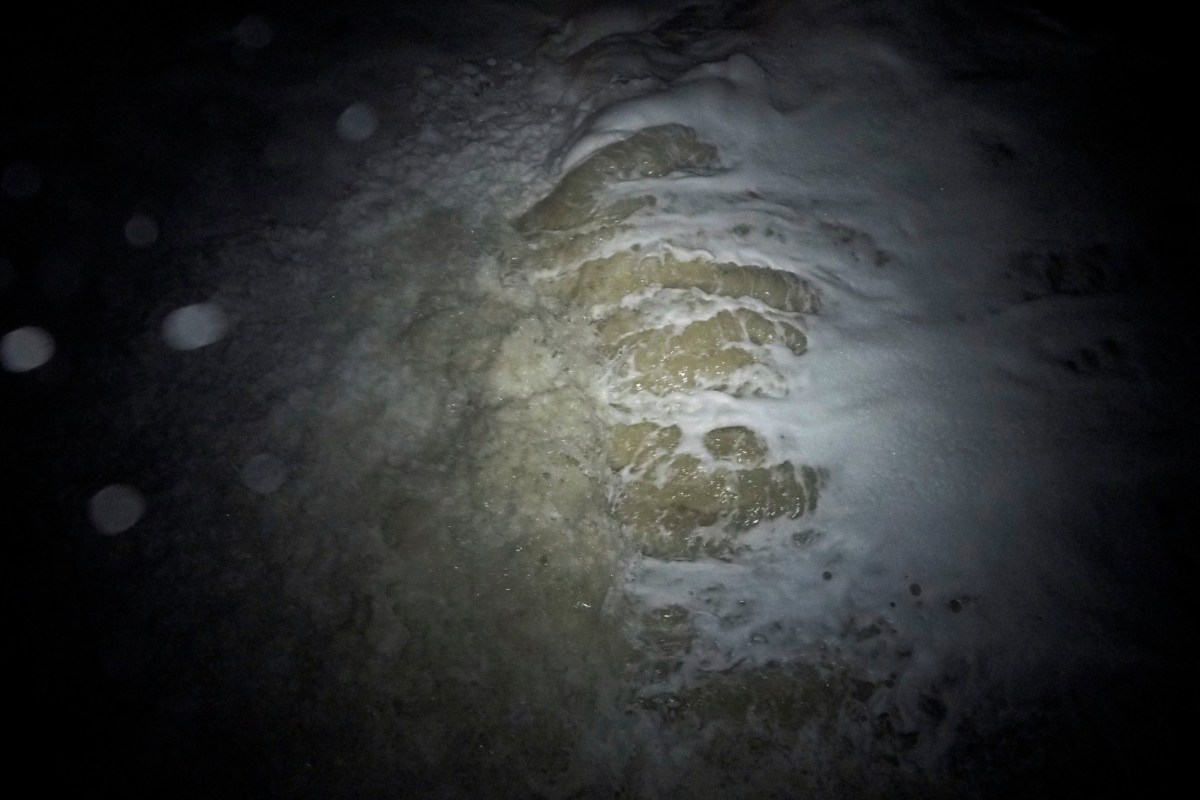
A few years ago I decided I wanted to make some videos of cherry blossom swaying in the breeze at night. I’m not going into the ‘why?’ of this as it’d take up too much space. However the idea did create a problem: given that, at the time, camera sensors were not quite sensitive enough to be able to use only streetlight to get the correct exposure, I had to find a portable means of illumination bright enough to make the idea possible. I started looking at ‘specialist’ torch sites (yes, they do exist) and ended up spending some time reading entries in some very peculiar chat rooms, largely populated by security professionals and border patrol guards. Most seemed to agree on one particular make and model; this is the torch I now have. Though not the cheapest, it really is very bright.
I knew where to find the cherry trees, in a park not far from where I live, and so, one night close to midnight I set out.
Having set up my tripod and brand new video camera in some bushes near a particularly good sprig of blossom, I switched my torch on and began to film. It was then that I began to notice just how many carousers used the park, some simply to get home from the pub, others to continue ‘partying’. After only a few minutes I could hear a group of lads coming straight towards me and, realising at this point just how much I’d invested in my equipment, and how difficult it would be to extricate myself from the shrubs and make a run for it, my heart began to sink. I wasn’t necessarily expecting a fight, these things don’t happen that often, but conversations in the middle of the night can sometimes be difficult.
Yet, at a certain point, the whole group suddenly veered off in another direction. A little later the same thing happened again. First the loud voices, then some muffled muttering, then the sounds once more dwindled. It was at this point that I realised what I must have looked like to outside eyes: no one wants to go near the nutter hiding in the bushes in the middle of the night. Emboldened by this, I carried on filming, happily disregarding the other goings on around me and finally went home with a full memory card feeling quite pleased with myself.
A few nights later I related this adventure to some friends in the pub. They just laughed and said “Chris, they didn’t think you were some kind of pervert, they though you were the police”.
 Umbrellage