If you’re rich, then you’re unlucky;
All you need is a face which says
I’m a descendant of Adam
Abdullah Ibn Al Mu’tazz (861 – 908 ad)
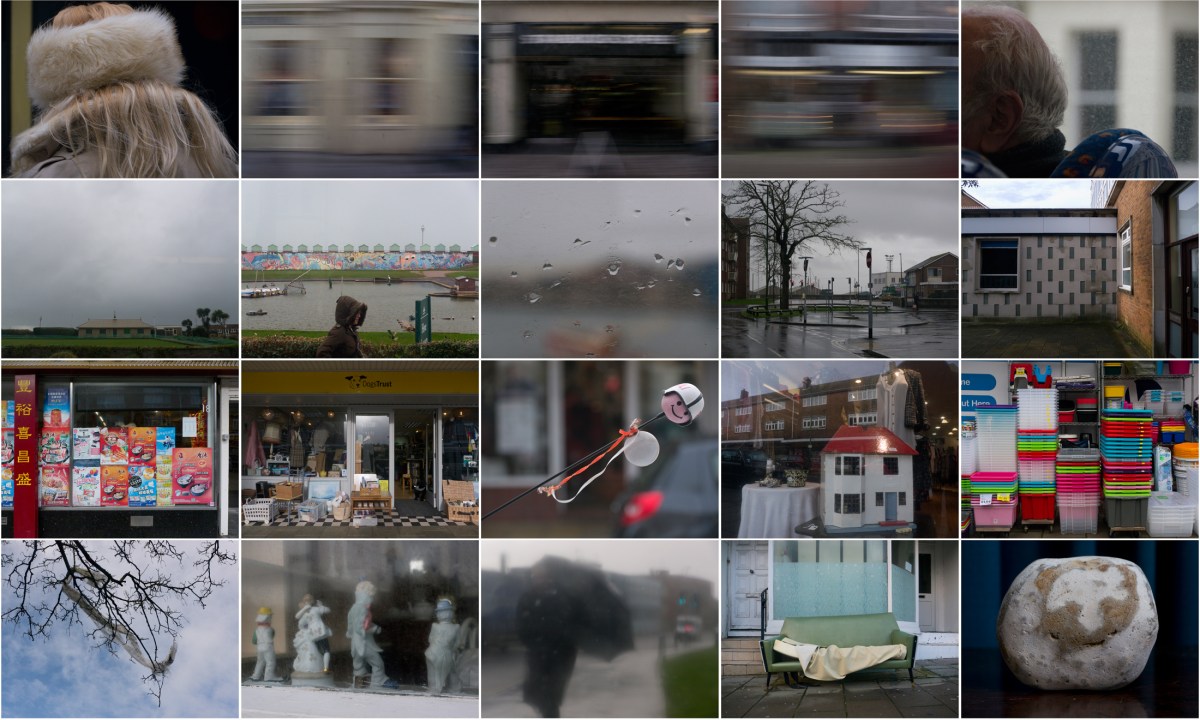
If you’re rich, then you’re unlucky;
All you need is a face which says
I’m a descendant of Adam
Abdullah Ibn Al Mu’tazz (861 – 908 ad)

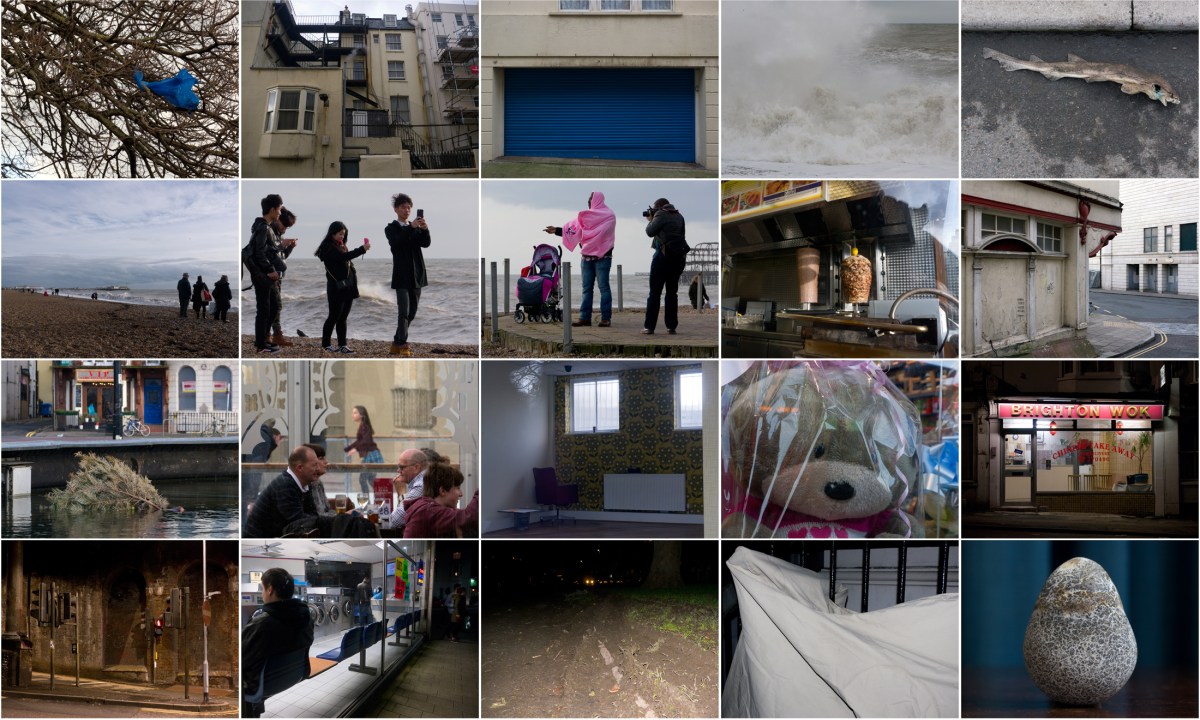
Civilized human beings wear clothes, therefore there can be no portraiture, no mythological or historical storytelling without representations of folded textiles. But though it may account for the origins, mere tailoring can never explain the luxuriant development of drapery as a major theme of all the plastic arts. Artists, it is obvious, have always loved drapery for its own sake – or, rather, for their own. When you paint or carve drapery, you are painting or carving forms which, for all practical purposes, are non-representational – the kind of unconditioned forms on which artists even in the most naturalistic tradition like to let themselves go. In the average Madonna or Apostle the strictly human, fully representational element accounts for about ten per cent of the whole. All the rest consists of many colored variations on the inexhaustible theme of crumpled wool or linen. And these non-representational nine-tenths of a Madonna or an Apostle may be just as important qualitatively as they are in quantity. Very often they set the tone of the whole work of art, they state the key in which the theme is being rendered, they express the mood, the temperament, the attitude to life of the artist. Stoical serenity reveals itself in the smooth surfaces, the broad untortured folds of Piero’s draperies. Torn between fact and wish, between cynicism and idealism, Bernini tempers the all but caricatural verisimilitude of his faces with enormous sartorial abstractions, which are the embodiment, in stone or bronze, of the everlasting commonplaces of rhetoric – the heroism, the holiness, the sublimity to which mankind perpetually aspires, for the most part in vain. And here are El Greco’s disquietingly visceral skirts and mantles; here are the sharp, twisting, flame-like folds in which Cosimo Tura clothes his figures: in the first, traditional spirituality breaks down into a nameless physiological yearning; in the second, there writhes an agonized sense of the world’s essential strangeness and hostility. Or consider Watteau; his men and women play lutes, get ready for balls and harlequinades, embark, on velvet lawns and under noble trees, for the Cythera of every lover’s dream; their enormous melancholy and the flayed, excruciating sensibility of their creator find expression, not in the actions recorded, not in the gestures and the faces portrayed, but in the relief and texture of their taffeta skirts, their satin capes and doublets. Not an inch of smooth surface here, not a moment of peace or confidence, only a silken wilderness of countless tiny pleats and wrinkles, with an incessant modulation – inner uncertainty rendered with the perfect assurance of a master hand – of tone into tone, of one indeterminate color into another. In life, man proposes, God disposes. In the plastic arts the proposing is done by the subject matter; that which disposes is ultimately the artist’s temperament, proximately (at least in portraiture, history and genre) the carved or painted drapery. Between them, these two may decree that a fete galante shall move to tears, that a crucifixion shall be serene to the point of cheerfulness, that a stigmatization shall be almost intolerably sexy…
Aldous Huxley. The Doors of Perception (1954)
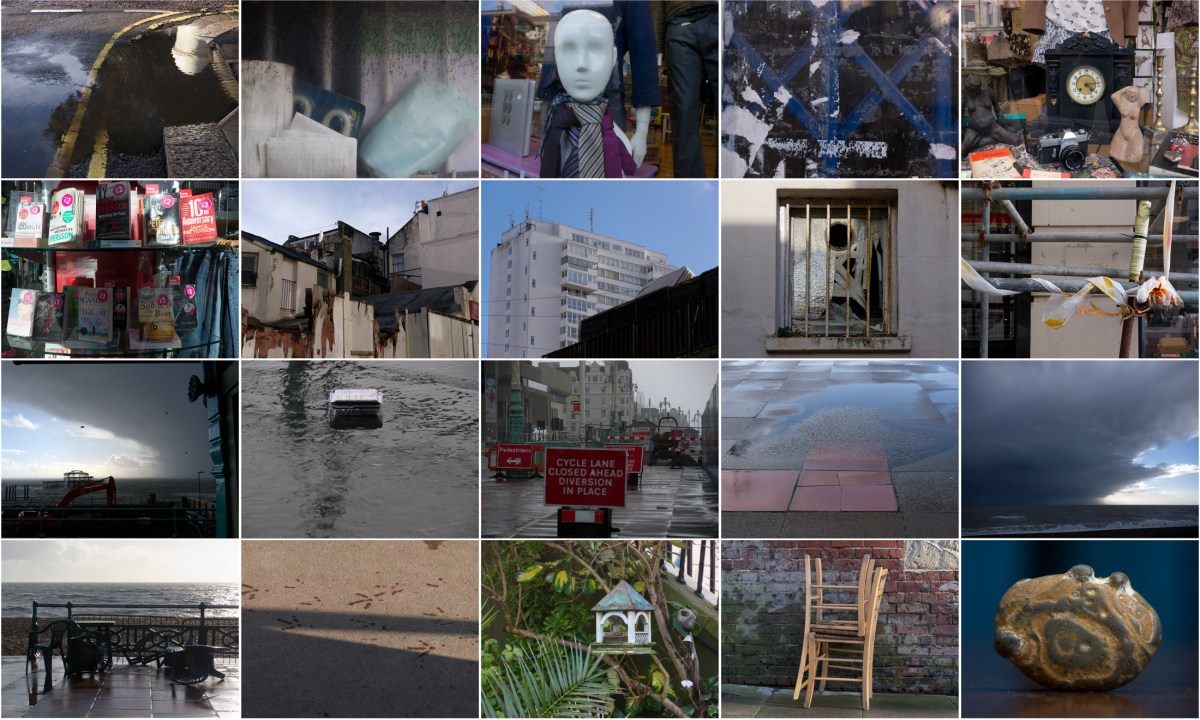
So you find yourself in town without a raincoat and suddenly out of nowhere there’s a downpour so heavy everyone is running for doorways and bus stops and you curse the weather and how long are you going to have to stand cramped under a tiny and inadequate awning with some bloody smoker because it seems endless and you also curse your luck and indeed you are unlucky because had you been out in the open like on the beach you could have seen the gathering storm grow from a hairy dog to an elephant to a gigantic whale till finally it becomes the huge upswept wing of the angel of obliteration before it passes overhead shedding rain like tattered curtains but before you know it dwindles from the apocalypse to merely a gigantic whale and then an elephant before becoming once more a hairy and retreating dog and then the sun bursts through and you can hardly see for all the dazzlement.
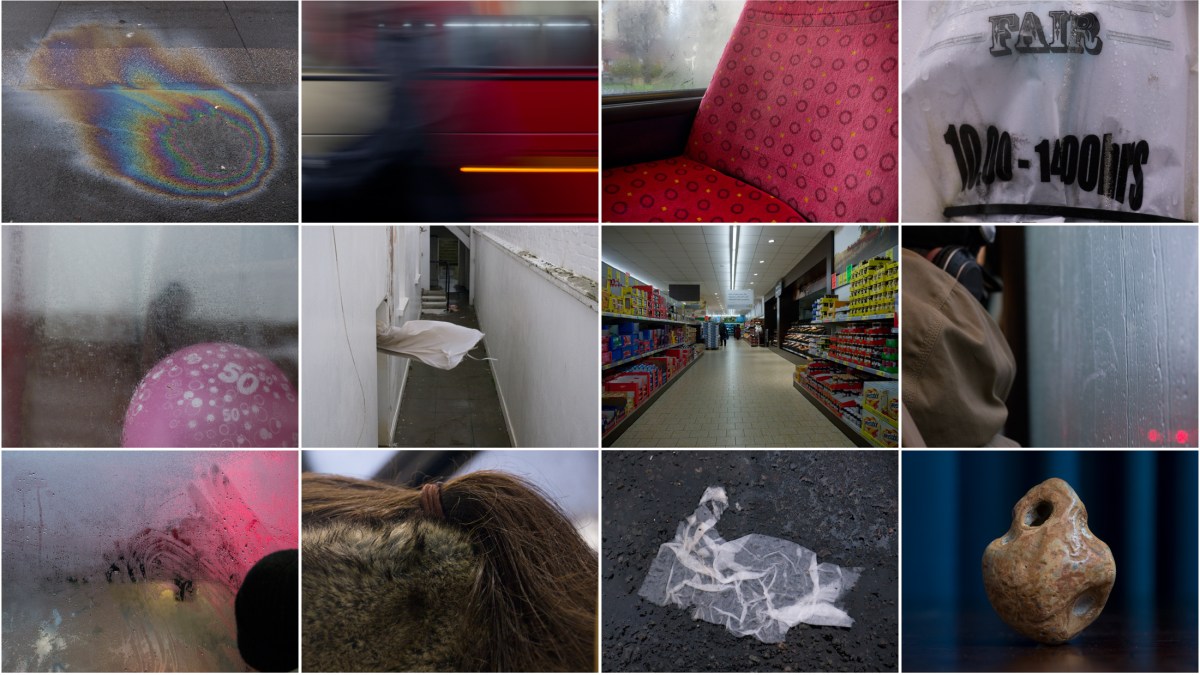
Enigmatic signifiers are messages received in early infancy that the fledgling human subject is simply unable to comprehend. These messages, which can be verbal, visual, tactile, or even olfactory, constitute the prototype for all future experiences of bewilderment. While the infant may understand that they are addressed to her, and that they demand a response of some kind, their content is wholly unintelligible. To make matters worse, these communications are permeated with meanings of which even their senders are unaware; they are unconscious on the part of both parties. They also lack originals; according to Laplanche, every enigmatic signifier is a copy of an endless series of copies that has been passed down through the generations as in a game of telephone. For Laplanche, these signs do not disappear with mature understanding but rather remain at the heart of human interaction. The originary scenario of the enigmatic signifier is retriggered throughout the subject’s life whenever he or she is sent a mixed message, hailed by an ambiguous address, or confronted with a scenario that seems to invite and yet resist decoding.
King, Homay: ‘Lost in Translation: Orientalism, Cinema, and the Enigmatic Signifier’ Duke University Press (23 Sep 2010). pp3-4
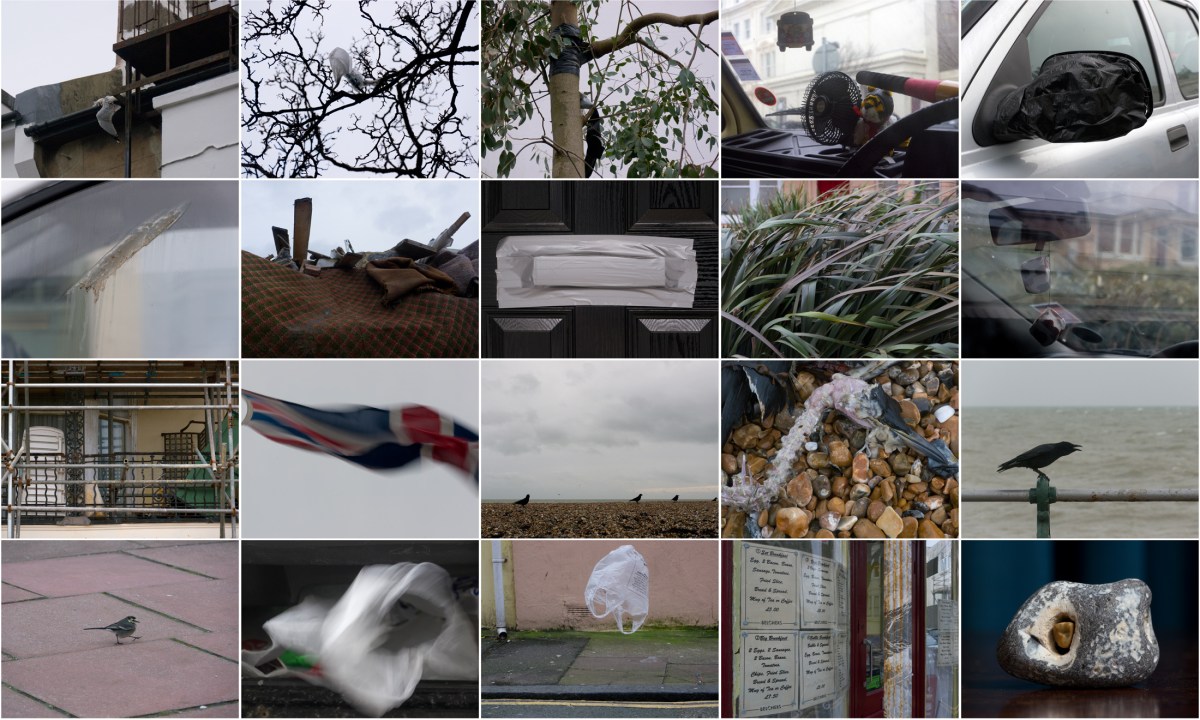
In ancient Greece, followers of Pythagoras were expressly prohibited from eating beans. This was actually quite a sensible proscription if you consider that, in the ancient Greek language the word πνευμα (pneuma) means not only ‘wind’ (hence pneumatic: inflated, or pneumonia: πνευμονία) but also ‘soul’, which meaning still survives today as a linguistic metaphor, as in: ‘breath of life’, and the rather quaint custom of saying ‘bless you’ to someone who has just sneezed.
While the real purpose of this blessing is now ambiguous, it stems from the European belief that the soul is expelled from the body when sneezing and that, variously, the devil might either steal away your soul while in this homeless state, or, conversely, that our temporarily vacant bodies could become occupied by the devil in our absence. Incidentally, Judith, one of the canteen ladies where I work, told me off recently when I thanked her for her answering benediction, telling me that to express gratitude in this particular instance would negate the response.
As above, so below, as the saying goes. I’m not sure if Brussels sprouts were known to the Pythagoreans but if they were, I suspect they would have been forbidden too.
Language can be a tricky thing.
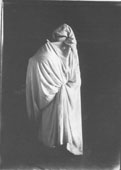
Gaétan Henri Alfred Edouard Léon Marie Gatian de Clérambault was a French psychiatrist who, while perhaps less widely known than other practitioners working in the earlier part of the 20th century, was not without influence. He ‘introduced the term ‘psychological (mental) automatism’ and suggested that the mechanism of ‘mental automatism’ might be responsible for ‘hallucination experiences’’(1). He also defined the condition which became known as De Clérambault’s syndrome (aka erotomania) in which sufferers come to believe they are the object of desire for a person, usually famous or high-status, who they have usually had little or no contact with. ‘During an erotomanic episode, the patient believes that a secret admirer is declaring their affection to the patient, often by special glances, signals, telepathy, or messages through the media. Usually the patient then returns the perceived affection by means of letters, phone calls, gifts, and visits to the unwitting recipient. Even though these advances are unexpected and often unwanted, any denial of affection by the object of this delusional love is dismissed by the patient as a ploy to conceal the forbidden love from the rest of the world'(2). Jacques Lacan regarded de Clérambault as his ‘only master in psychiatry.’
In addition to his work as a psychiatrist, de Clérambault was also an accomplished artist – for a while teaching classes on the art of the draped costume at the École nationale supérieure des Beaux-Arts in Paris – and an obsessive photographer. Between 1914 and 1918 he produced over 30,000 photographs, some of which formed part of a research project on the symptoms of hysteria, but also a sizeable body of work portraying Moroccan women under the veil. In these photographs, all of the female subjects are so elaborately and completely concealed from head to toe by swags of cloth, that it is difficult to tell that there is a human being, let alone a woman, under these garments. Yet at the same time these enigmatic and spectral figures seem to possess a quality that is both predatory and erotic.
All artists project their desires onto their surroundings. Perhaps the same is true of psychiatrists, or indeed anyone seeking to further our own (or maybe just their) abilities to make sense of the world. What interests me most about de Clérambault is the conjunction between his psychiatric practice and his private compulsion to record this singular subject.
(1) Vladimir Lerner, British Journal of Psychiatry http://bjp.rcpsych.org/content/197/5/371.short
(2) Anderson CA, Camp J, Filley CM (1998). “Erotomania after aneurysmal subarachnoid hemorrhage: case report and literature review”. J Neuropsychiatry Clin Neurosci 10 (3): 330–7

If, on a winter’s day when the wind is up, you find yourself in search of something, but not entirely sure what that something is, go and find a copse of young deciduous trees. It is important that they are growing close together; a small thicket of self-set saplings is best, of a kind you’d find in unmanaged woodland or derelict lots.
Then press your ear against one of the trunks, and wait, and listen.

What I can name cannot really prick me. The incapacity to name is a good symptom of disturbance.
Roland Barthes, Camera Lucida
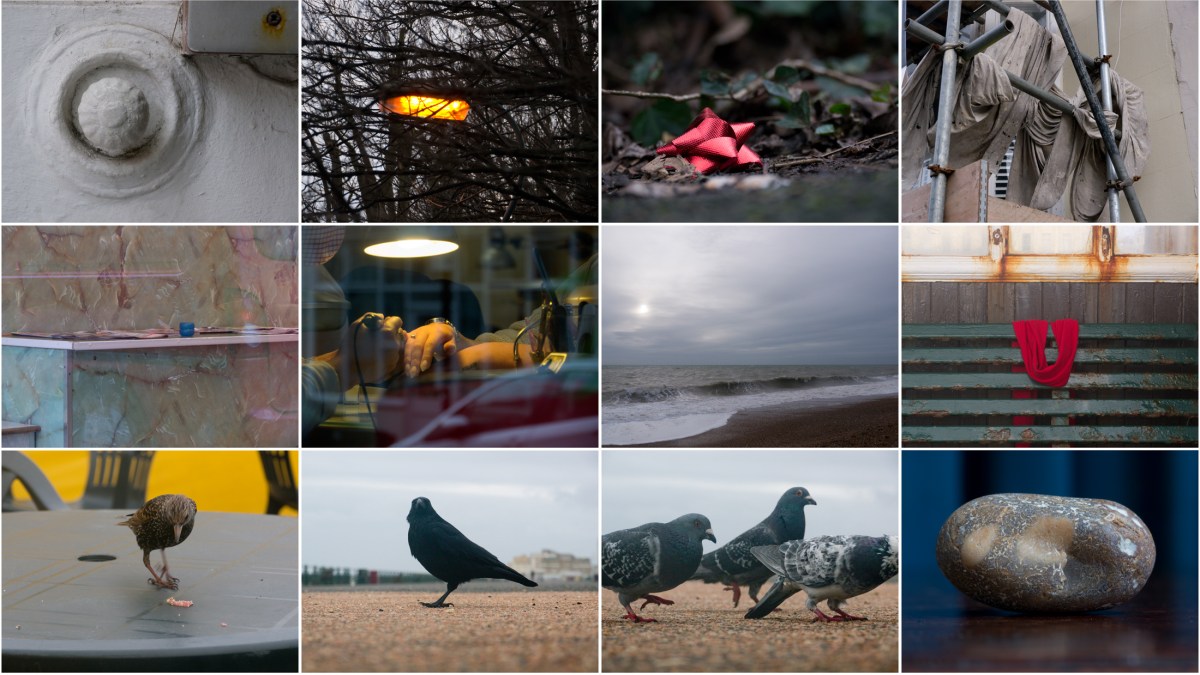
I first noticed it a couple of months ago. There would be the usual gulls, pigeons and crows hanging around the café, and then there was this one starling. Given its diminutive size in relation to the other birds I had to admire its tenacity in staking out the place as it’s territory. Indeed I was also curious: Do starlings actually have territories? Aren’t they flock birds? This one clearly hangs out alone and I am still wondering why: Fiercely independent innovator? Lazy opportunist? Anti social? Or just a runt who, fed up with being at the bottom of the pecking order, decided to clear out? At the end of the summer while the café was still busy and the weather mild enough for the scraps bin to be left outside, it’d dart in and out of it like a humming bird while the less agile pigeons looked on in jealous bemusement. Now in the middle of winter, and punters (and therefore scraps) are thin on the ground, it just perches on top of the wind break waiting patiently for plates too clean for the other birds to bother with, but still yielding enough for its tiny needs. Sometimes it’ll wait so patiently by a diner yet to finish their plate of chips that they can’t resist pushing a few crumbs across the table.
A few weeks ago it flew down and perched on the back of the chair next to mine while I was drinking some tea. It could see there wasn’t any food, but since no one else was around it just stayed there. After a while it began to sing. Starlings have the most extraordinary song, something like a cross between a budgie and radio static, full of pops, whistles and slow descending whoops. I was entranced. In a break in its song, I tried, badly, to imitate it, but it seemed close enough for the bird to recognise the effort. It whistled 2 peeps, one high, one low, and looked at me. I managed to mimic this as a response and after a pause it did it again. So, so did I… This went on for a while, until another customer turned up with a plate of food and it was off.
Yesterday I had some chips at the café. I whistled the two peeps and the starling turned up on queue (to be honest, I think I ordered the chips in the hope it would). So I broke one chip up into tiny pieces and placed these on the opposite side of the table to me. It darted across the table, its claws skittering on the plastic surface, retrieved the crumbs one at a time, skidding and flying back to its perch while finishing each beak-full. Once the chip pieces had gone it sang again. Once again I was entranced.
Today I made it a packed lunch out of a thin slice of salami chopped into bits the size of small garden worms, plus some crumbs from a seeded loaf of bread, and dropped the bits into an old plastic film pot. The wind hit me as soon as I neared the sea front and I could hear the waves booming in the distance. I wondered if it was going to be just too wild, but nevertheless I peeped twice and there it was again. The breadcrumbs were ignored but the salami went down singing hymns (and it bloody well should, my favourite saussison sec avec herbes de provence).
Why does this make me so happy? I don’t know, I don’t really care.
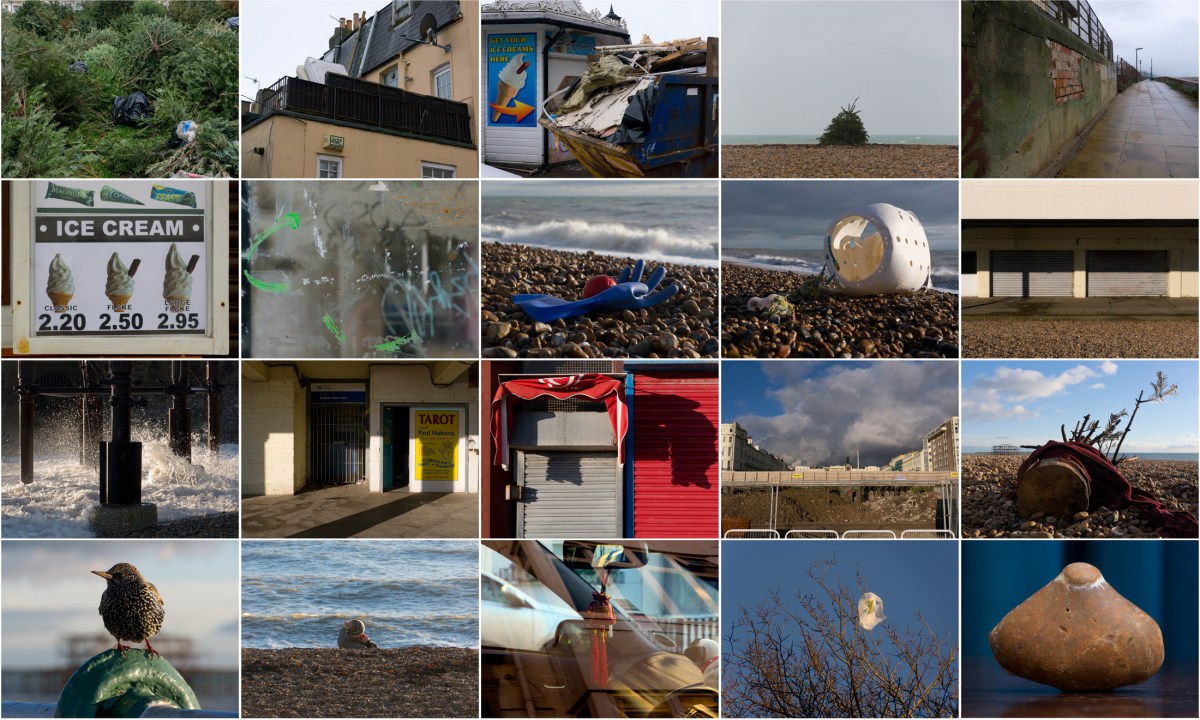
If you took all the abandoned Christmas trees in Brighton and laid them end to end they wouldn’t spell out the word ‘floccinaucinihilipilification’.
 Umbrellage