Love is in the air – Thurs 5th Feb

Valentines day may have been named after St Valentine (or rather, one of at least two of them, no-one knows which one) or at least renamed after a St Valentine as an attempt to Christanize the pre-existing pagan fertility festival of Lupercalia, in which young men whipped the buttocks of young women in an attempt to improve their fertility (any excuse) but the original purpose of it was to mark the day at the end of the winter period where you would allow your pigeons to start mating.

Pigeons can, given the right conditions, reproduce all year, but the scarceness of food in the winter means their chicks are less likely to survive – not such a good idea if you’re living in a subsistence community such as England in the dark and middle ages, and relying on pretty much anything as a food supply. Apparently getting pigeons to start breeding around this time of year also means that, when their young start flying there are less hawks around. Oh, and, in more northern climes the increase in sunlight during February leads to a corresponding increase in gonadal activity in birds…

Ah, romance!

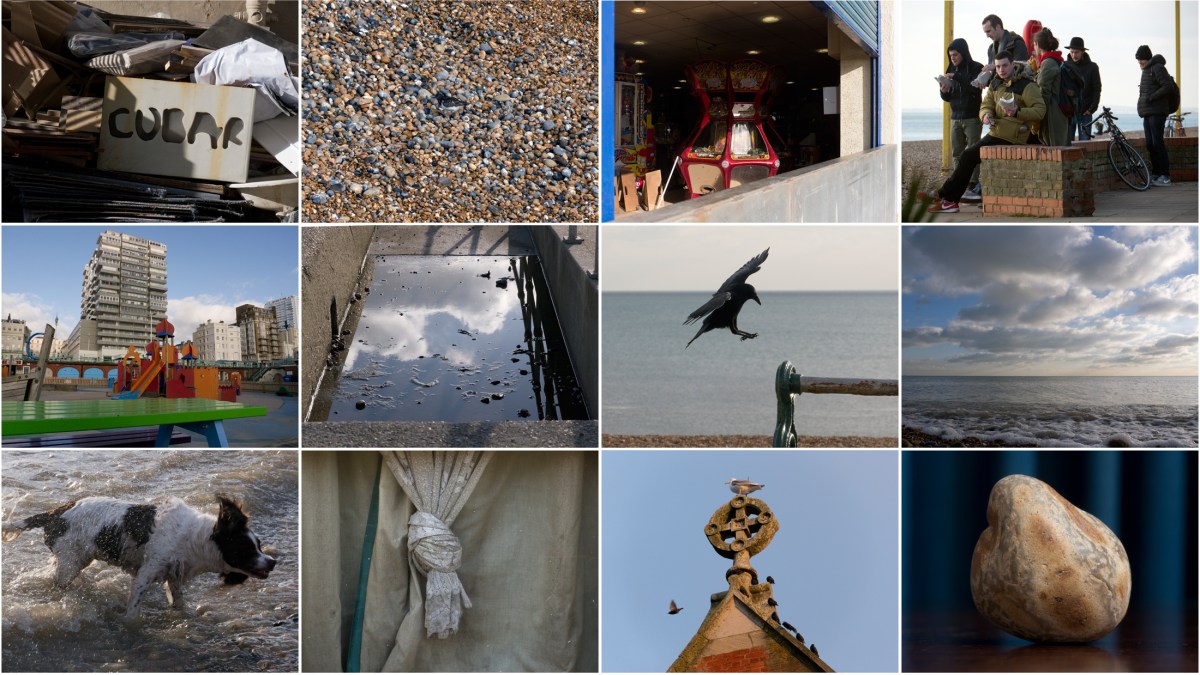
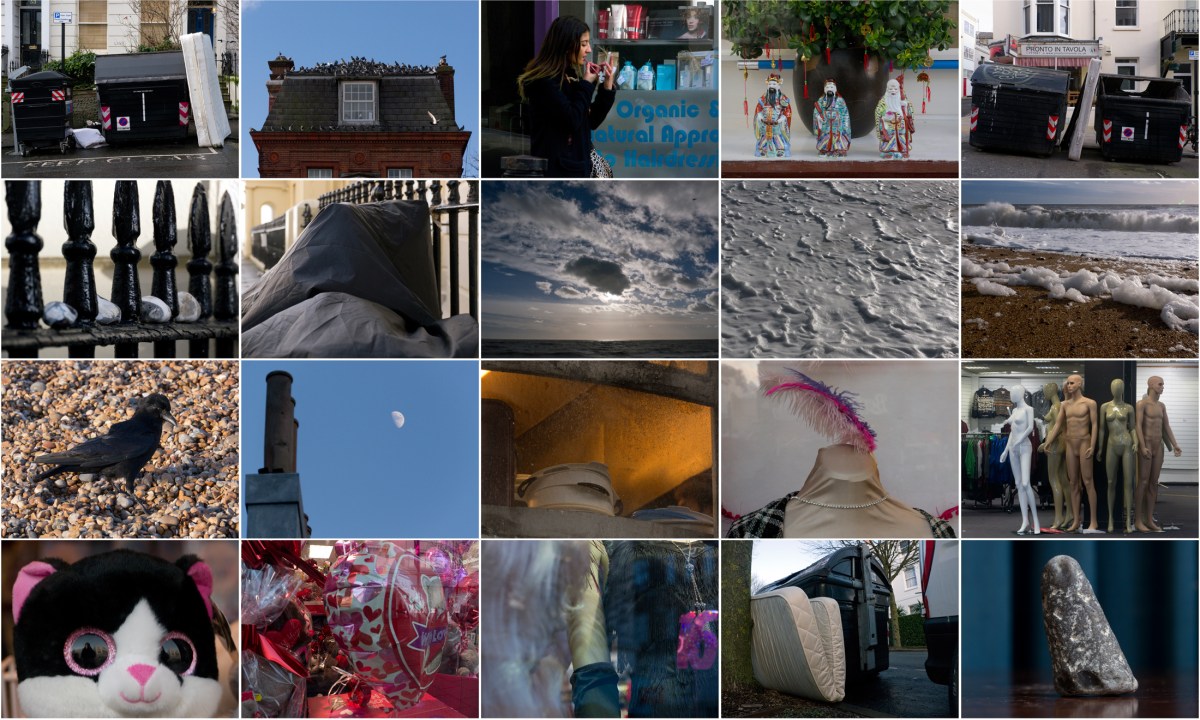
Anyway, as mentioned in a previous post (Springs – Weds 28th Jan) there’s definitely a lot more goings on in the bird world of late. I was reminded of this today when I walked past a tree so filled with pigeons I thought it was about to burst into bloom (either that or they’ve been watching Hitchcock movies through someone’s window).

Here are two lines from Chaucer’s ‘The Parliament of Fowls’ (written sometime around 1382). This is the A. S. Kline 2007 translation:

‘For this was on Saint Valentine’s day,
When every fowl comes there his mate to take’

And again in Chaucer’s original language:

‘For this was on Seynt Valentynes day,
Whan every foul cometh ther to chese his make’

I reckon that clinches it.

Watch out for my forthcoming Valentines special, with a top ten list of things to say to your beloved to entice him or her to go out for that special meal with you…

Chorus – Weds 4th Feb

Back at the café again; so is the starling, perching on top of a windbreak pole and singing his heart out. Another complex song varying from pops and crackles to budgie sounds to a two-part call containing one ascending, and then one very long descending note, not quite a wolf-whistle, but close enough, actually rather better. No scaffolder could be that tuneful, or suggestive. I try this part of the song. The starling gives me a look. He keeps on singing. I try it again. After a while he does it back.

And there’s this crow watching us, looking really intent. I try it again and then, honest, cross my heart, I hear this two-part squawk returned; one ascending, one long descending, well, ‘note’ isn’t exactly the word as it sounds like its coming from a domestic gravel crusher but I know it’s the same tune so I try it again for the benefit of the crow and it returns the call again, several times over while becoming more and more animated, first shifting its weight from one leg to another and then adding a bit of a knees-bend so it seems to be doing something like the okey-cokey on a pogo stick.

The starling flies off. I suppose its bad enough having your best tune murdered by a great lump of a human without some bloody crow joining in too, but me and the crow are dead pleased with ourselves.

Mass observation – Mon 2nd Feb

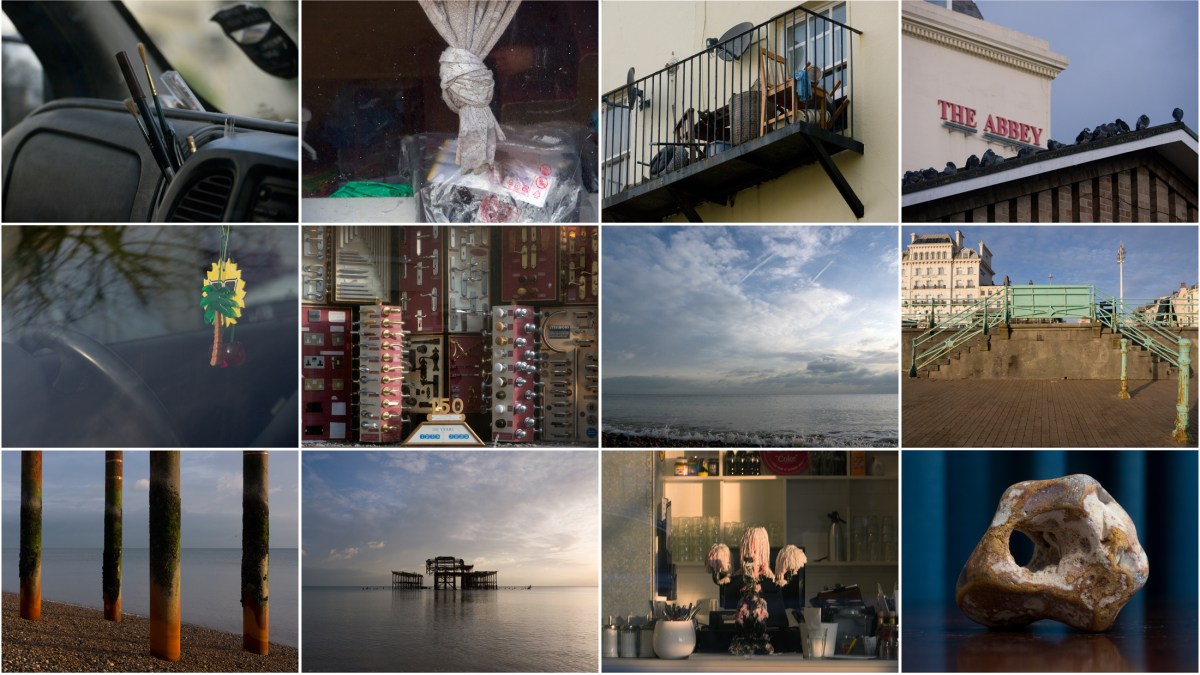
Yesterdays contact sheet felt incomplete (hence I’m writing a day late). Nevertheless I wanted to get something out because I was so pleased with the sparrow shot, but none of the other photos seemed to work together; they needed something else. I ended up running out of time before quiz night (oh yes!) and decided I’d sort it once I got home or just post the sparrow on its own. This turned out to be lucky because within minutes of arriving at the pub, I get a text from Tony saying, rather gnomically, ‘look at the moon’. If you get a message from someone saying something like that, you just have to obey, so, end of round one, off I trot outside and my god, he’s right: the most fantastic frost halo. Huge too.

So I then drag everyone else in my team out into the street, some less willing than others, but all agree it’s breathtaking. Liz takes a pic on her phone where you can just see it. Even the smartass team on the next table go out and have a look (I’m delighted that one of their number comes back inside a few minutes later and asks me what he was supposed to be looking at – ha! – one question you haven’t got the answer for eh?). So when the quiz and drinks are finished (we were only three points off winning this week. Team smartass won again, dammit…) on the way home I’m having a longer look at the moon and realise that it’s the last image I need for the contact sheet. Its bloody freezing out and I’m really struggling with the idea of staying in to have a cup of tea before venturing forth again but I know the moon is on the move and will disappear round the corner if I don’t do something now, so, find the tripod and the really wide angle lens, and head back downstairs.

Of course, this being Brighton, I open the front door only to trip over someone else, literally on my doorstep, with a camera and tripod. His friend has just facebooked the news and it’s a bit of a challenge for him now, especially after the lightning last summer. We chat a bit more and he heads off for the beach because he thinks he can get a better shot. Apparently his girlfriend is in the shower; this piece of information is somehow significant. I stay put because I reckon I can make the trees work for the image. I’m also wondering how long his girlfriend showers for. It’ll take him at least half an hour to get to the beach and back, probably a lot longer once he’s set up the camera and taken the pictures. Does he often just disappear while she’s having a wash?

.sparrow flight 2-2-15 (click for a bigger image)

Bored room – Sat 31st Jan

I seem to have been put on someone’s mail list as a manager, and regularly get emails inviting me to different corporate training weekends, focus groups, sandpit sessions, conferences, consultations, and other events larded with the latest jargon. All of these go straight into the trash file. Well, all except this one, which I append for your delight:

As every dog owner knows, it takes a lot of time and patience to train a dog–whether she’s a puppy or an adult dog learning new behaviors. 1000 Best Dog Training Secrets is packed full of useful training tips for new and seasoned dog owners from two experts in the field.

The easy-to-follow advice covers everything from basic skills to socialization, obedience training, manners, tricks and more. ‘X’ and ‘Y’, owners and operators of ‘Z’ Training and Education school in N.E. offer insight into handling dogs at all stages of development from brand new puppy to geriatric, so it’s never too late to get started.

You will learn about:

  • Establishing leadership
  • Socialization–learning from human leaders
  • Obedience training
  • Developing life skills
  • Teaching manners
  • Dog etiquette
  • Behavior problem prevention and solutions
  • Toys, games and leisure activities

Given that the above content is so similar to all the other emails I receive, I suspect that ‘dog’ is the latest euphemism for employee.

(names removed out of courtesy to the owners)

Collected stones. Dec 2014 – Jan 2015

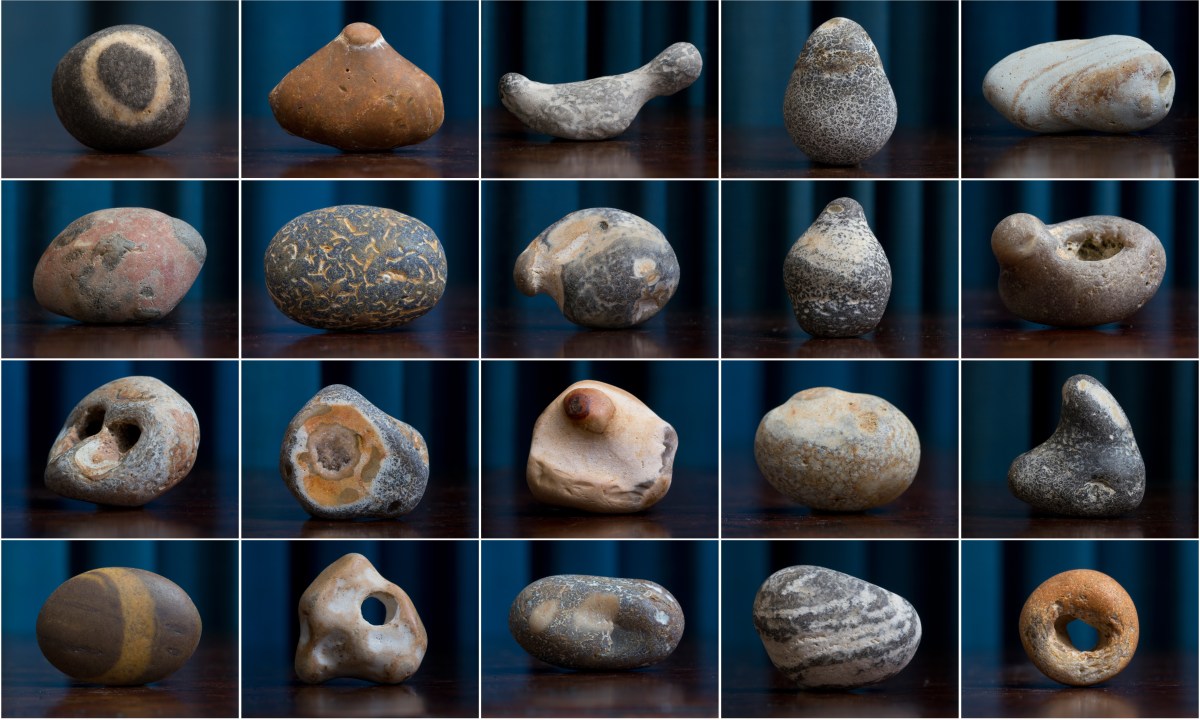
Here’s another page of stones. There are now four in all, collected from ones I’ve found since beginning this exploration. You can find the others if you click the 3 bars icon at the head of the page, after which click ‘stone of the day’.

3 bars

And here to introduce these latest treasures, are the opening lines from Roger Caillois’s book, ‘The Writing of Stones’ first published in 1913:

Just as men have always sought after precious stones, so they have always prized curious ones, those that catch the attention through some anomaly of form, some suggestive oddity of colour or pattern. This fascination almost always derives from a surprising resemblance that is at once improbable and natural. Stones possess a kind of gravitas, something ultimate and unchanging, something that will never perish or else has already done so. They attract through an intrinsic, infallible, immediate beauty, answerable to no one, necessarily perfect yet excluding the idea of perfection in order to exclude approximation, error and access. This spontaneous beauty thus precedes and goes beyond the actual notion of beauty, of which it is at once the promise and the foundation.

For a stone represents an obvious achievement, yet one arrived at without invention, skill, industry, or anything else that would make it a work in the human sense of the word, much less a work of art. The work comes later, as does art; but the far-off roots and hidden models of both lie in the obscure yet irresistible suggestions in nature.

(Translated by Barbara Brey, University Press of Virginia, Charlottesville)

Springs – Weds 28th Jan

Something’s stirring in the bird world of late. There’s been more than the usual to-ing and fro-ing, hopping and bobbing, and some very interesting sounds I’m not going to demean by reducing them to a simple tweet. On Monday I saw four magpies who were most definitely cavorting. The starling at the café seems to be developing a far more brilliant coat than the speckled brown plumage he’s had on all winter. The seagulls are even noisier than ever. Even one of the crows (who, as a species, seem, on the whole, immune to any behaviour beyond the utilitarian) has been practising his (her? probably his) repertoire of croaks on one of the commonly perched-upon railings nearby, or as he struts the beach looking for tidbits.

As a human corollary to this, in the center of town, heart shaped balloonoids (they aren’t proper balloons because they are made out of that crinkly stuff, heat sealed at the joins) bedecked with extravagant and unsupportable assertions like ‘I will love you forever’ float in card shop windows, accompanied by an army of fluffy bears, bunnies, meerkats, and things with big round eyes I can’t find a name for, embroidered with similar slogans.

But this is not the main reason for today’s posting. What I really want to know is why this week everyone also seems to be throwing out their old mattresses? I found three today, and several others over the past few journeys. Is this phenomenon linked to human courtship rituals? Is this where I have been going wrong?

Babel – Tues 27th Jan

As with every language, French has a variety of words for verbal communication. Three that have become important to linguistic theory and psychoanalysis over the last century, particularly as they have been defined and to some extent redefined by Saussure and Lacan, are ‘Langue’, ‘Langage’ and ‘Parole’. Saussure writes:

‘But what is language [langue]? It is not to be confused with human speech [langage], of which it is only a definite part, though certainly an essential one. It is both a social product of the faculty of speech and a collection of necessary conventions that have been adopted by a social body to permit individuals to exercise that faculty. Taken as a whole, speech is many-sided and heterogeneous; straddling several areas simultaneously-physical, physiological, and psychological – it belongs both to the individual and to society; we cannot put it into any category of human facts, for we cannot discover its unity.’ (1)

And a few pages later:

‘Among all the individuals that are linked together by speech, some sort of average will be set up: all will reproduce – not exactly of course, but approximately – the same signs united with the same concepts. How does the social crystallization of language come about? Which parts of the circuit are involved? For all parts probably do not participate equally in it.
The non-psychological part can be rejected from the outset. When we hear people speaking a language that we do not know, we perceive the sounds but remain outside the social fact because we do not understand them. Neither is the psychological part of the circuit wholly responsible: the executive side is missing, for execution is never carried out by the collectivity. Execution is always individual, and the individual is always its master: I shall call the executive side speaking [parole].’ (2)

Elsewhere, regarding Lacan’s ideas:

‘Lacan takes up Saussure’s theory that language is a structure composed of differential elements, but whereas Saussure had stated this of langue, Lacan states it of langage.
Langage becomes, for Lacan, the single paradigm of all structures.
Lacan then proceeds to criticize the Saussurean concept of language, arguing that the basic unit of language is not the sign but the signifier.
Lacan then argues that the unconscious is, like language, a structure of signifiers, which also allows Lacan to formulate the category of the symbolic with greater precision.’ (3)

And:

‘The French term parole presents considerable difficulty to the English translator because it does not correspond to any one English word. In some contexts it corresponds to the English term “speech,” and in others is best translated as “word.” … Lacan’s use of the term parole owes little to Saussure – whose opposition between parole and langue is replaced in Lacan’s work with the opposition between parole and langage – and is far more determined by references to anthropology, theology, and metaphysics.’ (4)

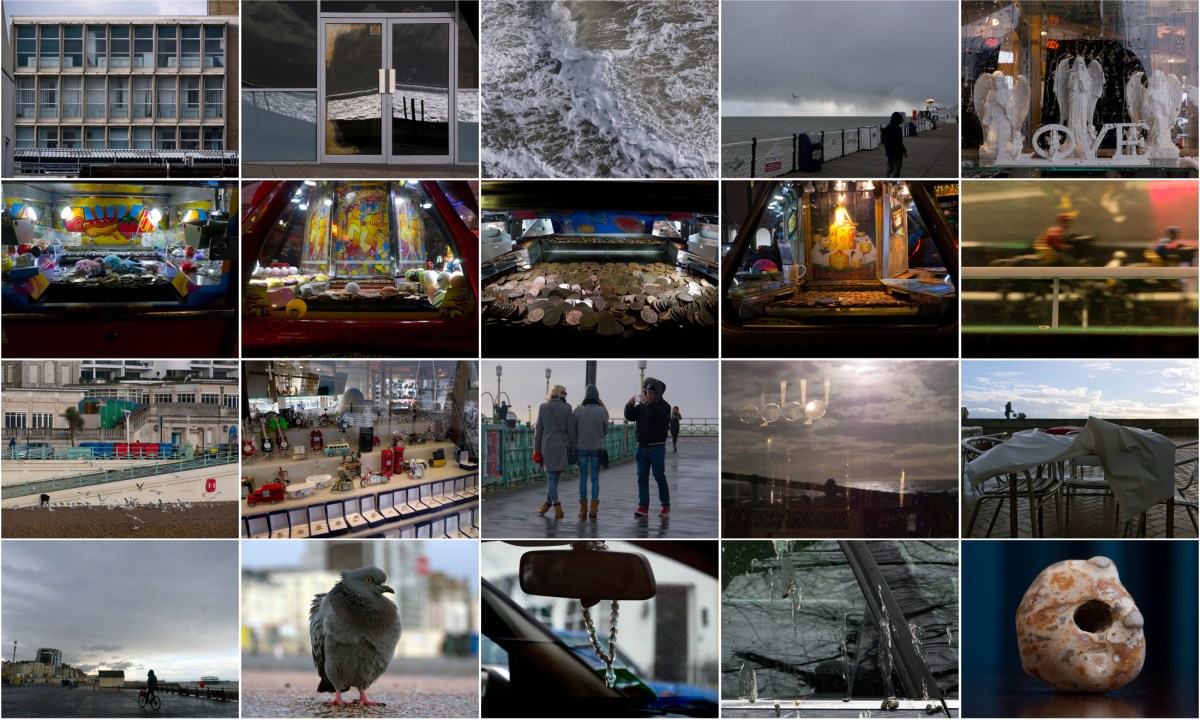
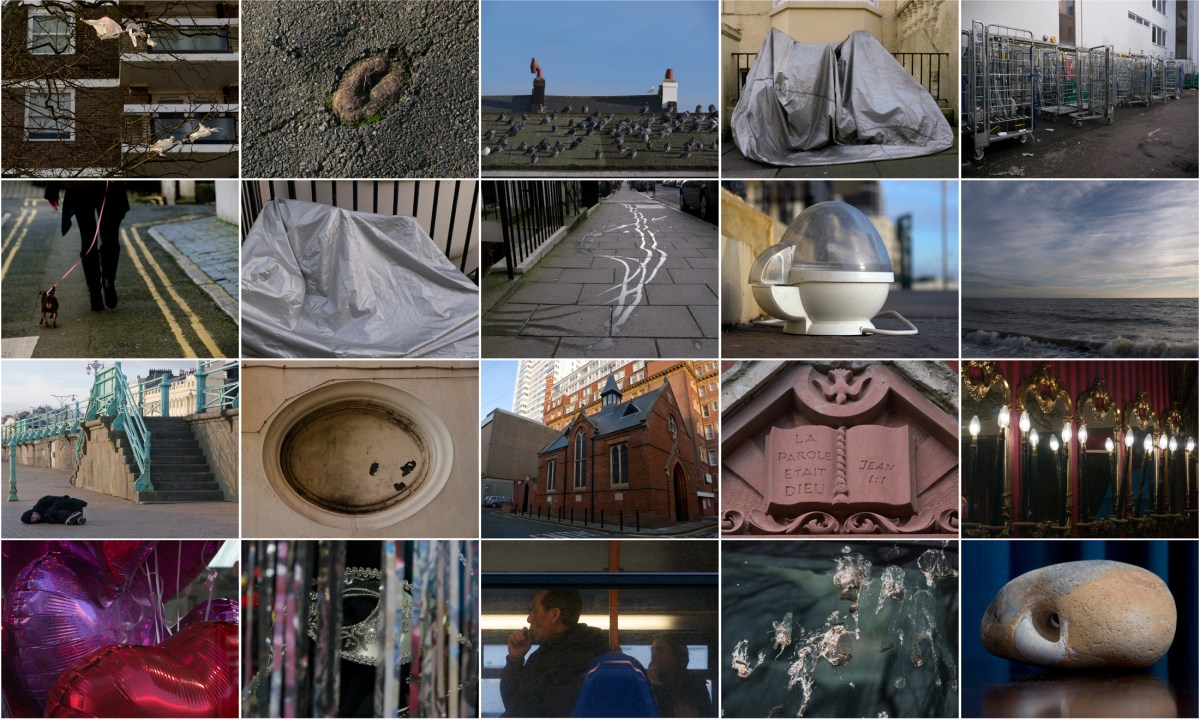
I was reminded of these ideas recently when I came upon a small French Protestant church tucked away behind the Metropole Hotel (despite having lived in Brighton for decades, I’m not sure I’ve ever seen this building before. How easily we take for granted the places we live, sticking to the most efficient routes while ignoring many others because they don’t seem to offer enough to warrant our time or attention). The church is tiny and as you can see from some of today’s pictures, made of brick, with terracotta ornamentation, including a sculpted book over the door, upon which the following legend is inscribed:

LA PAROLE ETAIT DIEU
JEAN 1:1

My French is rudimentary but I can remember enough (augmented by memories of religious studies at school and occasional attendance at church services) to be able to translate this to ‘The word was God’ and to spot that the ‘word’ used in this instance was (in French of course): Parole.

I see it as an advantage that, because English has no direct equivalent translation, this actually gives more scope for exploration in finding an equivalent. In English, we speak, we say; but also: we utter, pronounce, invoke, give voice, whisper, enunciate, deliver…

My understanding of the above arguments, is that for both Saussure and Lacan, ‘Parole’ is an intimate and intensely personal act, a way we reveal our innermost selves in our communications. And yet also (perhaps more for Lacan) because it is so personal, so loaded with private associations and history, it is, to some extent, always unknowable.

This simple phrase in the first verse of the gospel according to John, re-translated via French, now becomes so much more complex, more pregnant.

And, of course, the French version would have been translated from a Latin or Greek text, and the original manuscript by John, was probably written in Greek but could have been Aramaic or Hebrew, and would certainly have owed much to far earlier Hebrew, or Assyrian or Babylonian creation legends (these languages possibly even owing something to early Sanskrit, a language considered by some ancient chroniclers to be so perfect that to utter a name using that tongue, would be to bring the thing it signifies into existence). And how would the notion of ‘the word’ of speech as an intimate act have been understood, and used then, so long ago?

In the beginning was the Word, and the Word was with God, and the Word was God. (5)

Notes
1. ‘Course in General Linguistics’ Ferdinand de Saussure. Edited by Charles Bally and Albert Sechehaye In collaboration with Albert Riedlinger. Translated by Wade Baskin. McGraw-Hill Book Company, New York, Toronto, London. p9
2. Ibid. p13
3. ‘Encyclopedia of Lacanian Psychoanalysis’ http://nosubject.com/index.php?title=Language
4. Ibid. http://nosubject.com/index.php?title=Speech
5. ‘John 1:1’ (King James version)