Vernal Equinox – Fri 20th March

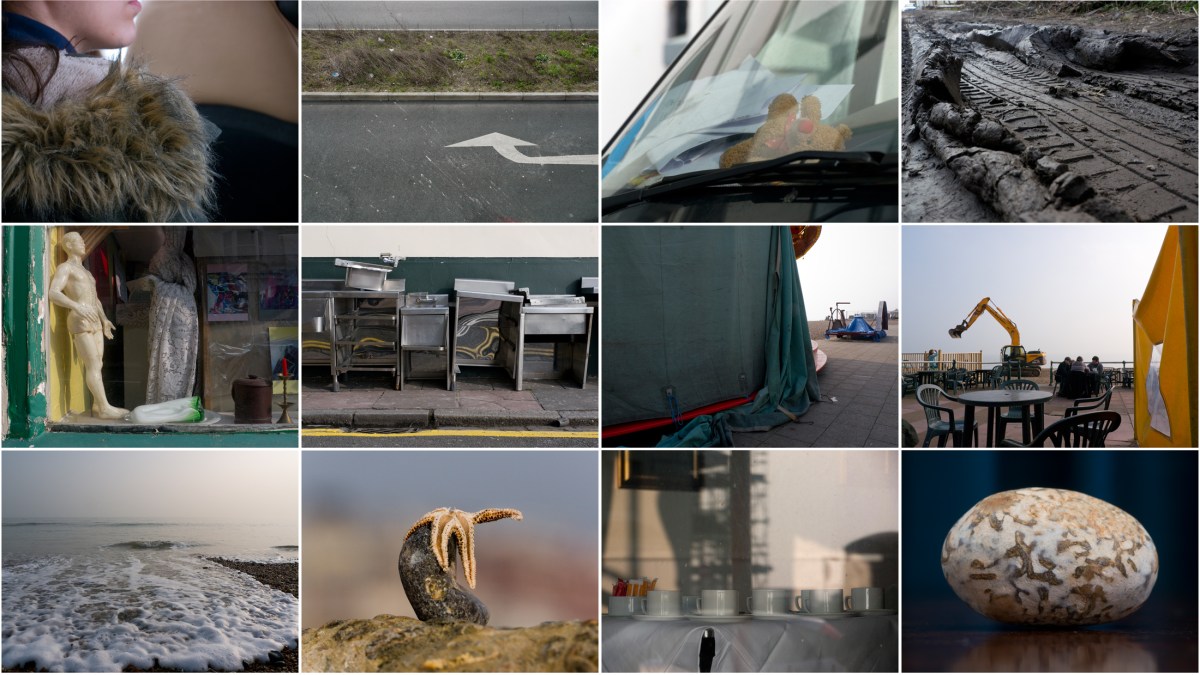
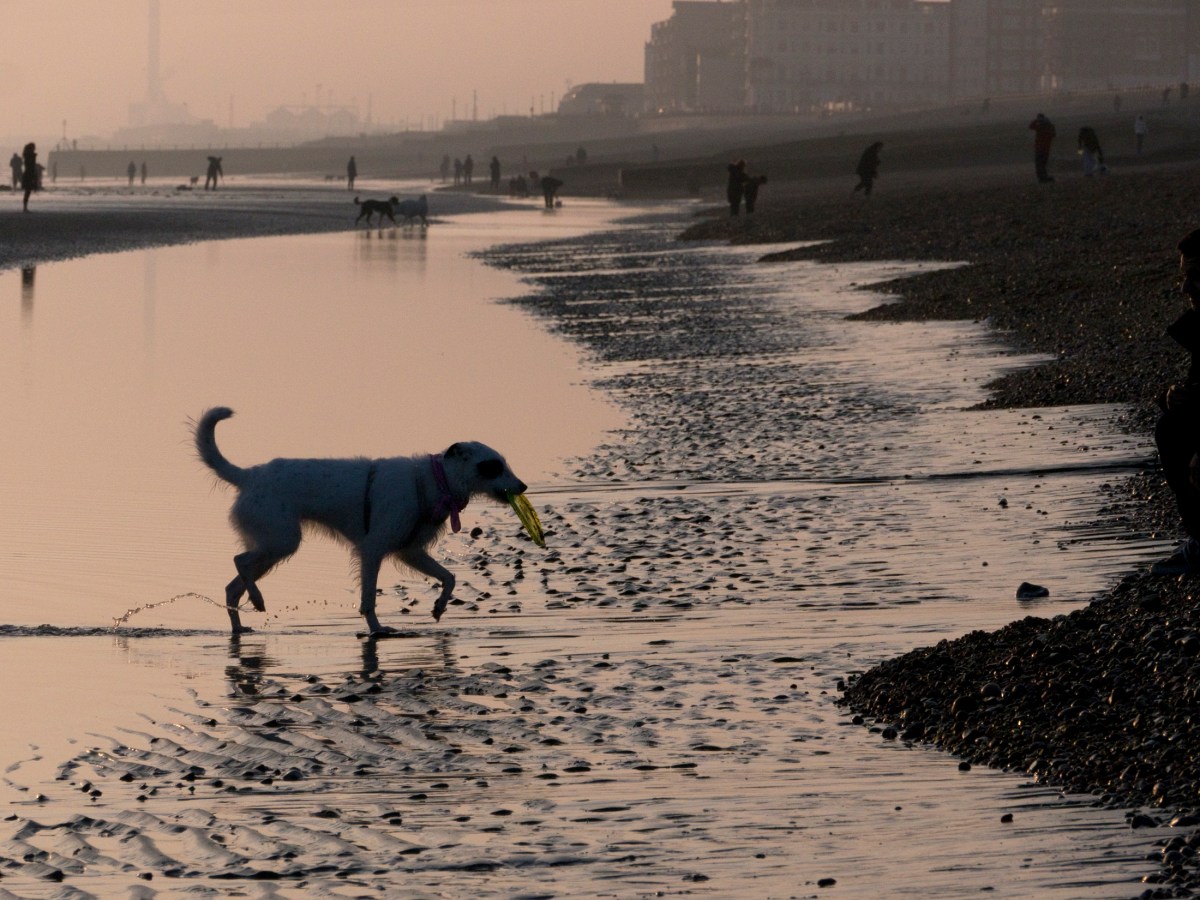
I had planned a special edition today to mark the solar eclipse, and indeed had written something witty about the great British experience of remarkable astronomical phenomena (i.e. its always bloody cloudy and you miss everything) but I’ve now decided that’s a dumb idea. This blog is about discovering the extraordinary within the everyday, not what you miss out on. So, instead, I just want to say that I’ve never seen a tide as low as the one this evening. Maybe it was because today was also the vernal equinox and, unusually, was also a very calm evening.

I wasn’t alone in this delight and as the sun set the beach was populated with a hundred dog walkers and people just out for a stroll, all discovering the joy of splashing along the sand we never knew we had in Brighton, while the tiniest of waves lapped in the distance like lace in a breeze. It doesn’t get much better than that.

Fruits de Mer – Thurs 19th March

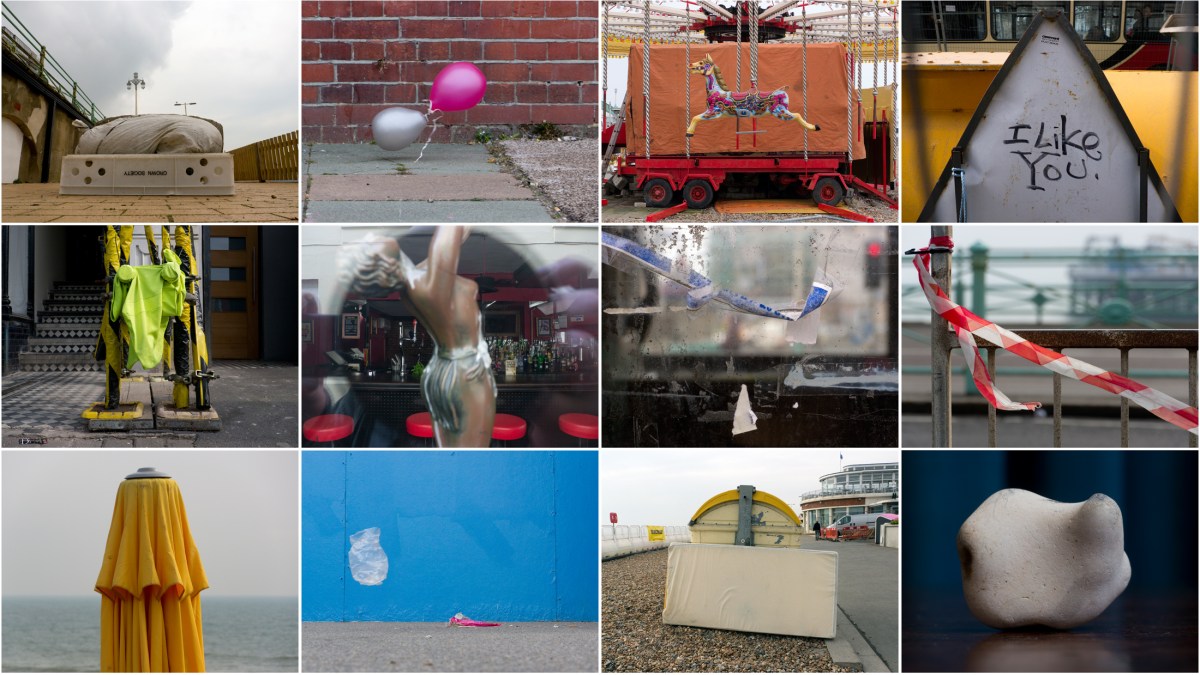
Seafood seems to be on the menu in the bird world at the moment. Today I came across the second seagull in a week eating a starfish (yes that’s a starfish in the picture not, as on normal occasions, a gullet-full of chips). This looks quite charming, the pretty star shape held in the beak of this snowy white seaside icon, until you realise that the hapless echinoderm is probably still alive.

And then there is the additional dietary supplement of whelks. These, being heavily armoured, create something of a problem for both seagulls and crows alike. How do you get at them when they are in their shells? The answer seems to be to fly to a great height and drop them so the shells shatter when they hit the ground, then swoop down to pick through the broken pieces.

Of course doing so means that, for a few seconds, the whelk is not in your possession, meaning some other bird nearer the ground could nip in and steal these tasty morcels. Indeed this is a favourite strategy among those of a lazier, or smarter, persuasion and I have seen numerous fights break out over ownership. I had thought that this is how crows get hold of these shellfish. They certainly aren’t known for their swimming skills. But then a few weeks ago I was on the beach near the end of the day, to see the man from the whelk stall trundle across the pebbles with a huge plastic crate, which he then upturned unceremoniously, dumping a great mound of mollusc shells at the water’s edge.

At once there was a riot of flapping wings as both gulls and crows descended on this prize, first of all squabbling for the best bits, then drawing back, nonplussed, when they realised that most of the contents had been eaten. Nevertheless there were enough scraps left to warrant perseverance and I saw as many crows as gulls flying away with shells held in their beaks. It seems the crows have learned from the gulls what then to do with them. The crack when the shell hits the ground is quite distinct.

Now all I want to know is why there seem to be so few tourist injuries resulting from being hit from a great height by plummeting seashells? Is this luck, or is the tourist board hushing things up? After all Aeschylus the Ancient Greek tragedian suffered a similar fate when an eagle mistook his bald head for a rock and dropped a tortoise on him, killing him outright. Or maybe Brighton birds are smart enough to realise that killing tourists diminishes further possible food sources including bread, cake, kebabs, chips and the hot dogs I’ve mentioned in other posts?
Lost – Weds 18th March

‘The gentleman raised his eyes above his newspaper and looked curiously at Jemima–
“Madam, have you lost your way? ” said he. He had a long bushy tail which he was sitting upon, as the stump was somewhat damp.
Jemima thought him mighty civil and handsome. She explained that she had not lost her way, but that she was trying to find a convenient dry nesting-place.’

The Tale of Jemima Puddle-Duck
Beatrix Potter

The Land of Cockaigne – Sat 14th March

According to mediaeval myth, Cockaigne is a land of plenty, situated somewhere west of Spain. There the rivers are of milk and beer, pigs wander around ready roasted, it rains sweet pastries and cooked tarts, abbey walls are made of pies and pasties, and the nuns would best be described as naughty (yes, abbeys and nuns, but you should consider that the myth was at its height under this name during the middle ages when European society revolved around religious life, and the only people who were able to write, and therefore record this mythical land, were monks).

The myth survived beyond writing in several customs including the greasy pole game. It may also be that the song: Big Rock Candy Mountains, written in 1895 by the former street busker and hobo Harry McClintock, represents in lyrical form the remnants of this tradition. Here are two verses from the song, as recorded in 1928:

In the Big Rock Candy Mountains
All the cops have wooden legs
And the bulldogs all have rubber teeth
And the hens lay soft-boiled eggs
The farmers’ trees are full of fruit
And the barns are full of hay
Oh I’m bound to go
Where there ain’t no snow
Where the rain don’t fall
The winds don’t blow
In the Big Rock Candy Mountains.

In the Big Rock Candy Mountains
You never change your socks
And the little streams of alcohol
Come trickling down the rocks
The brakemen have to tip their hats
And the railway bulls are blind
There’s a lake of stew
And of whiskey too
You can paddle all around it
In a big canoe
In the Big Rock Candy Mountains

Apparently the recorded version was considerably cleaned up.

Art and Artifice – Fri 13th March

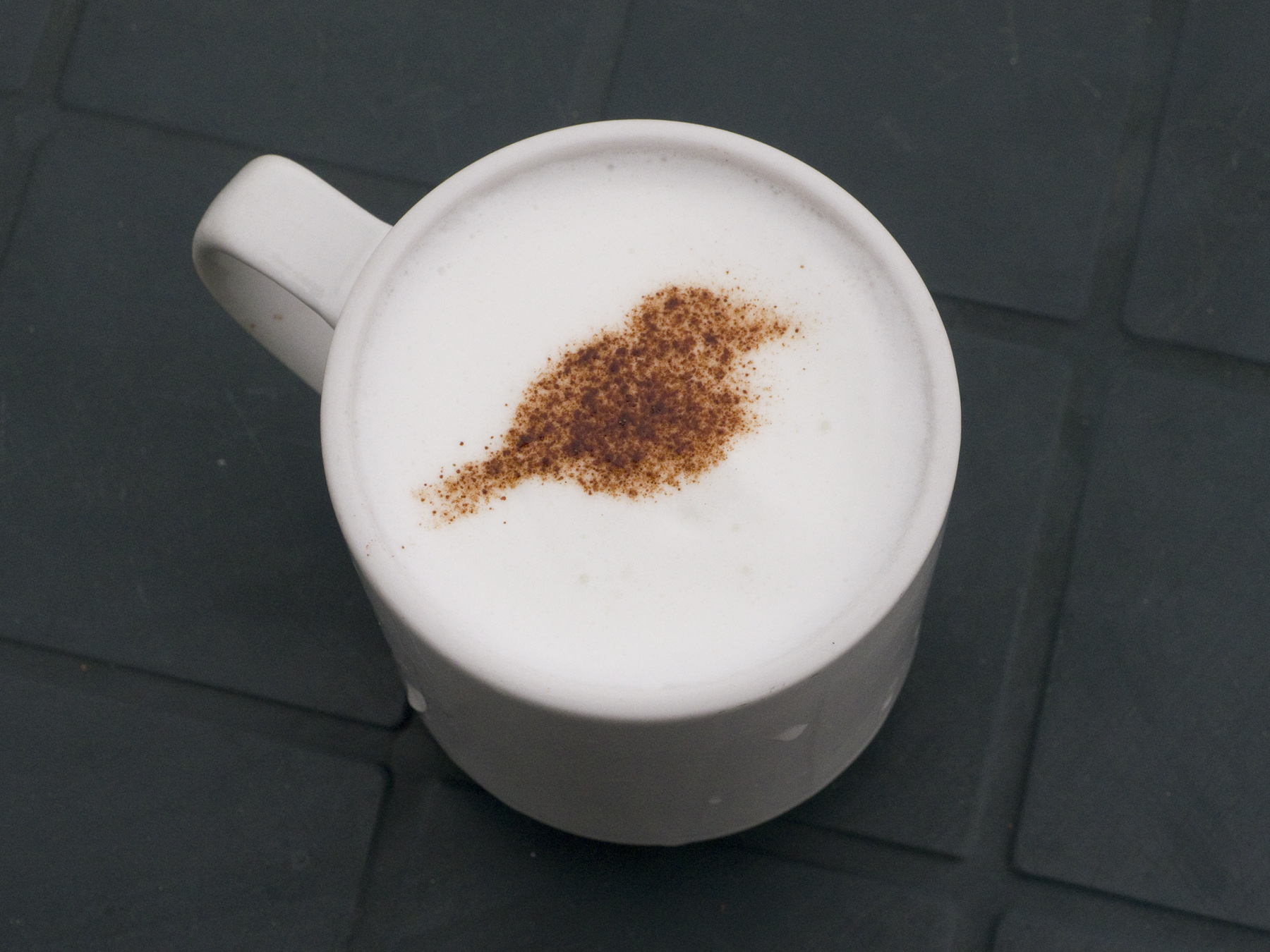
Alexandra and Barbora, the girls at the café, have been getting creative with their cappuccinos. The heart stencil is a test piece for an ambitious series of works using powdered chocolate on a frothed milk surface. Their plans for the future include a series on iconic European birds (we all miss the starling, but hope he’s now arrived safely at his summer destination on the Baltic coast; the crow family might be included too) and their most daring project: a suite of tableau in homage to Rubens’s Medici cycle, currently hanging in the Louvre, Paris. This latter series will require the purchase of several cappuccinos for the full effect, but they do a loyalty card so you get the last instalment free!

Update (15-3-15): Here is number one in the Iconic European Birds series. ‘The starling’ (winter coat puffed up against the cold):

_1290375adjcrp-sm

Passing by – Thurs 12th March

“In a distant and second-hand set of dimensions, in an astral plane that was never meant to fly, the curling star-mists waver and part…
See…
Great A’Tuin the turtle comes, swimming slowly through the interstellar gulf, hydrogen frost on his ponderous limbs, his huge and ancient shell pocked with meteor craters. Through sea-sized eyes that are crusted with rheum and asteroid dust He stares fixedly at the Destination.
In a brain bigger than a city, with geological slowness, He thinks only of the Weight.
Most of the weight is of course accounted for by Berilia, Tubul, Great T’Phon and Jerakeen, the four giant elephants upon whose broad and star-tanned shoulders the disc of the World rests, garlanded by the long waterfall at its vast circumference and domed by the baby-blue vault of Heaven.
Astropsychology has been, as yet, unable to establish what they think about.”

‘The Colour of Magic’
Terry Pratchett (28 April 1948 – 12 March 2015)

Stray

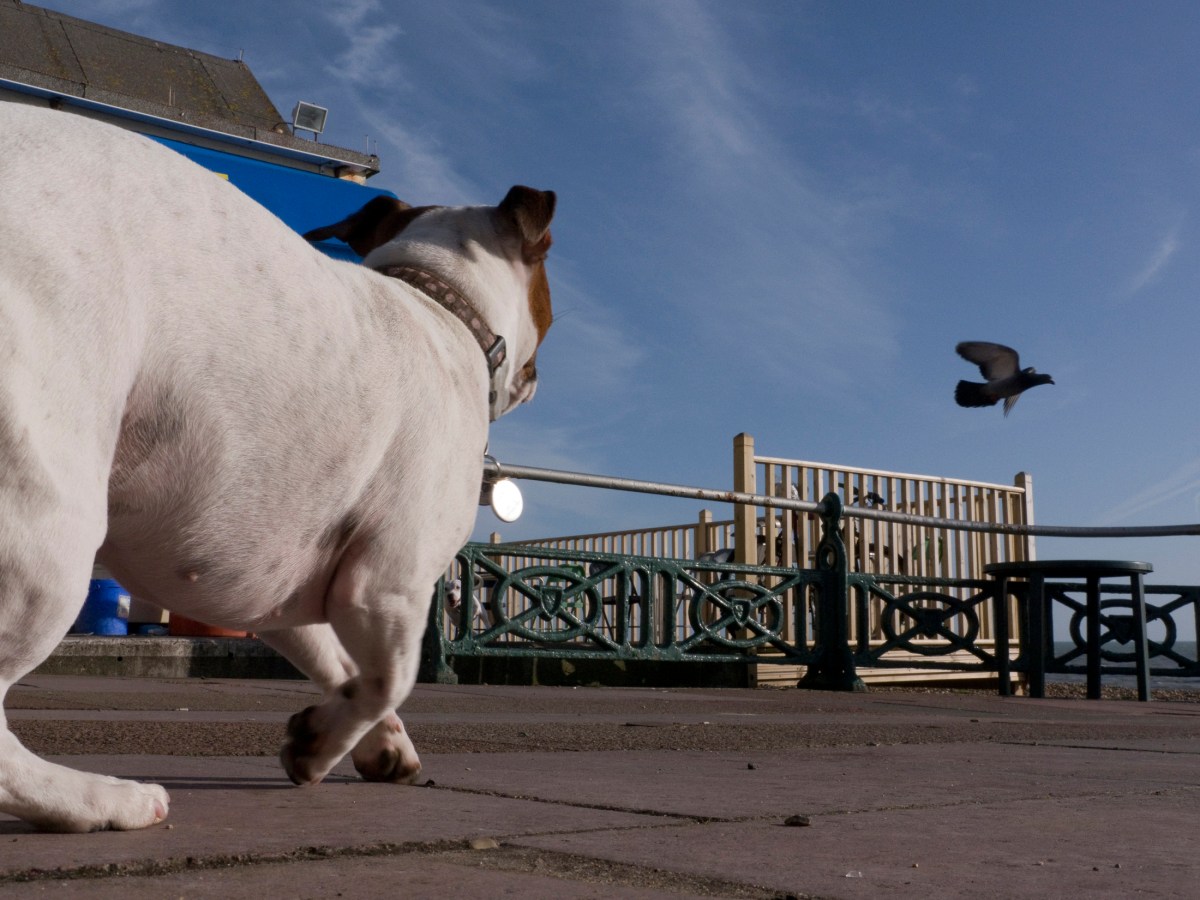
Actually I took this photograph a couple of weeks ago on a day when I was determined I wasn’t going to do a blog entry (but nevertheless still went out with the camera). I didn’t take much else that day, certainly not enough for the usual format of 12 or 20 images, but ever since then it’s sat there with unbearable and imploring patience, rather like a dog waiting for scraps, or a walk. So, I give in, here it is off its leash.

Surfacing – Tues 10th March

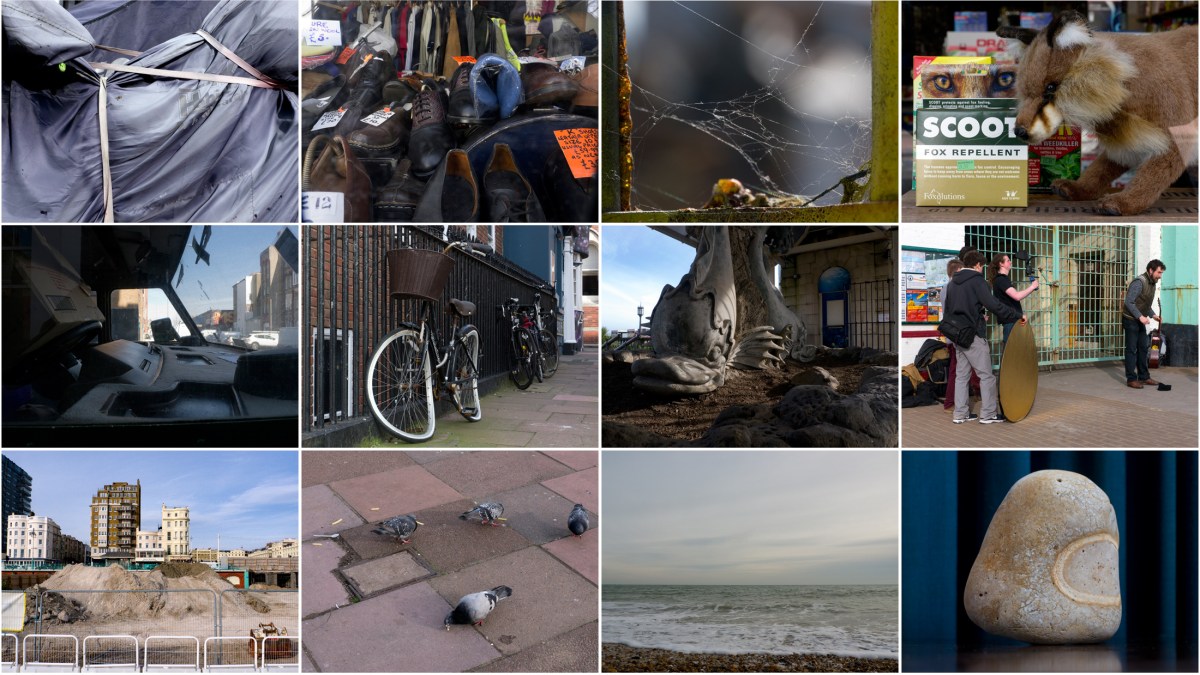
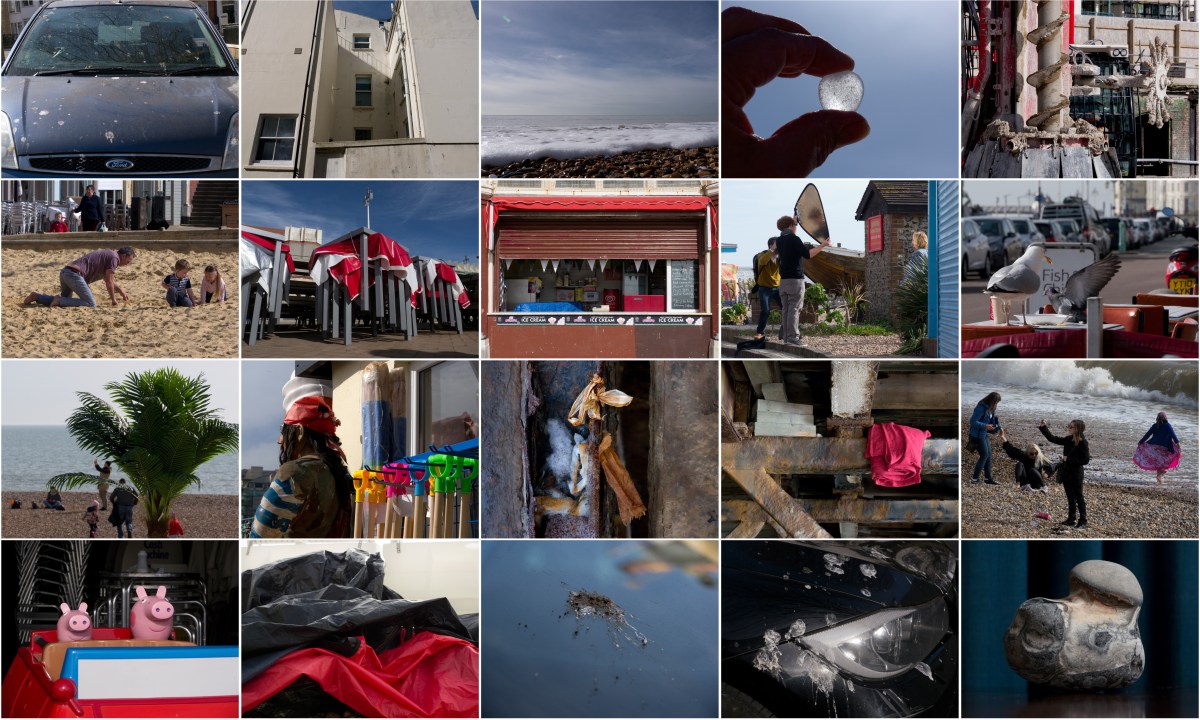
I’ve been searching the beach for interesting stones for a few months now, and I’m surprised that the glass pebble pictured in today’s contact sheet is the first I’ve come across. You used to be able to find these quite often, not only clear glass, but amber and green too, sometimes even blue. I suppose that since we now use so much plastic for bottles, the dwindling of this man-made shoreline phenomenon is inevitable though, given the number of bars and clubs along the sea front, this still surprises me.

I remember the last big open air Fatboy Slim gig on the shore, the one when the beach was so packed with people they themselves seemed like pebbles. And indeed, because no one had considered what would happen if you held an event on the beach that started at low tide, a quarter of a million party people moved like pebbles too, driven up the beach by the rising waters as the evening drew on.

I also remember that the next morning the beach was so strewn with broken bottles it glittered, bejewelled, as if some profligate sultan had abandoned all his riches to the sea. It took a long time before the beach was safe to walk on barefoot and many of the splinters, rather than being collected during the clean up operation, would have settled below the stones where they probably still are, some by now ground down to sand but maybe not all. Now I think about it, I’m even more surprised this is the first piece of glass I’ve found. Perhaps it’s a fragment of vodka bottle whose contents were downed on that infamous night?

But leaving aside these memories, only now surfacing as I write, finding this one has made me ponder further. It’s glass, and it’s definitely a pebble, because it’s been worn smooth and rounded through the continual grinding of the waves on the shore. That’s what pebbles are aren’t they – things rounded smooth by the sea? But it isn’t a stone is it? Stones are formed purely as a result of geological processes. And this is why I’m not photographing it in the usual manner like the others I’ve found, because it isn’t a stone, is it? But now I’m wondering, if the definition of pebble is something worn smooth by the action of the sea, can you have wooden pebbles? Plastic ones? Larger pieces of seashell seem to qualify if rounded enough, as do the occasional fragments of brick or concrete.

This is now really bothering me.

Fatboy Slim big beach boutique 2002