Stray

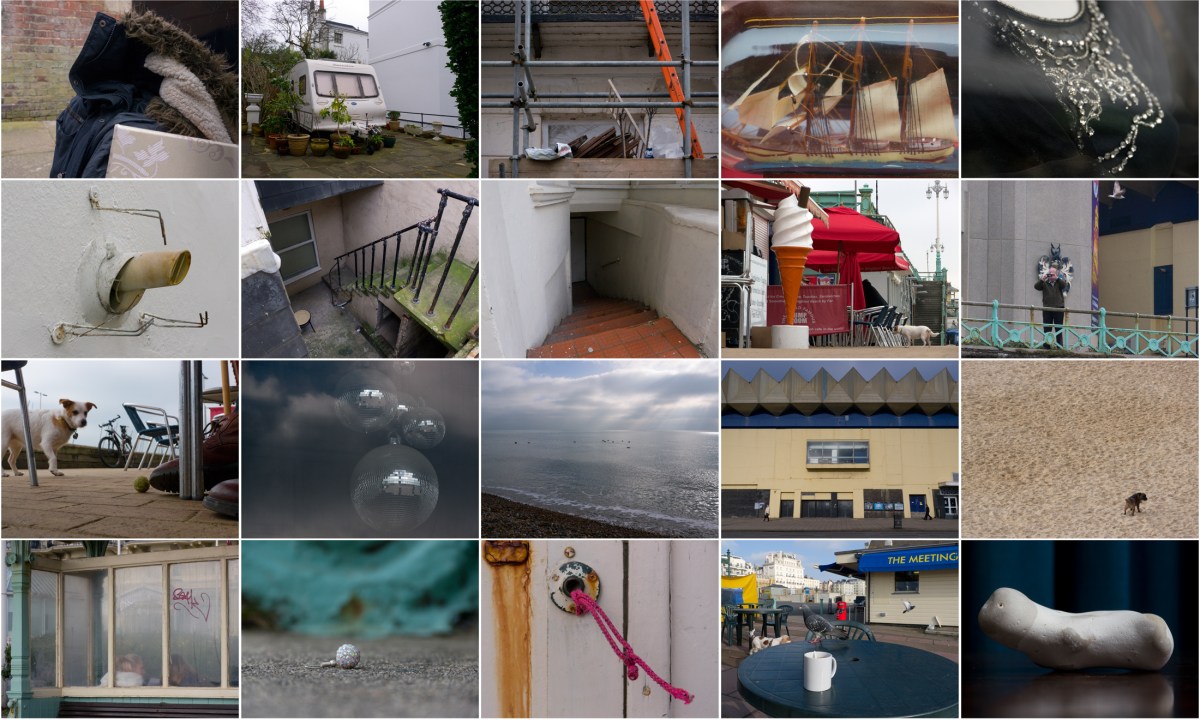
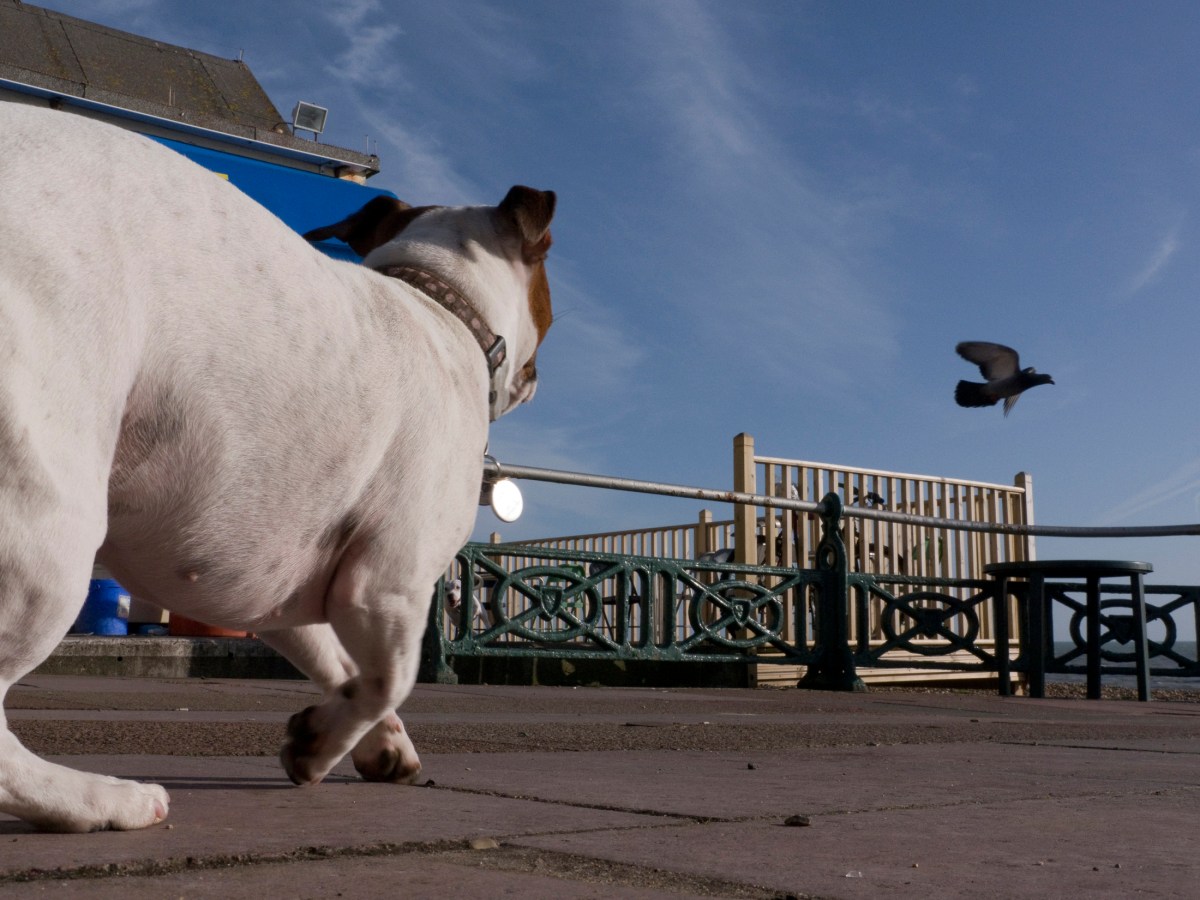
Actually I took this photograph a couple of weeks ago on a day when I was determined I wasn’t going to do a blog entry (but nevertheless still went out with the camera). I didn’t take much else that day, certainly not enough for the usual format of 12 or 20 images, but ever since then it’s sat there with unbearable and imploring patience, rather like a dog waiting for scraps, or a walk. So, I give in, here it is off its leash.

Howler – Sun 1st March

“Dogs are not like cats, who amusingly tolerate humans only until someone comes up with a tin opener that can be operated with a paw. Men made dogs, they took wolves and gave them human things–unnecessary intelligence, names, a desire to belong, and a twitching inferiority complex. All dogs dream wolf dreams, and know they’re dreaming of biting their Maker. Every dog knows, deep in his heart, that he is a Bad Dog…”

‘Men at Arms’ Terry Pratchett

Canis Philosophica – Mon 9th Feb

Dogs are great optimists. They are also, by nature, empiricists. Experience has taught them that if they wait long enough, and with sufficient faith (manifest in a particular look which, while not resembling any human equivalent, nevertheless communicates itself to us across the species divide with absolute certainty) that which is believed in will come to pass: the ball will be thrown; the sausage will fall from the table. Dogs are also rarely disappointed. On the few occasions when the above does not work, something more interesting will inevitably turn up that then becomes of crucial importance. In this way, existential crisis is averted. The pigeon may not be caught, but look, there is another!

Of course, it may be that dogs have no intention of catching pigeons or, for that matter, car wheels. It is enough that the pigeon flies away, the car retreats. These too are results.

I spent several years of my childhood living in a bungalow. Down its center ran a hallway, at one end of which was the front door. This was panelled with two moderately sized sheets of patterned glass, one above, one below the letterbox. These panes, while offering privacy, nevertheless allowed us to see visitors approaching the door. Every morning one such visitor was the postman. You could set your watch by the regularity of his appearance, something our small and perky terrier knew only too well, and, as the time approached, Patch would skulk at the kitchen end of the corridor, with eager anticipation badly disguised as nonchalance. At the sound of the postman’s approaching steps the dog would fly down the hallway barking furiously and, a few feet before the door, leap forwards, hitting the glass with a satisfying clang. Equally satisfying would be the sound of the entire family shouting ‘Patch! Stop it!’ accompanied on the other side of the door by muttered curses occasionally augmented with a backwards stumble. It mattered not to Patch that the door prevented any chance of apprehending the intruder. Clearly the defensive manoeuvre had worked and the postman had, once again, been seen off. Happy with his work, our faithful guardian would then trot off and lie on the sofa.

However, over time the glass must have weakened so that, one day, the morning ritual did not culminate in the usual clang but with a great shattering explosion as the glass gave way and Patch, for the first time, found himself in actual physical contact with the postman. Perhaps contact is too strong a word? Bouncing off the postman’s legs Patch ended up seated on the lawn, surrounded by glass, while the postman ran up the garden path shouting ‘you want to watch that bloody dog’. It didn’t occur to Patch to chase the intruder because hitting the glass door had always worked, and now, with this obstacle removed, he found himself in unfamiliar territory. Instead, slightly bemused, he got up and found some very interesting things to sniff around the garden.
Monstroceros – Sun 8th Feb

In 1821 a fossil tooth was discovered by a labourer while quarrying at Cuckfield in Sussex. The tooth came to the attention of Gideon Mantell, the Victorian palaeontologist. Mantell excited by what he believed to be the uniqueness of the find consulted a French comparative anatomist, a certain Baron Cuvier, but Cuvier pronounced it to be merely that of an ancient rhinoceros. Mantell cannot have been entirely convinced by this dismissal because, upon acquiring several more similar remains, he began to search for a living descendant whose teeth might resemble his own growing collection more closely. In his quest he came upon a specimen of iguana from the Galapagos islands. The Galapagos iguana is a herbivorous lizard whose staple diet is seaweed. While its teeth would have been substantially smaller than the petrified equivalents in Mantell’s possession; in every other respect the physical similarities, even down to the patterns of wear, were too similar to be ignored. In 1824 Mantell published these findings in a paper, pronouncing the discovery of a ‘new’ species and naming it Iguanadon, meaning Iguana tooth.

The study of palaeontology in Sussex during the 19th century was fraught with problems. Discoveries were rare and almost invariably incomplete; moreover, not enough was known within this emerging science to provide a framework within which to fit new examples as they came to light. What kind of animal could the teeth have belonged to? From the similar patterns of wear displayed in Mantell’s growing collection, Iguanadon could be established as being a herbivore, but biped or quadruped? Furthermore, of all the other bones that were from time to time dug up, which ones belonged to which? The physical attributes of the tooth collection’s original owners persisted as an enigma for years. Then in 1834 a quarryman in Maidstone found a more complete example of Iguanadon which, while still only partial and scattered, included a similar tooth. Mantell recognised the importance of this find and purchased it. He then set to reconstructing the pieces.

From his knowledge of other ancient and modern skeletons there were few difficulties in the putting together of this strange monster: hip bones, ribs and vertebrae were easily recognisable despite the novelty of the species and a team of technicians and assistants assembled these disparate elements into a semblance of what the creature may have looked like. There was one problem, no one could fathom the placement of a long sharp bone found with the others. Perhaps the earlier meeting with Baron Cuvier had an influence because it was finally decided that this fossil fragment should go on the end of the creatures nose thus giving it a somewhat rhinoceros like appearance.

Illustrations were prepared and the resulting pictures of this exotic beast, when published, stirred the imaginations of the contemporary scientific community. In the great inaugural exhibition of Crystal Palace in London it is recorded that a full sized model of iguanadon was shown, proudly displaying it’s horn.

Several years later in 1878, nineteen more or less complete examples of the dinosaur were exhumed by coal miners in a pit at Benissart in Belgium. In the ensuing excavation organised by Louis Dollo it was discovered that each came with not one but two of the aforementioned pointed bones. In all of the remains their position, when found, corresponded to the places where we might find thumbs on other animals. The illustrations and skeletal reconstructions were subsequently changed.

Love is in the air – Thurs 5th Feb

Valentines day may have been named after St Valentine (or rather, one of at least two of them, no-one knows which one) or at least renamed after a St Valentine as an attempt to Christanize the pre-existing pagan fertility festival of Lupercalia, in which young men whipped the buttocks of young women in an attempt to improve their fertility (any excuse) but the original purpose of it was to mark the day at the end of the winter period where you would allow your pigeons to start mating.

Pigeons can, given the right conditions, reproduce all year, but the scarceness of food in the winter means their chicks are less likely to survive – not such a good idea if you’re living in a subsistence community such as England in the dark and middle ages, and relying on pretty much anything as a food supply. Apparently getting pigeons to start breeding around this time of year also means that, when their young start flying there are less hawks around. Oh, and, in more northern climes the increase in sunlight during February leads to a corresponding increase in gonadal activity in birds…

Ah, romance!

Anyway, as mentioned in a previous post (Springs – Weds 28th Jan) there’s definitely a lot more goings on in the bird world of late. I was reminded of this today when I walked past a tree so filled with pigeons I thought it was about to burst into bloom (either that or they’ve been watching Hitchcock movies through someone’s window).

Here are two lines from Chaucer’s ‘The Parliament of Fowls’ (written sometime around 1382). This is the A. S. Kline 2007 translation:

‘For this was on Saint Valentine’s day,
When every fowl comes there his mate to take’

And again in Chaucer’s original language:

‘For this was on Seynt Valentynes day,
Whan every foul cometh ther to chese his make’

I reckon that clinches it.

Watch out for my forthcoming Valentines special, with a top ten list of things to say to your beloved to entice him or her to go out for that special meal with you…

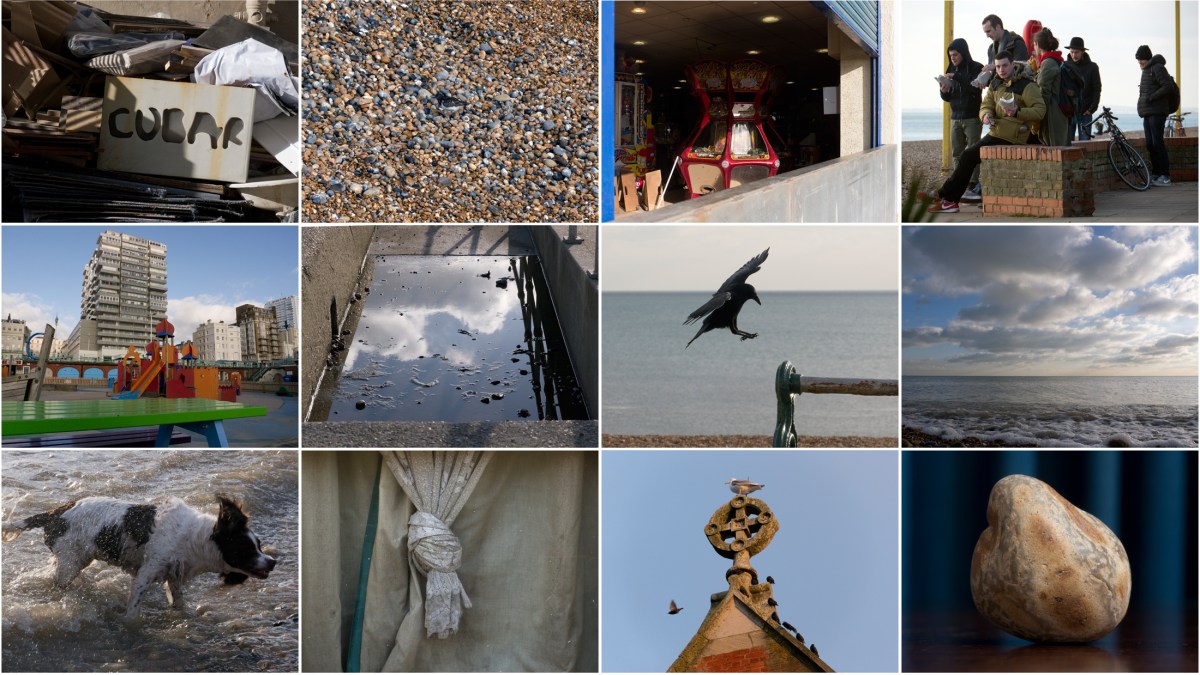
Chorus – Weds 4th Feb

Back at the café again; so is the starling, perching on top of a windbreak pole and singing his heart out. Another complex song varying from pops and crackles to budgie sounds to a two-part call containing one ascending, and then one very long descending note, not quite a wolf-whistle, but close enough, actually rather better. No scaffolder could be that tuneful, or suggestive. I try this part of the song. The starling gives me a look. He keeps on singing. I try it again. After a while he does it back.

And there’s this crow watching us, looking really intent. I try it again and then, honest, cross my heart, I hear this two-part squawk returned; one ascending, one long descending, well, ‘note’ isn’t exactly the word as it sounds like its coming from a domestic gravel crusher but I know it’s the same tune so I try it again for the benefit of the crow and it returns the call again, several times over while becoming more and more animated, first shifting its weight from one leg to another and then adding a bit of a knees-bend so it seems to be doing something like the okey-cokey on a pogo stick.

The starling flies off. I suppose its bad enough having your best tune murdered by a great lump of a human without some bloody crow joining in too, but me and the crow are dead pleased with ourselves.

Springs – Weds 28th Jan

Something’s stirring in the bird world of late. There’s been more than the usual to-ing and fro-ing, hopping and bobbing, and some very interesting sounds I’m not going to demean by reducing them to a simple tweet. On Monday I saw four magpies who were most definitely cavorting. The starling at the café seems to be developing a far more brilliant coat than the speckled brown plumage he’s had on all winter. The seagulls are even noisier than ever. Even one of the crows (who, as a species, seem, on the whole, immune to any behaviour beyond the utilitarian) has been practising his (her? probably his) repertoire of croaks on one of the commonly perched-upon railings nearby, or as he struts the beach looking for tidbits.

As a human corollary to this, in the center of town, heart shaped balloonoids (they aren’t proper balloons because they are made out of that crinkly stuff, heat sealed at the joins) bedecked with extravagant and unsupportable assertions like ‘I will love you forever’ float in card shop windows, accompanied by an army of fluffy bears, bunnies, meerkats, and things with big round eyes I can’t find a name for, embroidered with similar slogans.

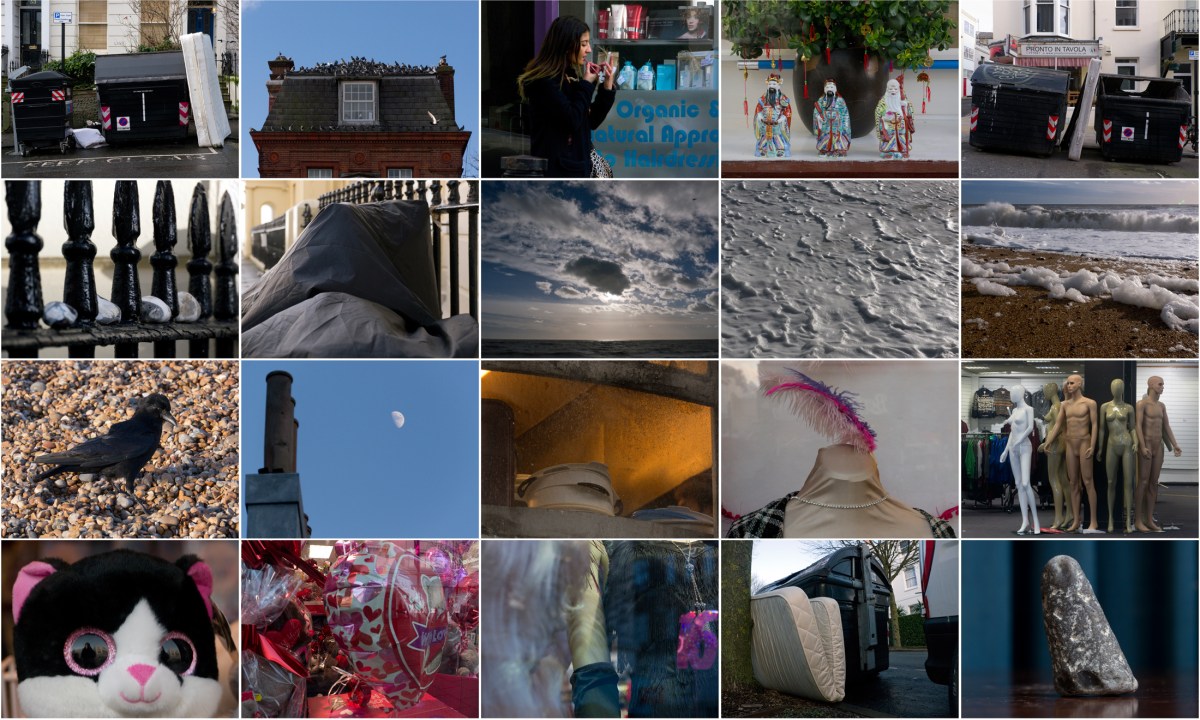
But this is not the main reason for today’s posting. What I really want to know is why this week everyone also seems to be throwing out their old mattresses? I found three today, and several others over the past few journeys. Is this phenomenon linked to human courtship rituals? Is this where I have been going wrong?

Appropriation – Mon 26th Jan

The rats dropped the rolling-pin, and listened attentively.
“We are discovered and interrupted, Anna Maria; let us collect our property––and other people’s,––and depart at once.”
“I fear that we shall be obliged to leave this Pudding.”

The Tale of Samuel Whiskers
or
The Roly-Poly Pudding
Beatrix Potter

Murmuration – Sun 18th Jan

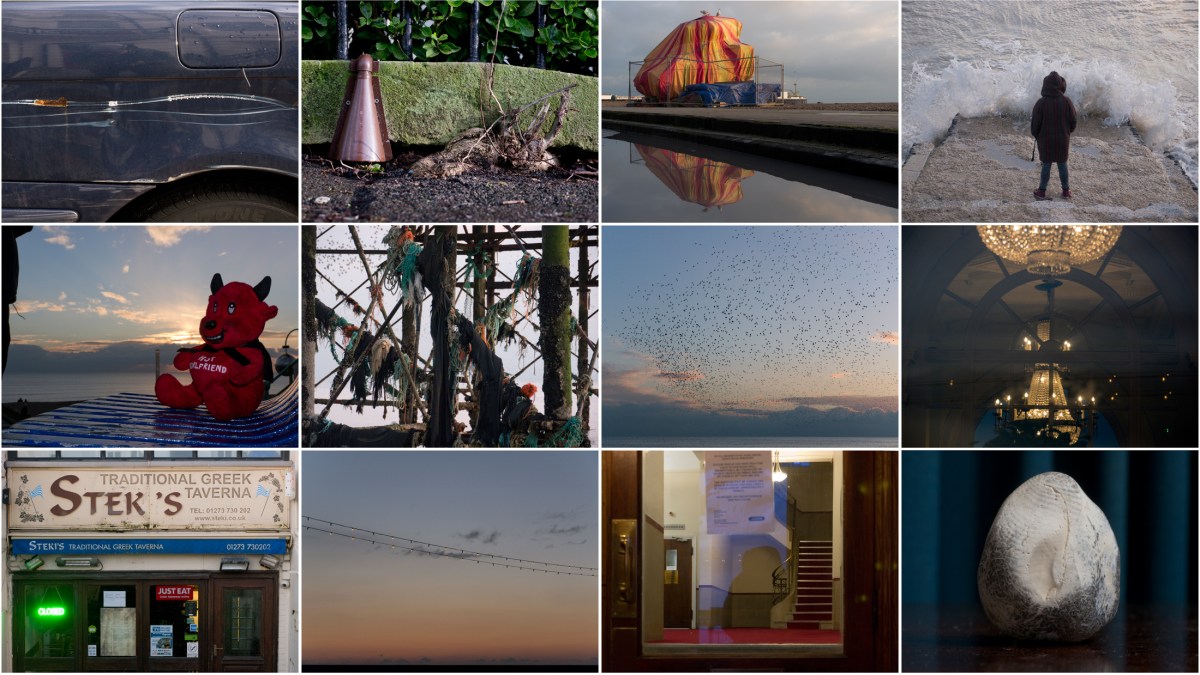
Murmuration is the specific name given to a flock of Starlings. Why not just flock? Only when you see them massed in their thousands, tens of thousands, turning in unison with no perceptible hesitation, do you realise that ‘flock’ is inadequate for this most remarkable phenomenon. The sound of their amassed wing-beats as they fly overhead is as much felt as heard.

How do they create such extraordinary, evolving, three-dimensional shapes in the sky without ever crashing into each other? Apparently someone has worked out a computer program that creates nearly identical formations, simply by inputting optimal maximum and minimum wingtip distances, alongside flight speed. So much for the how. The why is not answered there, but even this can probably be accounted for via Dawkins’s theories on the extended phenotype. And maybe he’s right, but the poet inside me howls and rebels at such a thought. Just go and look at one of their extravagant displays and tell me there is no joy unaccounted for by biological imperatives. I am not a believer in intelligent design, but neither am I a reductionist.