Alien encounter (part 2) – Sat 9th May

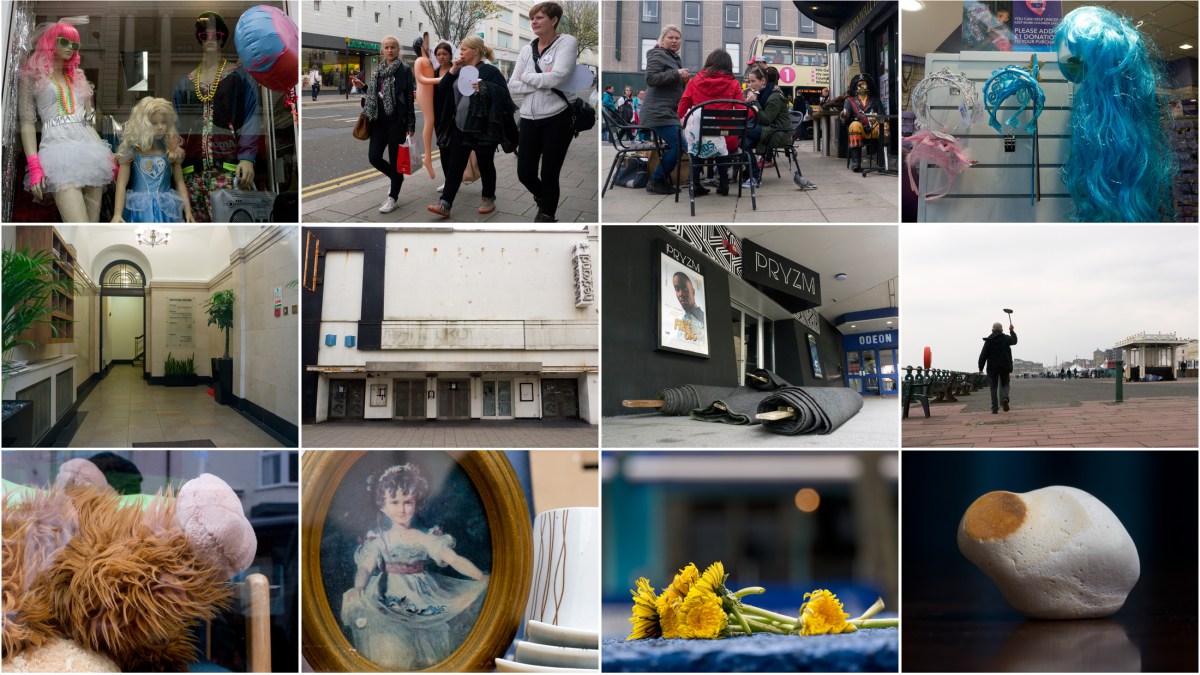
Several theories have been floated regarding the sensation I described yesterday*. These range from out of body experiences, to comments that I was under the influence of various artificial stimulants. One suggestion: ‘somatic symptom disorder’, does come close – after all, it was certainly ‘all in [or on] my head’ – but only because in reality a seagull had landed on mine in the mistaken belief that it would provide a handy platform from which to eat the (my) aforementioned prawn sandwich.

I suppose it could have been worse. As mentioned in my post of 19th March, Aeschylus the Greek Tragedian was killed outright when an Eagle mistook his head for a rock and dropped a tortoise on him from a great height. At least I (and my sandwich) came out of the encounter unscathed, and it is some comfort to know that now, somewhere on the seafront, a seagull has learned that certain kinds of large pebble will shout “fuck off you little sod!” when landed on.

*mainly because facebook truncated my post again, removing the (admittedly somewhat obscure) punchline.

Election Special – 7th May

Left right left right left right left right left right left right left right left right left right left right left right left right left right left right left right left right left right left right left right left right left right left right left right left right left right left?

More on the creative industries – Sat 2nd May

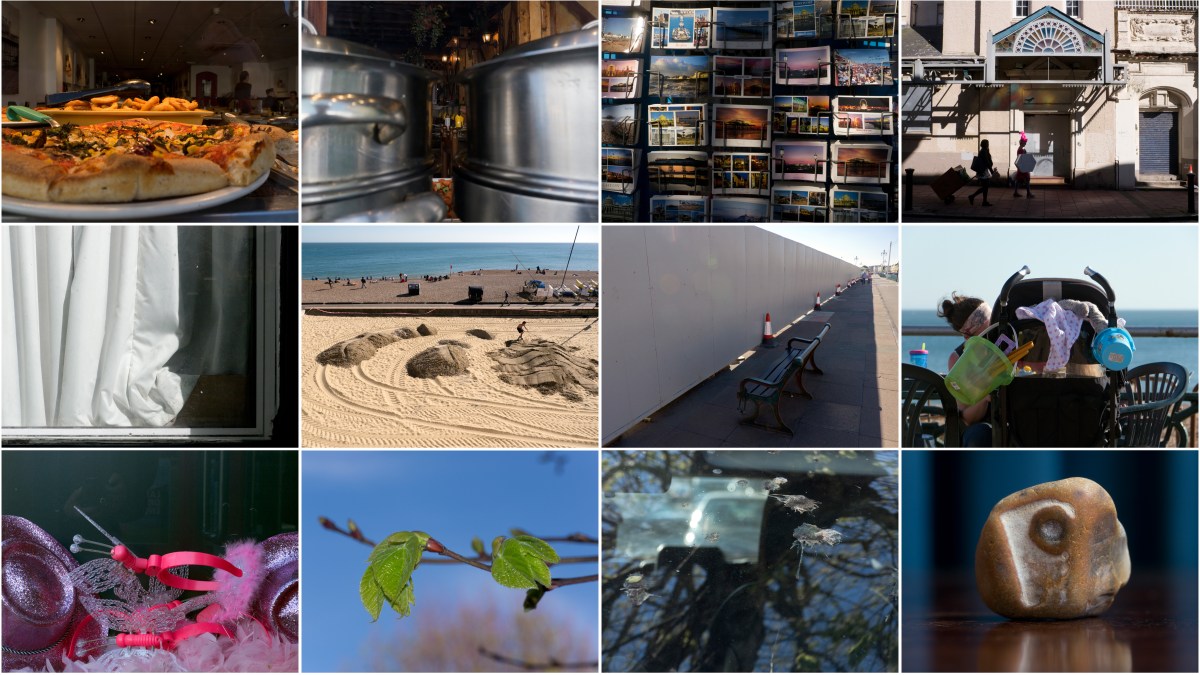
Today is the beginning of the Brighton festival, a whole month of cultural events including art exhibitions, plays, comedy revues, musical performances, talks, walks and happenings. These take place not only in every public venue in town, but indeed many private houses are also thrown open to the public, these filled with the endeavours of the numerous talented artists, photographers and craftspeople who live here. Also, during this time the streets are filled with itinerant performers, including jugglers, fire eaters, mime artists, conjurors, buskers, skateboarding troupes (some including dogs) and comedians, to name but a few.

You will note I do not have any photographs whatsoever that seem to indicate this fact. I consider this a personal success.

Covert operations – Fri 24th April

The man at the café continues in his heroic task of clearing the establishment of all birds. He’s increased his arsenal of anti-avian devices, so that now, when not sporting his favourite weapon: the long handled brush (pictured) he will have with him another, manky old brush-head with long bristles. This he carries by the hairs in readiness to hurl at any fowl seen to be encroaching on his territory. Tea at the café is thus now punctuated with a series of loud cracks and skitters as this missile hits the ground and skids across the pavement, usually followed by a flurry of wings. Sometimes if you’re quick enough you can see the makeshift projectile fly through the air and I am now wondering how long it’s going to be before he hits a tourist. Of course this could also be me, and nearly was today, but that’s a risk I’m prepared to take, the floor-show is just too good and anyway, we all need a little danger in our lives.

At first sight it would appear this assault is working, there aren’t so many birds around lately, but I don’t think this is all to do with his endeavours. Given the crows are not to be seen on the beach either (an area outside his jurisdiction) I reckon they are currently nesting, this hypothesis supported by recently seeing one of them on the lawns with a beak so full of browning grass clippings that he or she looked a dead ringer for Karl Marx. And now the derelict West Pier seems to have developed a white frosting that evaporates from time to time as whole flocks take to the air, suggesting it’s become this year’s seagull nesting site of choice.

Sadly though, the pigeon world is now a rather more nervous one. They have all taken to lurking behind table legs and, when traversing any open terrain, do so at a run, their heads bobbing frantically in syncopation with their legs until they reach better cover elsewhere. Abandoned remains of chips, butties and fried breakfasts remain unmolested for whole minutes at a time, indeed it seems like it’s taking the man longer to clear the tables than was the case when he first arrived, so maybe this is a baiting strategy?

Nevertheless, despite his apparent successes, the whole world knows this situation is only temporary and indeed as soon as he turns his back or disappears on some errand, any uneaten plates of food left behind will all at once disappear under a cloud of feathers. It’s just that now, most of the food is immediately tossed to the ground so it can be eaten under the cover of various items of café furniture.

I must admit to being curious about what will happen when, their eggs hatched, the crows and gulls need to start foraging for their chicks. Both these species have a lot more presence and are less likely to take things lying down. When they return, I don’t think it’s going to go all his way…

Measuring the impact of academic research – Sun 19th April

An important part of university life is the research of its teaching staff. This is what makes the place of study great and ensures that students studying there receive the best of educations. Research is judged on several criteria, including: ‘originality’ (no copying) ‘academic rigour’ (reading lots and not faking any experiments) ‘peer review’ (what other university lecturers think about what you’re doing) and ‘impact’. This last criterion is still somewhat debated across disciplines but, essentially, it’s how much what you do changes the world; the size of impact your work produces. Of course you have to be careful. Burning down the local hospital would have a great deal of impact and get you a lot of attention in the media, but not necessarily of the right kind. Besides, it would only be deemed local impact and universities want world leaders.

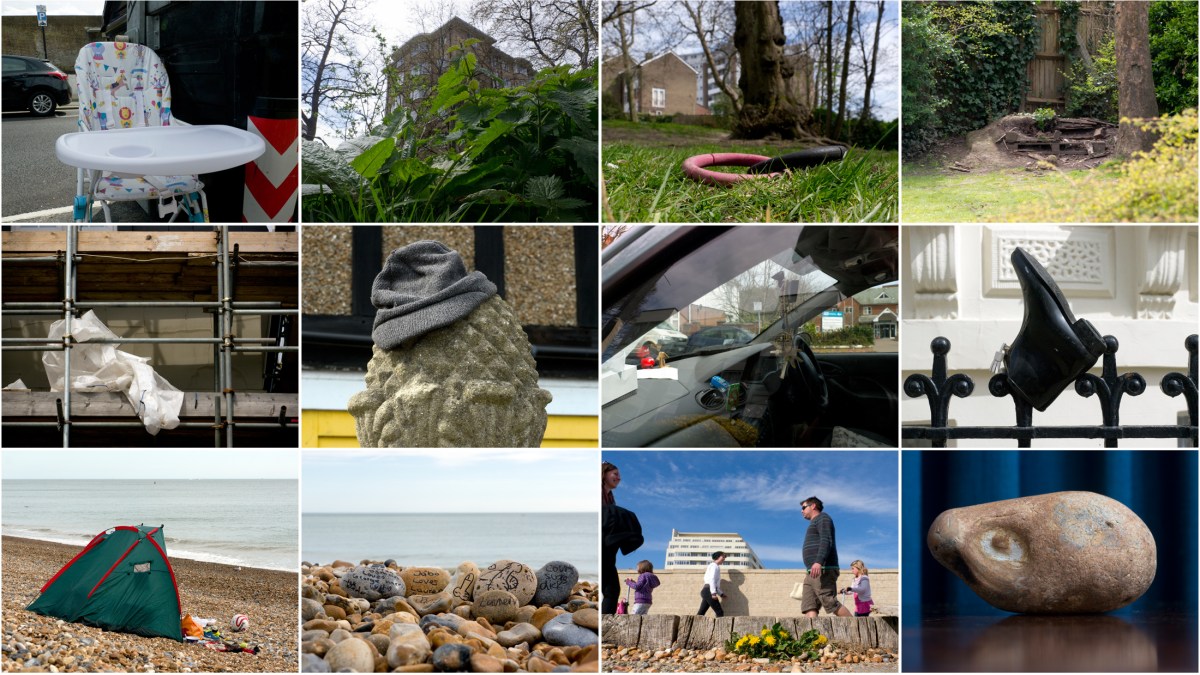
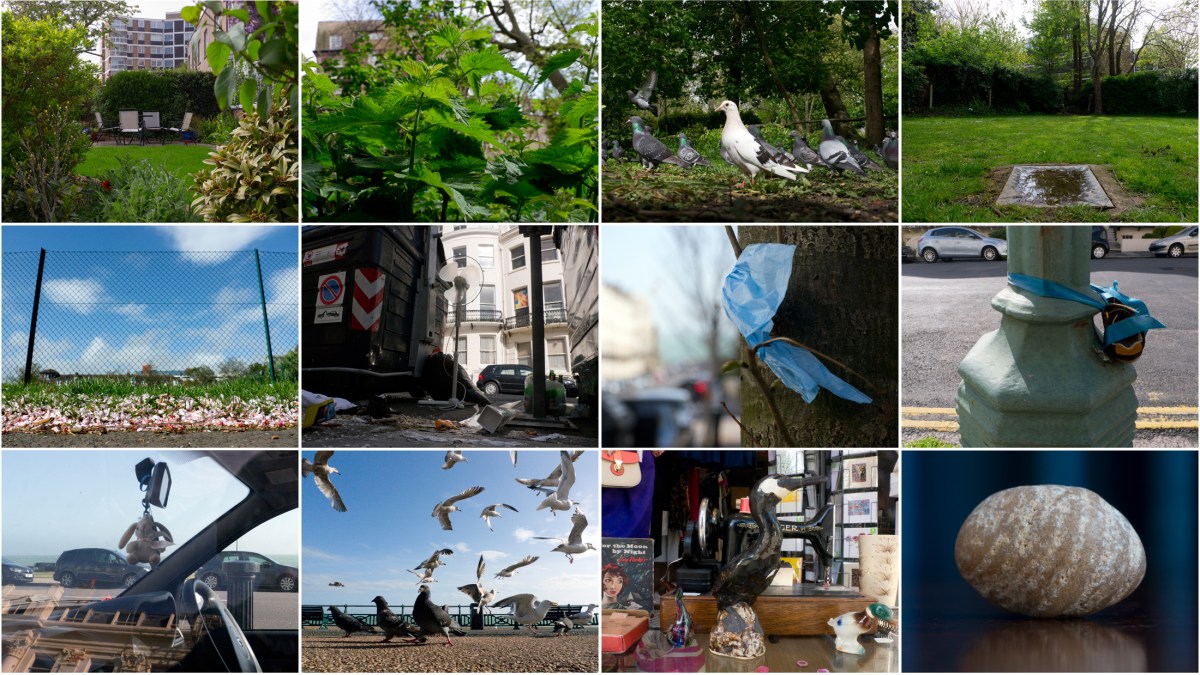
I was thinking of this subject today while on my daily walk when I came across a number of stones with some very unusual patination. On closer inspection I could see that these had not been formed entirely by natural processes; someone, or several someones judging by the different styles, had been writing and drawing on them (see picture in bottom row).

This reminded me of a successful public art initiative that had happened in the area a number of years ago. The project involved local children from all the surrounding schools going to the beach, selecting a stone, drawing a picture on it and then casting it back into the sea. I can’t actually remember what this symbolised (if anything at all) but it was deemed to be a good, indeed a poetic thing, and got a write up in the local paper.

As I mentioned, this was quite a few years ago and the children who had been involved in the event would now be teenagers. Finding today’s inscribed stones has made me wonder: were these drawings made by some of the same people who, as infants, took part in this event? Admittedly the subject matter is very different but it’d be nice to think they were connected, and that their memories of this project had prompted them to revisit the idea. If so, this would be a clear example of impact, albeit still on a local scale.

Surge – Thurs 15th April

The force that through the green fuse drives the flower
Drives my green age; that blasts the roots of trees
Is my destroyer.
And I am dumb to tell the crooked rose
My youth is bent by the same wintry fever.

The force that drives the water through the rocks
Drives my red blood; that dries the mouthing streams
Turns mine to wax.
And I am dumb to mouth unto my veins
How at the mountain spring the same mouth sucks.

The hand that whirls the water in the pool
Stirs the quicksand; that ropes the blowing wind
Hauls my shroud sail.
And I am dumb to tell the hanging man
How of my clay is made the hangman’s lime.

The lips of time leech to the fountain head;
Love drips and gathers, but the fallen blood
Shall calm her sores.
And I am dumb to tell a weather’s wind
How time has ticked a heaven round the stars.

And I am dumb to tell the lover’s tomb
How at my sheet goes the same crooked worm.

‘The force that through the green fuse drives the flower’ (1934)
Dylan Thomas

Shipwrecked – Sat 11th April

There was once an old sailor my grandfather knew
Who had so many things which he wanted to do
That, whenever he thought it was time to begin,
He couldn’t because of the state he was in.

He was shipwrecked, and lived on a island for weeks,
And he wanted a hat, and he wanted some breeks;
And he wanted some nets, or a line and some hooks
For the turtles and things which you read of in books.

And, thinking of this, he remembered a thing
Which he wanted (for water) and that was a spring;
And he thought that to talk to he’d look for, and keep
(If he found it) a goat, or some chickens and sheep.

Then, because of the weather, he wanted a hut
With a door (to come in by) which opened and shut
(With a jerk, which was useful if snakes were about),
And a very strong lock to keep savages out.

He began on the fish-hooks, and when he’d begun
He decided he couldn’t because of the sun.
So he knew what he ought to begin with, and that
Was to find, or to make, a large sun-stopping hat.

He was making the hat with some leaves from a tree,
When he thought, “I’m as hot as a body can be,
And I’ve nothing to take for my terrible thirst;
So I’ll look for a spring, and I’ll look for it first.”

Then he thought as he started, “Oh, dear and oh, dear!
I’ll be lonely tomorrow with nobody here!”
So he made in his note-book a couple of notes:
“I must first find some chickens” and “No, I mean goats.”

He had just seen a goat (which he knew by the shape)
When he thought, “But I must have a boat for escape.
But a boat means a sail, which means needles and thread;
So I’d better sit down and make needles instead.”

He began on a needle, but thought as he worked,
That, if this was an island where savages lurked,
Sitting safe in his hut he’d have nothing to fear,
Whereas now they might suddenly breathe in his ear!

So he thought of his hut … and he thought of his boat,
And his hat and his breeks, and his chickens and goat,
And the hooks (for his food) and the spring (for his thirst) …
But he never could think which he ought to do first.

And so in the end he did nothing at all,
But basked on the shingle wrapped up in a shawl.
And I think it was dreadful the way he behaved –
He did nothing but bask until he was saved!

(AA Milne, The Old Sailor)
Plymouth Bites (part two)

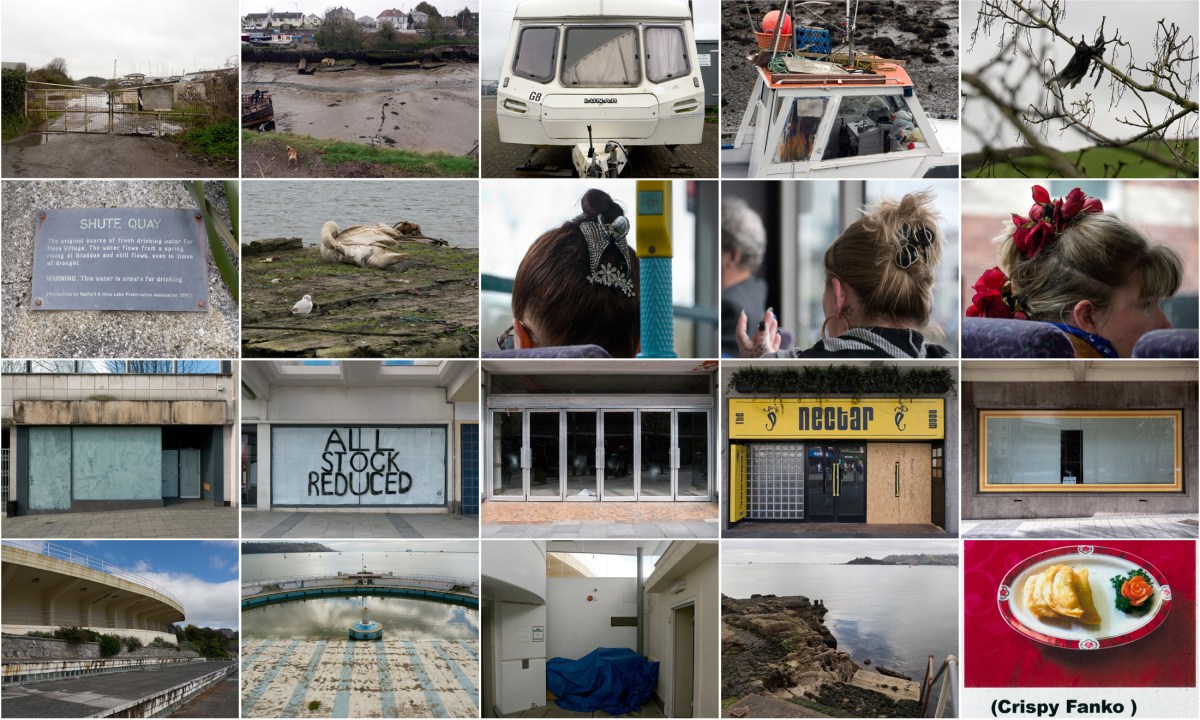
I’m sitting outside the café at Jennycliff. A poodle paces slowly into view. It’s one of those big black ones, coat not shaved but cropped close all over except its head which sports an outrageous quiff. The muzzle underneath this coiffure seems to be razor thin, beak-like. Dogs of course do not have arms, let alone hands, but the way it carries its ball in its jaws implies holding something at arm’s length, gracefully, but with a hint of distain, perhaps in the manner of a dowager aunt handling the sugar tongs.

After a few yards the poodle drops the ball and walks off. Shortly after, its master appears, picks up the ball and throws it a few feet away from where the dog is now standing. The dog walks over to the ball, looks at it, picks it up and drops it again on the same spot. This ritual is repeated a few more times and then the man, having picked up the ball once more, heads slowly uphill to the car park. After a while the dog follows, occasionally pausing to look at its master from beneath it’s towering bouffant.

There’s a woman talking to the bus driver. The conversation is involved and I assume she’s a relative. This exchange goes on for some time and every so often she makes a sort of lunge for something on the shelf below the windscreen. ‘Sort of’ because she seems to be reaching out but at the same time not able to touch it. At first I assume its because its out of reach and the bus is moving, but when the bus stops, this act of reaching/withdrawing continues. As the engine cuts out, I hear the conversation better:
“I’m telling you the truth!”
“I don’t care madam, there are rules”
“But it’s mine I tell you!”
“Then tell me what’s inside”
“That’s not the point”
“Madam you have to tell me what’s inside the bag so I know its yours”
“I don’t know what’s inside!”
“Then how do I know it’s your bag?”
“I’m not interested in the contents, they aren’t mine, but it’s my bag I tell you!”

It’s a beautiful day, sunlight bouncing off every surface under a hazy blue sky and I’m sitting on the balcony of my sister’s place. The view is across a small green by the banks of the Plym estuary towards Cattedown where a huge ship is being loaded. I hear someone shouting: “come here you bugger!” so I look down to the grass below and see a man, one hand encased in a plastic bag, chasing a bull terrier who is just keeping out of reach, always facing the man. Every time the man tries to get round behind the animal it turns to once again face him. The dog appears to have two stumpy tails, both of which seem to be wagging, one below the other. The man shouts: “oh that’s really disgusting!” I can’t help but agree, but I’m enjoying the spectacle as he makes another unsuccessful grab for the second tail with his polythene-gloved hand.

Vernal Equinox – Fri 20th March

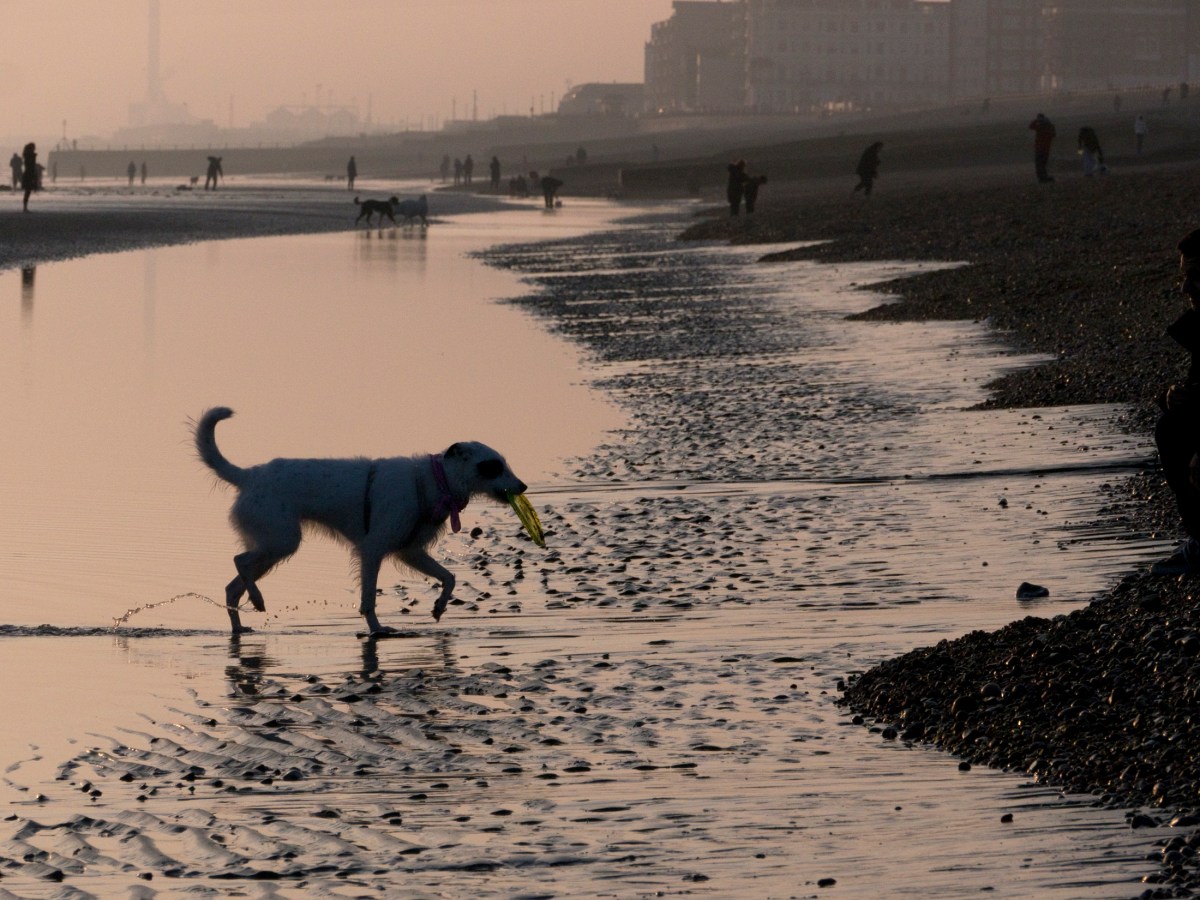
I had planned a special edition today to mark the solar eclipse, and indeed had written something witty about the great British experience of remarkable astronomical phenomena (i.e. its always bloody cloudy and you miss everything) but I’ve now decided that’s a dumb idea. This blog is about discovering the extraordinary within the everyday, not what you miss out on. So, instead, I just want to say that I’ve never seen a tide as low as the one this evening. Maybe it was because today was also the vernal equinox and, unusually, was also a very calm evening.

I wasn’t alone in this delight and as the sun set the beach was populated with a hundred dog walkers and people just out for a stroll, all discovering the joy of splashing along the sand we never knew we had in Brighton, while the tiniest of waves lapped in the distance like lace in a breeze. It doesn’t get much better than that.