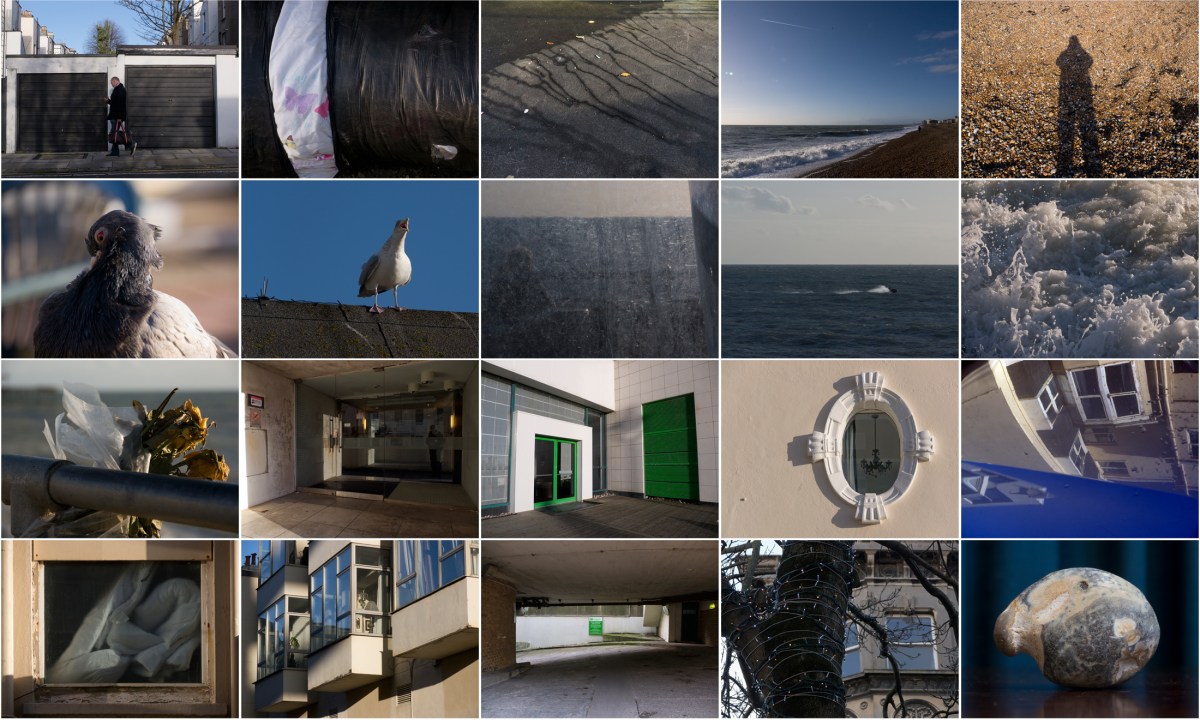
Collected Stones: Feb 2015

‘…the Thriae showed Hermes how to foretell the future from the dance of pebbles in a basin of water; and he himself invented both the game of knuckle-bones and the art of divining by them. Hades also engaged him as his herald, to summon the dying gently and eloquently, by laying the golden staff upon their eyes.’(1)

‘Among the Beng of the Ivory Coast, a regular form of divination involves the diviner’s use of black pebbles placed in a brass pan with a small amount of water. The process of consultation consists of the client informing the diviner about his/her problem and the reason for consultation. Turning the bowl in her hands, she observes how the pebbles settle in the bowl. From her observation she diagnoses the problem and prescribes an appropriate sacrifice.’(2)

(1) Robert Graves – The Greek Myths, 1955, revised 1960
(2) Jacob K Olupona, ‘Sacred Cosmos: An ethnography of African indigenous religious traditions’ in, ‘African Americans and the Bible: sacred texts and social structures’, ed Vincent L. Wimbush, Continuum International Publishing Group, New York, 2003

Surfacing – Tues 10th March

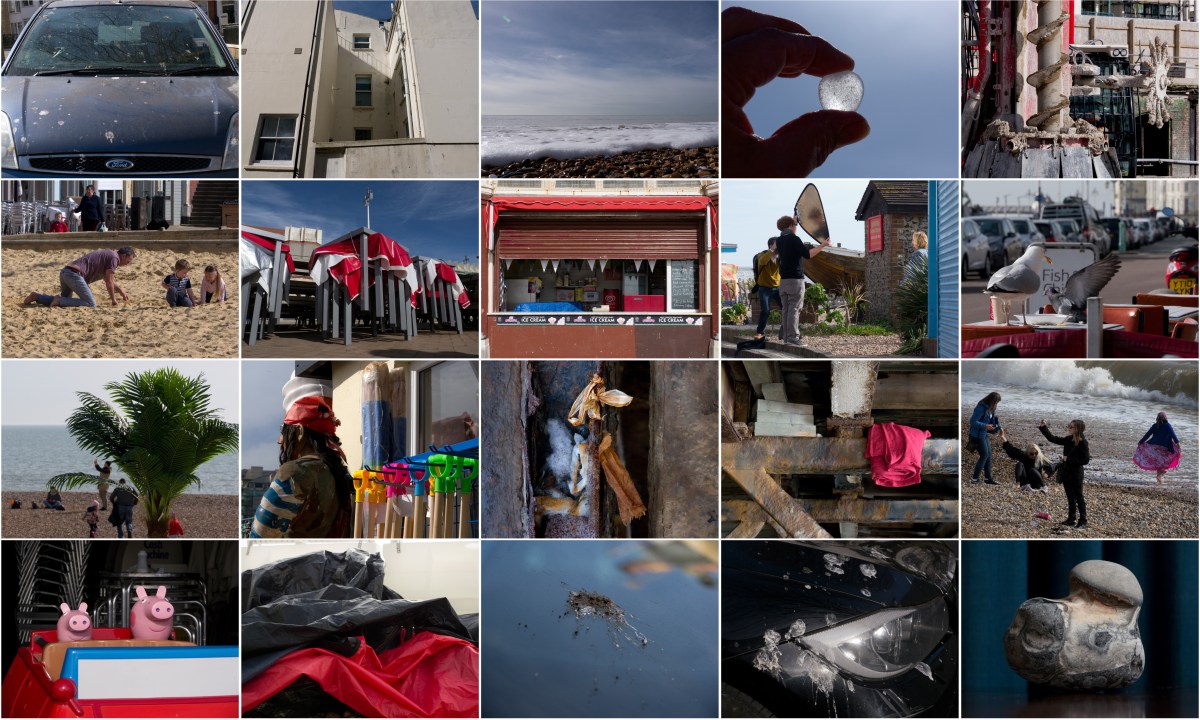
I’ve been searching the beach for interesting stones for a few months now, and I’m surprised that the glass pebble pictured in today’s contact sheet is the first I’ve come across. You used to be able to find these quite often, not only clear glass, but amber and green too, sometimes even blue. I suppose that since we now use so much plastic for bottles, the dwindling of this man-made shoreline phenomenon is inevitable though, given the number of bars and clubs along the sea front, this still surprises me.

I remember the last big open air Fatboy Slim gig on the shore, the one when the beach was so packed with people they themselves seemed like pebbles. And indeed, because no one had considered what would happen if you held an event on the beach that started at low tide, a quarter of a million party people moved like pebbles too, driven up the beach by the rising waters as the evening drew on.

I also remember that the next morning the beach was so strewn with broken bottles it glittered, bejewelled, as if some profligate sultan had abandoned all his riches to the sea. It took a long time before the beach was safe to walk on barefoot and many of the splinters, rather than being collected during the clean up operation, would have settled below the stones where they probably still are, some by now ground down to sand but maybe not all. Now I think about it, I’m even more surprised this is the first piece of glass I’ve found. Perhaps it’s a fragment of vodka bottle whose contents were downed on that infamous night?

But leaving aside these memories, only now surfacing as I write, finding this one has made me ponder further. It’s glass, and it’s definitely a pebble, because it’s been worn smooth and rounded through the continual grinding of the waves on the shore. That’s what pebbles are aren’t they – things rounded smooth by the sea? But it isn’t a stone is it? Stones are formed purely as a result of geological processes. And this is why I’m not photographing it in the usual manner like the others I’ve found, because it isn’t a stone, is it? But now I’m wondering, if the definition of pebble is something worn smooth by the action of the sea, can you have wooden pebbles? Plastic ones? Larger pieces of seashell seem to qualify if rounded enough, as do the occasional fragments of brick or concrete.

This is now really bothering me.

Fatboy Slim big beach boutique 2002

Pseudolithophilia – Tues 10th Feb

In ancient China, the appreciation of stones developed into a highly structured art form called ‘Gongshí’, or ‘scholars rocks’. Over subsequent centuries similar disciplines emerged in both Japan and Korea, named, respectively: ‘Suiseki’ and ‘Suseok’. In India, sacred stones, Shiva Linga, are still a vital part of daily worship. Western Europe saw the prehistoric megalith cultures, and the old and new stone ages. Some sections of modern society still place great store in the curative or talismanic properties of certain stones. Palaeontology deserves a whole book to itself. The 18th century French painter François Boucher prized his collection of objects of ‘natural philosophy’ (an emerging forerunner of modern sciences) including curiously shaped stones and minerals. And in recent decades, artists counting, among many others, Barbara Hepworth and Paul Nash, have had a tendency to collect odd shaped flints and other rocks for their aesthetic or mimetic qualities.

But, today, following my discovery of a mobile cliff face in a car park at the eastern edge of town, what I want to know is this: is there a similar practice that relates to the appreciation of artificial rocks and stones? We have plenty of models to use as a foundation for this new discipline: Star Trek abounds with exquisite examples as does the more esoteric 1957 East German children’s film: ‘The Singing Ringing Tree’ (‘Das singende, klingende Bäumchen’). Further pieces can be found in early episodes of Dr Who and numerous 50s B-movies. Then there are crazy golf courses, theme park rocks, ghost train caves and Christmas grottos, costume jewellery, garden, aquarium and vivarium ornaments, fountain accessories, coal-effect fires, decorative external cladding…

Every time I come up with what I think is a new idea, a quick search on the internet proves someone else has already been holding conferences on the subject, so, on that basis, the practice will surely, by now, be pretty well developed. So what’s it called? What are its rules and codes? Why can’t I find any mention of it? Or is this as yet still an underground movement?

singing ringing tree

Still from The Singing Ringing Tree, 1957, directed by Francesco Stefani
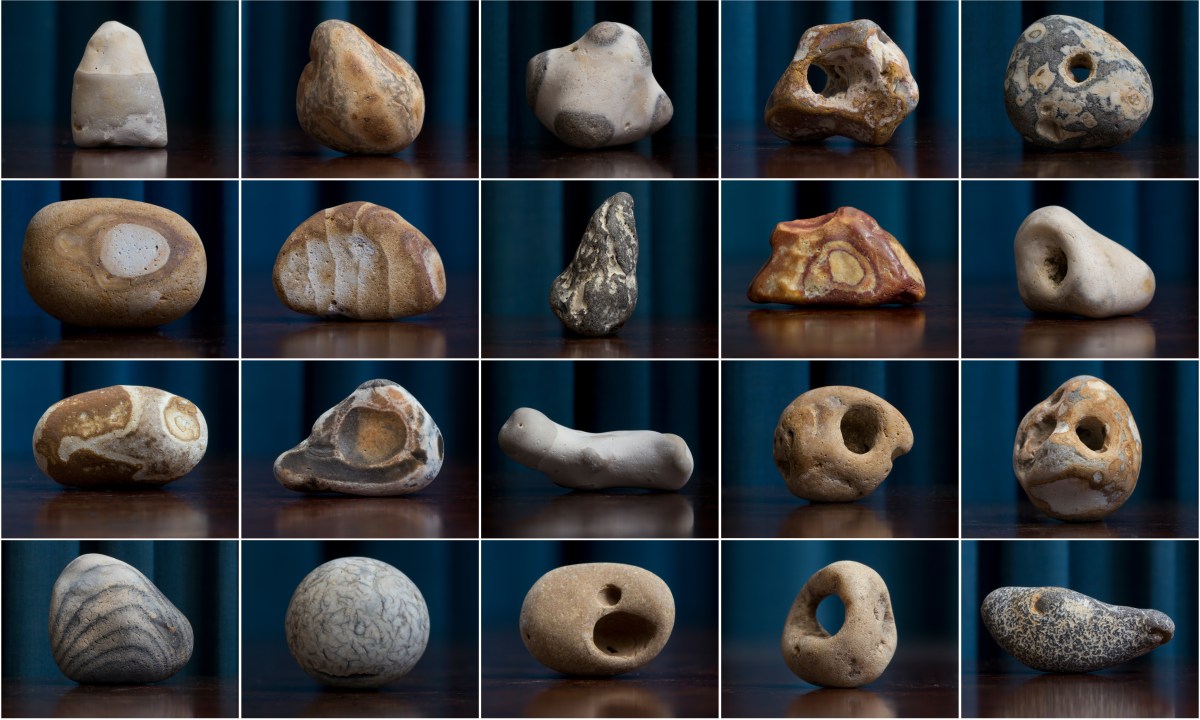
Collected stones. Dec 2014 – Jan 2015

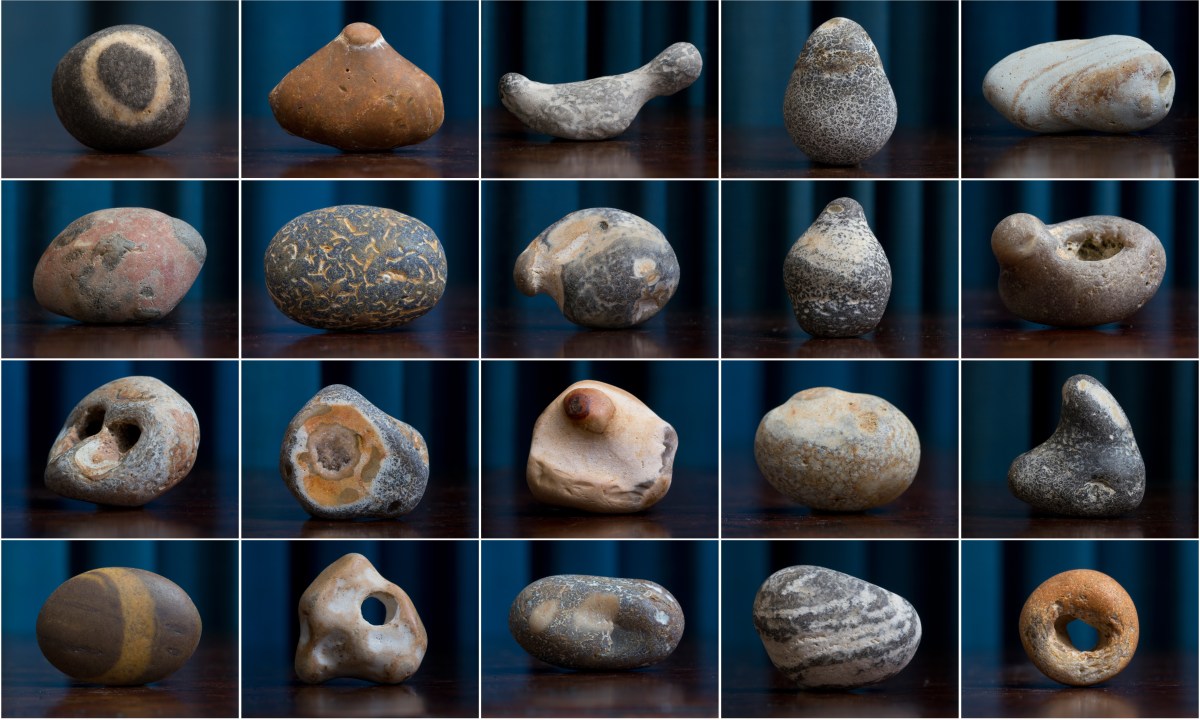
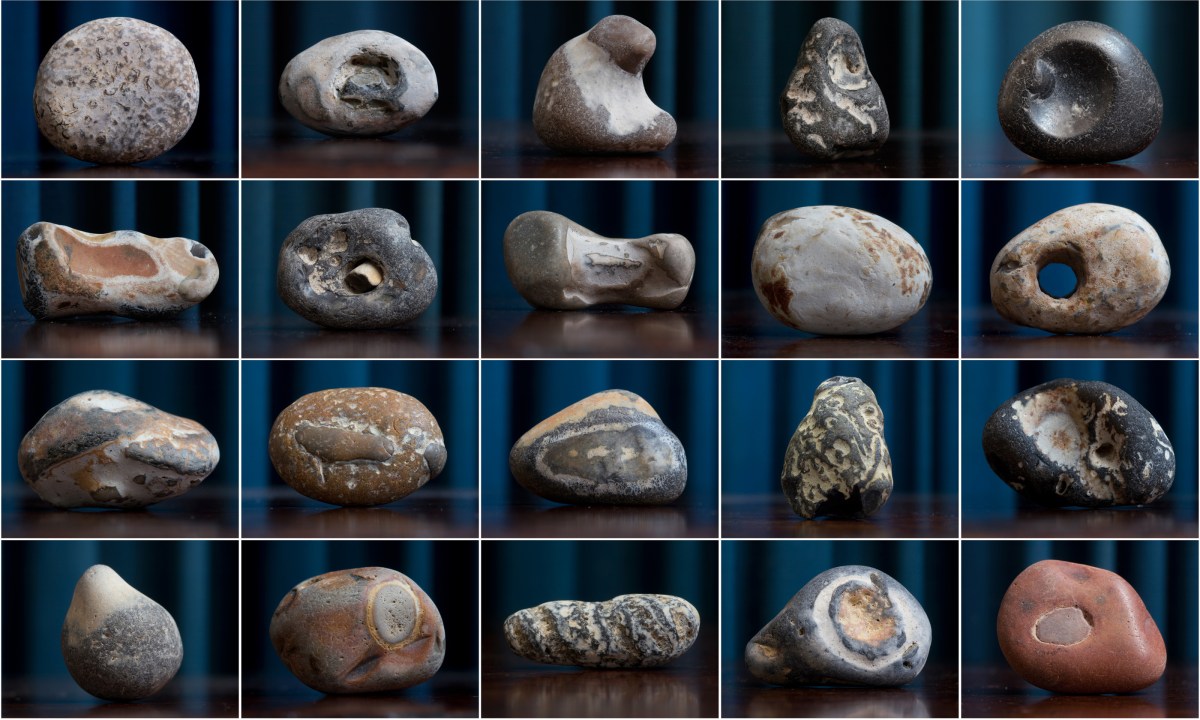
Here’s another page of stones. There are now four in all, collected from ones I’ve found since beginning this exploration. You can find the others if you click the 3 bars icon at the head of the page, after which click ‘stone of the day’.

3 bars

And here to introduce these latest treasures, are the opening lines from Roger Caillois’s book, ‘The Writing of Stones’ first published in 1913:

Just as men have always sought after precious stones, so they have always prized curious ones, those that catch the attention through some anomaly of form, some suggestive oddity of colour or pattern. This fascination almost always derives from a surprising resemblance that is at once improbable and natural. Stones possess a kind of gravitas, something ultimate and unchanging, something that will never perish or else has already done so. They attract through an intrinsic, infallible, immediate beauty, answerable to no one, necessarily perfect yet excluding the idea of perfection in order to exclude approximation, error and access. This spontaneous beauty thus precedes and goes beyond the actual notion of beauty, of which it is at once the promise and the foundation.

For a stone represents an obvious achievement, yet one arrived at without invention, skill, industry, or anything else that would make it a work in the human sense of the word, much less a work of art. The work comes later, as does art; but the far-off roots and hidden models of both lie in the obscure yet irresistible suggestions in nature.

(Translated by Barbara Brey, University Press of Virginia, Charlottesville)

Glossary – Tues 16th Dec

When I think of the word ‘pebble’ the words that come to mind are: shiny, smooth, polished, round, wet… But the word ‘stone’ conjures much more. In addition to the preceding, I might also think of: rough, lumpen, angular, pitted, sharp… and then there are also stones so important we have added names to them: hearth stone, lode-stone, philosophers stone, millstone, whet stone, altar stone, headstone… Some even have their own gods.

All pebbles are stones, not all stones are pebbles.

Finding treasure – Sun 14th Dec

Over the last few weeks I’ve been on the beach most days looking for interesting stones. I’ve found quite a few now, enough to realise that, to my surprise, I’ve come across all the best ones close to the path next to the beach, or around cafés. According to probability they should be spread pretty evenly across the shore, so this observation has given me pause for thought. There could be several reasons for this happening:

  1. I’m too lazy to go more than a few feet from the nearest cafe or pathway. Actually, that hypothesis is easily dismissed; I have looked all over the beach. Otherwise I wouldn’t have noticed the tendency. I merely note it to show i’ve considered the possibility.
  2. Small children, known for their creativity, openness and inquisitive nature find it impossible to resist collecting interesting examples on their visits to the seashore. However, later when it’s time to go home, their parents, dismayed at the piles of accumulated treasure being lugged up the beach would tell their offspring to leave them behind as they are ‘only stones’ or ‘oh darling we haven’t got room for any more of them’ or ‘what do you want those things for?’ This particular moment of parting would, most likely, happen near the path or, possibly, as a result of the tears caused by this particular separation trauma, near a café, directly as a result of having to console their tender charges with distractions of ice cream.
  3. Brighton is full of poets. Like children they are well known to have extraordinary powers of sensitivity and imagination, and would have no problem spotting these jewels. However everyone also knows that poets are easily distracted, tend to lose things and their pockets are always full of holes (which is why they never have any money). This would cause a higher concentration nearer any pathway. Furthermore, poets spend a lot of time in cafés.
  4. The above could also be true of Jazz musicians.
  5. The stones themselves really are magic. Over millions of years, the most powerful have evolved to be more attractive to humans and, during these same aeons, have slowly worked themselves up the beach to areas where people are more likely to pass by. In short, they want to be found.
  6. Every night, mermaids come out of the sea to look for interesting stones. However, because they have tails instead of legs they can only make it a few yards inland before having to return to the water. This means that the stones nearest the path escape their notice. It is also widely known that mermaids hate coffee – it isn’t salty enough for their liking.

I think this last reason is the most likely as it also explains the cuttlefish mystery (see entry for Mon 10th Nov) and why it is harder to find interesting stones after it’s been raining, or when there has been a high tide.

Stones of the day – collected

I’ve now been doing this blog for a while. As a result, I’ve gathered quite a few stones together. They are becoming a representation of a somewhat longer journey, so, for the first time, I’ve put them all together. Here’s one sheet. If you click on the 3 little lines icon at the top of the page (which takes you to the ‘about’ pages) and then go to the ‘Stone of the Day’ page, you’ll find two more.

Baguettage – Sat 29th Nov

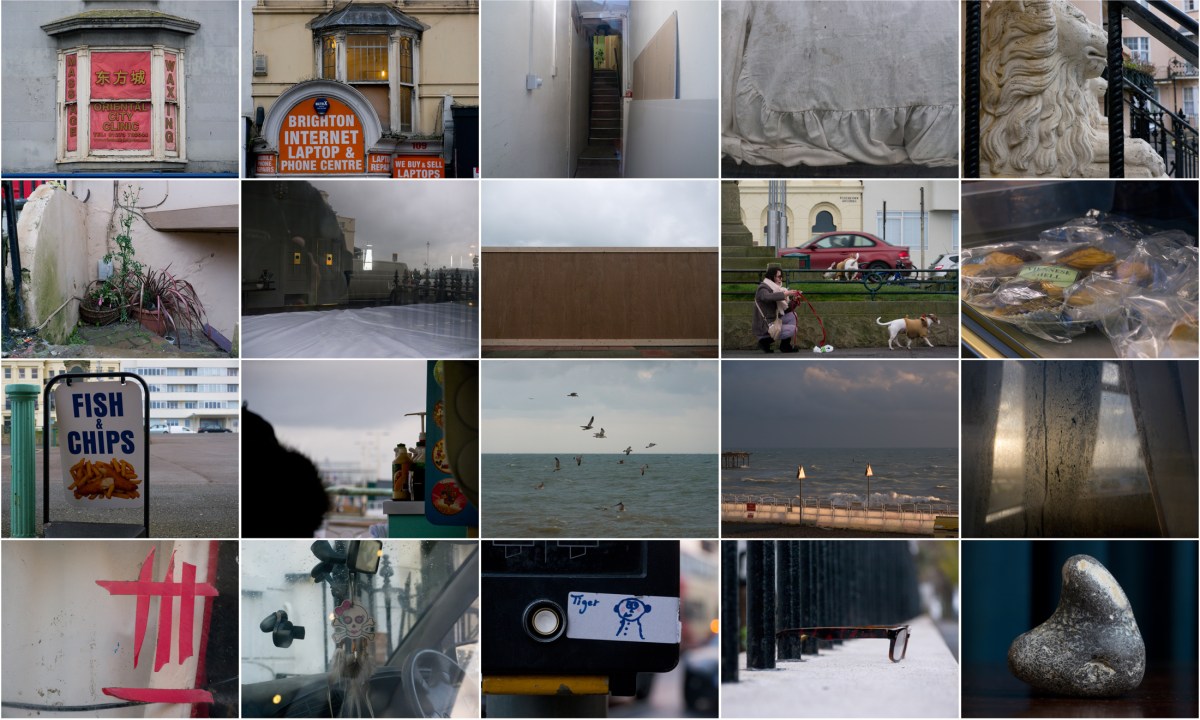
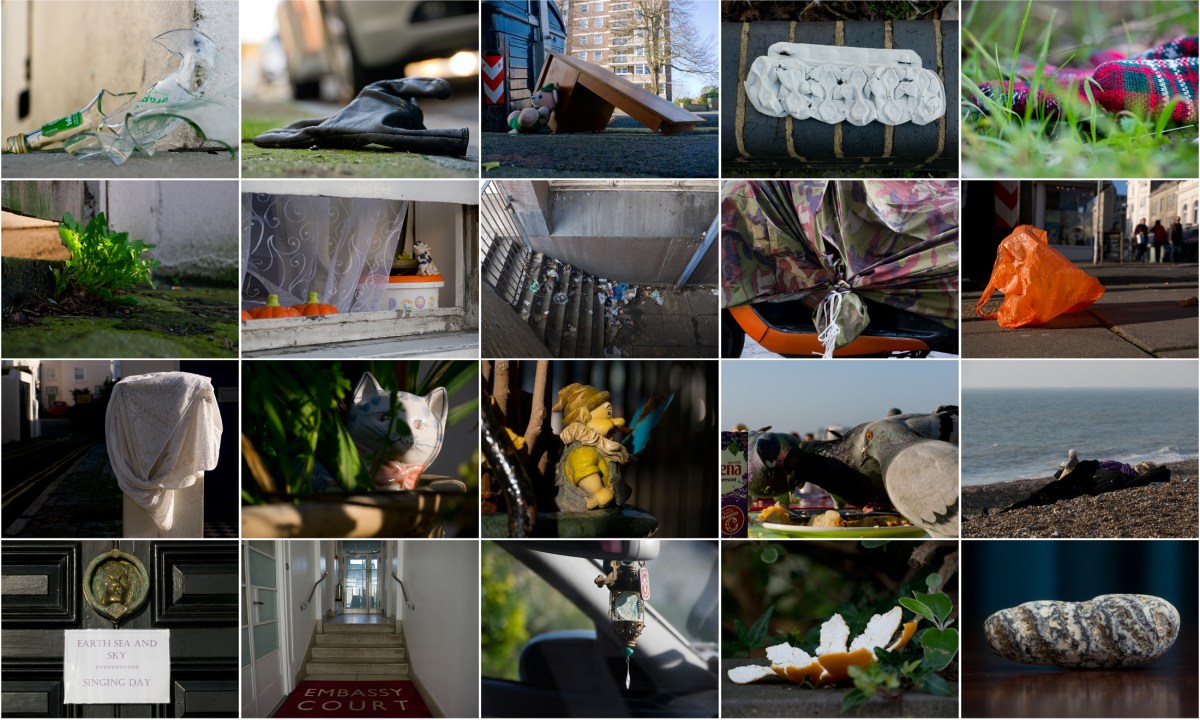
You may have read my entry about fairy loaves and my delight at finding one (if not read it now: Tues 11th Nov 2014). Well, look what I’ve found now (see last picture on today’s contact sheet): a fairy baguette! Surprisingly heavy too (must be wholemeal). I mean, only in Brighton would even the fairies make bread in the continental manner. It’s got those diagonally cut ridges and everything, and it must be a fairy loaf because its so tiny, about the size of a small cat poo… oh…

Were there cats in the cretaceous period? They’d have to be underwater cats because the geological strata that it would have emerged from would have been under water when it was laid. I mean I think it’s a fossil. I haven’t just brought an extremely hard cat poo home with me have I? Only one way to find out…

Damn. I think I’ve broken a tooth…