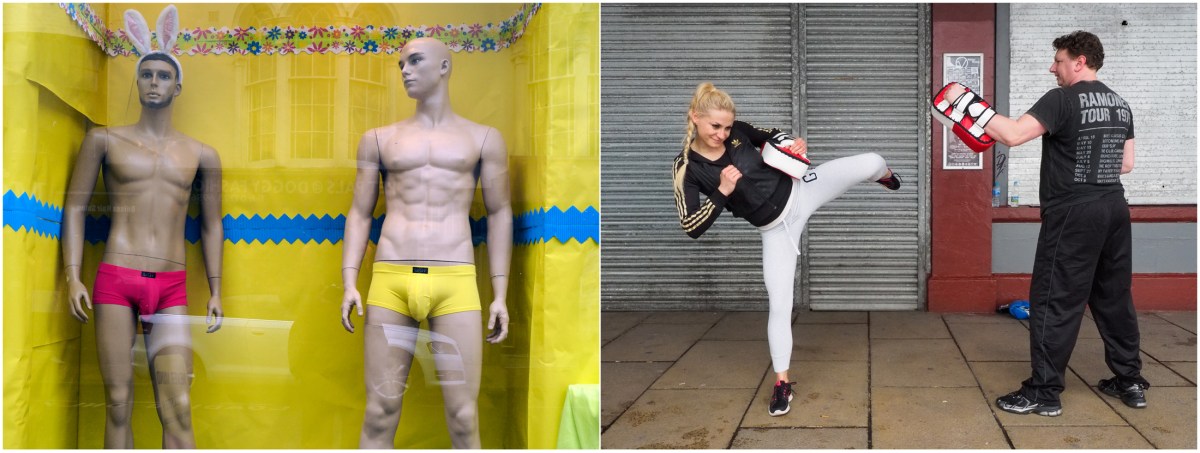
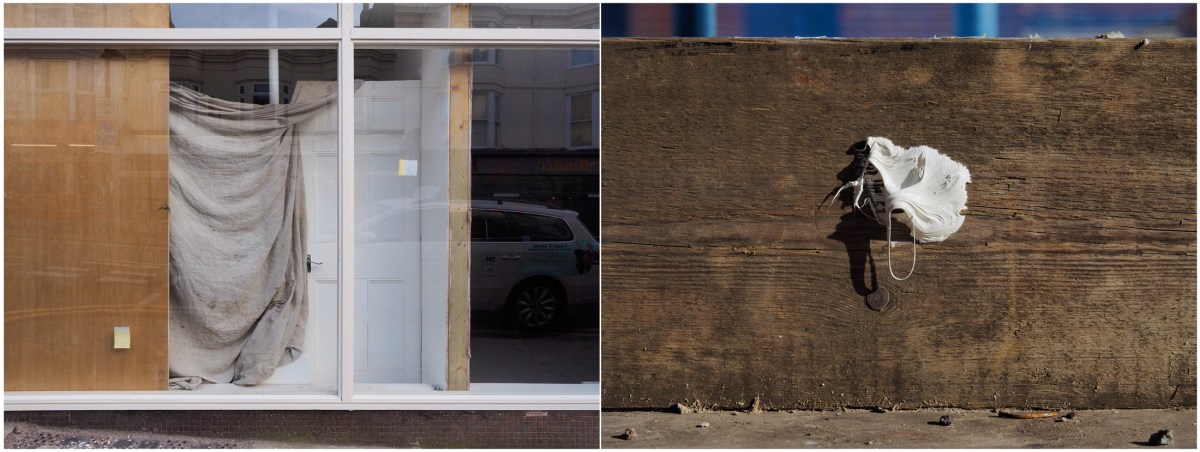
The Frog Prince – 19th April 2016

The next day when she had seated herself at table with the king and all the courtiers, and was eating from her little golden plate, something came creeping splish splash, splish splash, up the marble staircase, and when it had got to the top, it knocked at the door and cried, “Princess, youngest princess, open the door for me.” She ran to see who was outside, but when she opened the door, there sat the frog in front of it. Then she slammed the door to, in great haste, sat down to dinner again, and was quite frightened. The king saw plainly that her heart was beating violently, and said, “My child, what are you so afraid of? Is there perchance a giant outside who wants to carry you away?” “Ah, no,” replied she. “It is no giant but a disgusting frog.”

“What does a frog want with you?” “Ah, dear father, yesterday as I was in the forest sitting by the well, playing, my golden ball fell into the water. And because I cried so, the frog brought it out again for me, and because he so insisted, I promised him he should be my companion, but I never thought he would be able to come out of his water. And now he is outside there, and wants to come in to me.”

In the meantime it knocked a second time, and cried, “Princess, youngest princess, open the door for me, do you not know what you said to me yesterday by the cool waters of the well. Princess, youngest princess, open the door for me.”

‘The Frog Prince’, Brothers Grimm

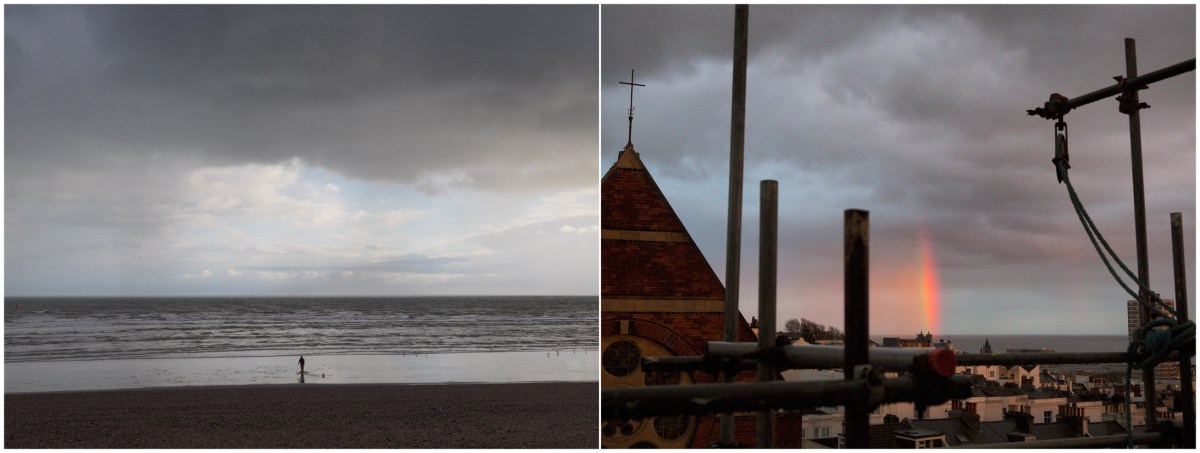
End of the rainbow – 7th April 2016

“But, in truth, it had not exactly been gold, or even the promise of gold, but more like the fantasy of gold, the fairy dream that the gold is there, at the end of the rainbow, and will continue to be there forever – provided, naturally, that you don’t go and look. This is known as finance.”

‘Going Postal’ Terry Pratchett

Jennycliff – 31st March 2016

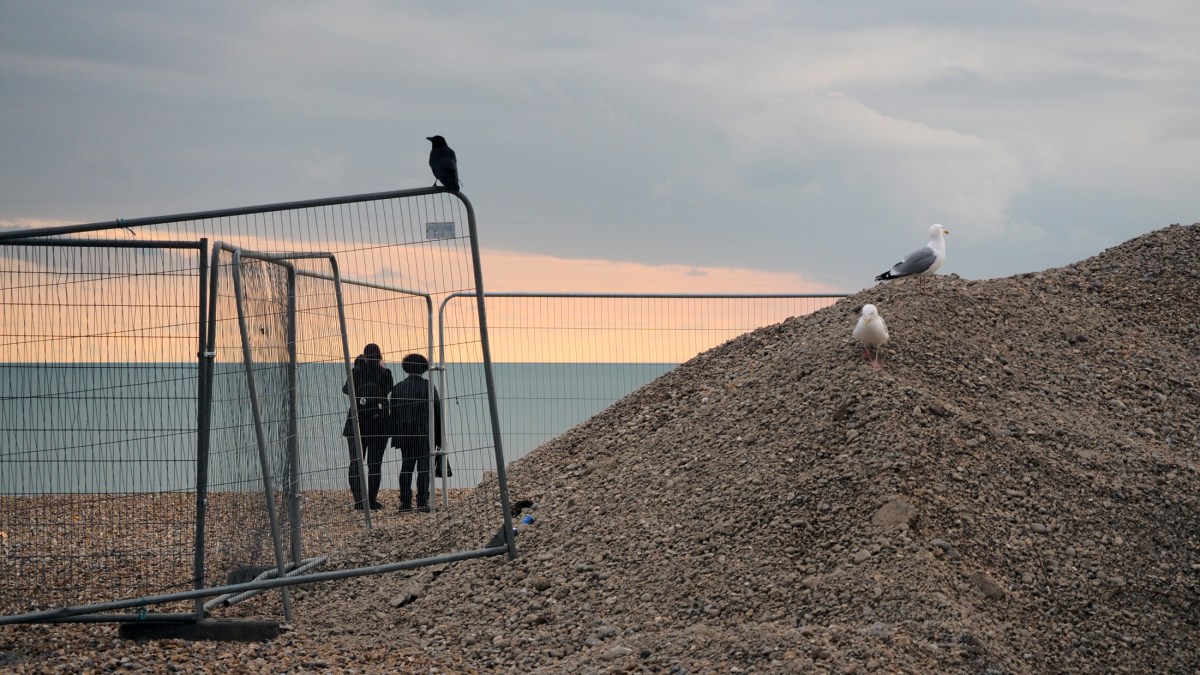
Last year when I first visited Jennycliff, I’d been disappointed to find that the path to the beach had been closed off because of cliff subsidence. Not only was there a big notice, but an even bigger and forbidding fence, complete with sharp bits, had been placed across the path that made sure you kept out. The views from the cliff and the café itself were still good, good enough reason to visit the spot, but there was always that feeling you were missing out on something.

This year I find the big notice and the even bigger forbidding fence are both still there, but in the intervening 12 months enough people had been irritated by this denial of access, and the fact that the cliffs still hadn’t been shored up, that now there was something of a path hacked through the gorse and clay just left of the fence, and just wide enough to allow circumnavigation. Paths like this tell you a lot about what to expect. On the one hand it wasn’t exactly official (if that had been the case the fence would have been taken away) but on the other hand it had seen enough traffic to indicate that more than one intrepid explorer had passed this way, on more than one occasion, had found the scrabbling worthwhile, and had lived to tell the tale. In short, you could get down to the beach, just don’t go crying to mummy if you fall over.

So L and I set off. It wasn’t far before you could see why the fence had been put up. A lot of the cliff had fallen away taking most of the path with it, so there was only a foot wide ledge in places to tread on, most of it mud made even more slippery by the recent rains. However, where it was at its narrowest some public spirited adventurer had tied a rope between the trunks of several shrubs so you had something to hold on to, and it didn’t take us long to get to the bottom.

Fences are strange things. Clearly they are designed to keep you out (or sometimes in) whether it’s ‘for your own good’, or just to keep you off someone else’s property, or make sure you’re where you’re supposed to be. But while their function is to prevent, they also act as a clear advert that here is something someone wants you kept away from, ergo, what’s beyond has to be interesting.

And fences do another thing: they delineate the borders of zones beyond the world of the ordinary, so that, once you’ve crossed this border, you are now in a special place where the usual rules no longer apply.

When we reached the beach there were a few teenagers there, some smoking, others clambering over rocks, throwing stones and rubbish from the shoreline, being generally loud, and one or two wandering on their own as far as the sea would let them. If I’d approached any of them with my ideas on life beyond the borders they would have just laughed or looked at me like I was mad. After all, there are other, more impenetrable boundaries that you only get to cross once.
Little pegs – 16th March 2016

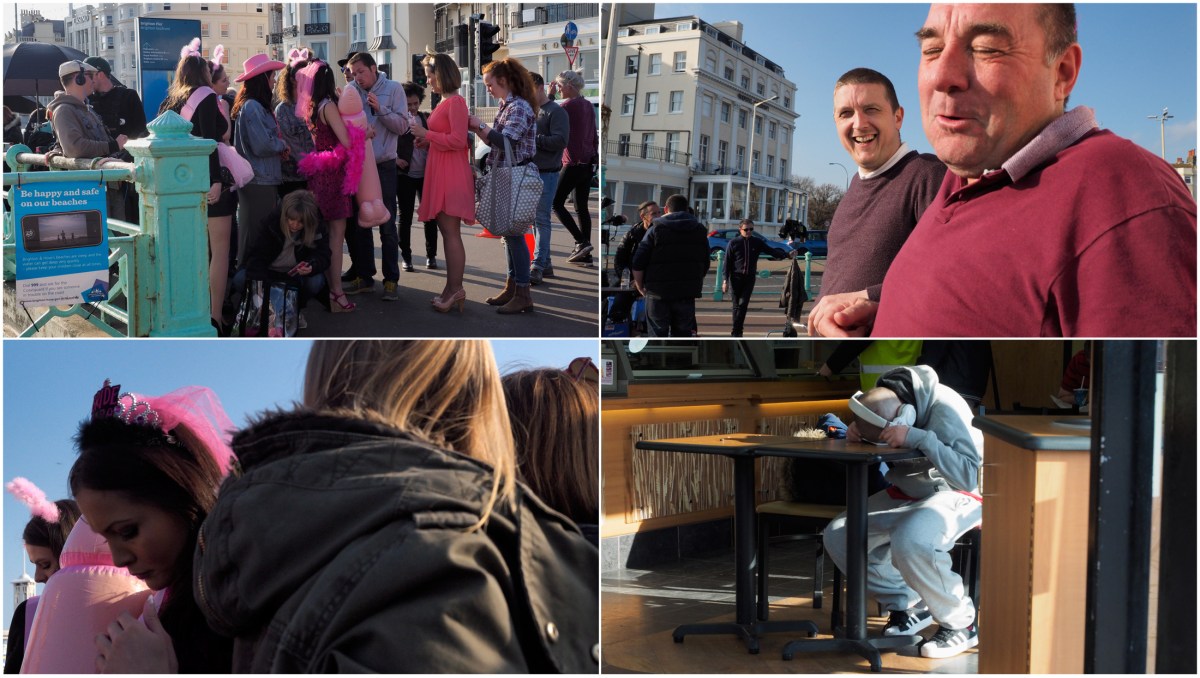
“When the creator had made all these ordinances he remained in his own accustomed nature, and his children heard and were obedient to their father’s word, and receiving from him the immortal principle of a mortal creature, in imitation of their own creator they borrowed portions of fire, and earth, and water, and air from the world, which were hereafter to be restored-these they took and welded them together, not with the indissoluble chains by which they were themselves bound, but with little pegs too small to be visible, making up out of all the four elements each separate body, and fastening the courses of the immortal soul in a body which was in a state of perpetual influx and efflux. Now these courses, detained as in a vast river, neither overcame nor were overcome; but were hurrying and hurried to and fro, so that the whole animal was moved and progressed, irregularly however and irrationally and anyhow, in all the six directions of motion, wandering backwards and forwards, and right and left, and up and down, and in all the six directions. For great as was the advancing and retiring flood which provided nourishment, the affections produced by external contact caused still greater tumult-when the body of any one met and came into collision with some external fire, or with the solid earth or the gliding waters, or was caught in the tempest borne on the air, and the motions produced by any of these impulses were carried through the body to the soul. All such motions have consequently received the general name of “sensations,” which they still retain.”

From: ‘Timaeus’ By Plato
Translated by Benjamin Jowett

Counter – 9th March 2016

“Putting the question in this way, there is no satisfactory solution to decoding. One would be drawn into an endless process since every level of decoding would reveal another one waiting to be decoded. Every symbol is just the tip of an iceberg in the ocean of cultural consensus, and even if one got right to the bottom of decoding a single message, the whole of culture past and present would be revealed. Carried out in this ‘radical’ fashion, criticism of a single message would turn out to be criticism of culture in general.”

Vilém Flusseur, ‘Towards a Philosophy of Photography’

Everything works out – 8th March 2016

“We read of Labhraidh Loingseach that his ears were like those of a horse; and hence, he used to kill on the spot everyone who cut his hair, lest he or anyone else might be aware of this blemish. Now he was wont to have his hair cropped every year, that is, to have cut off the part of his hair that grew below his ears. It was necessary to cast lots to determine who should crop the king each year, since it was his wont to put to death everyone who cropped him. Now it happened that the lot fell on the only son of a widow who approached the close of her life, and who lived near the king’s stronghold. And when she heard that the lot had fallen on her son, she came and besought the king not to put her only son to death, seeing he was her sole offspring. The king promised her that he would not put her son to death, provided he kept secret what he should see, and made it known to no one till death. And when the youth had cropped the king, the burden of that secret so oppressed his body that he was obliged to lie in the bed of sickness, and that no medicine availed him. When he had lain long in a wasting condition, a skilful druid came to visit him, and told his mother that the cause of his sickness was the burden of a secret, and that he would not be well till he revealed his secret to some thing; and he directed him, since he was bound not to tell his secret to a person, to go to a place where four roads met, and to turn to his right and to address the first tree he met, and to tell his secret to it. The first tree he met was a large willow, and he disclosed his secret to it. Thereupon the burden of pain that was on his body vanished; and he was healed instantly as he returned to his mother’s house. Soon after this, however, it happened that Craiftine’s harp got broken, and he went to seek the material for a harp, and came upon the very willow to which the widow’s son had revealed the secret, and from it he took the material for his harp and when the harp was made and set to tune, as Craiftine played upon it all who listened imagined that it sang, ‘Da o phill ar Labhraidh Lorc,’ that is, Labraidh Loingseach, meaning, ‘Two horse’s ears on Labhraidh Lorc’; and as often as he played on that harp, it was understood to sing the same thing. And when the king heard this story, he repented of having put so many people to death to conceal that deformity of his, and openly exhibited his ears to the household, and never afterwards concealed them.”

Geoffrey Keating, ‘The History of Ireland’ (Section 30)

Spectacular – 4th March 2016

“In ancient societies the consumption of cyclical time was consistent with the actual labour of those societies. By contrast, the consumption of pseudo-cyclical time in developed economies is at odds with the abstract irreversible time implicit in their systems of production. Cyclical time was the time of a motionless illusion authentically experienced; spectacular time is the time of a real transformation experienced as illusion.”

Guy Debord: ‘The Society of the Spectacle’. Paragraph 155

? – 25th Feb 2016

“Many years ago, as I was glancing through a catalogue of jokes for parties and weddings, I saw an item, ‘An object difficult to pick up’. I haven’t the slightest idea what that ‘object’ is or what it looks like, but I like knowing that it exists and I like thinking about it.”
‘Cocteau on the film’ conversations with Jean Cocteau recorded by Andre Fraigneau