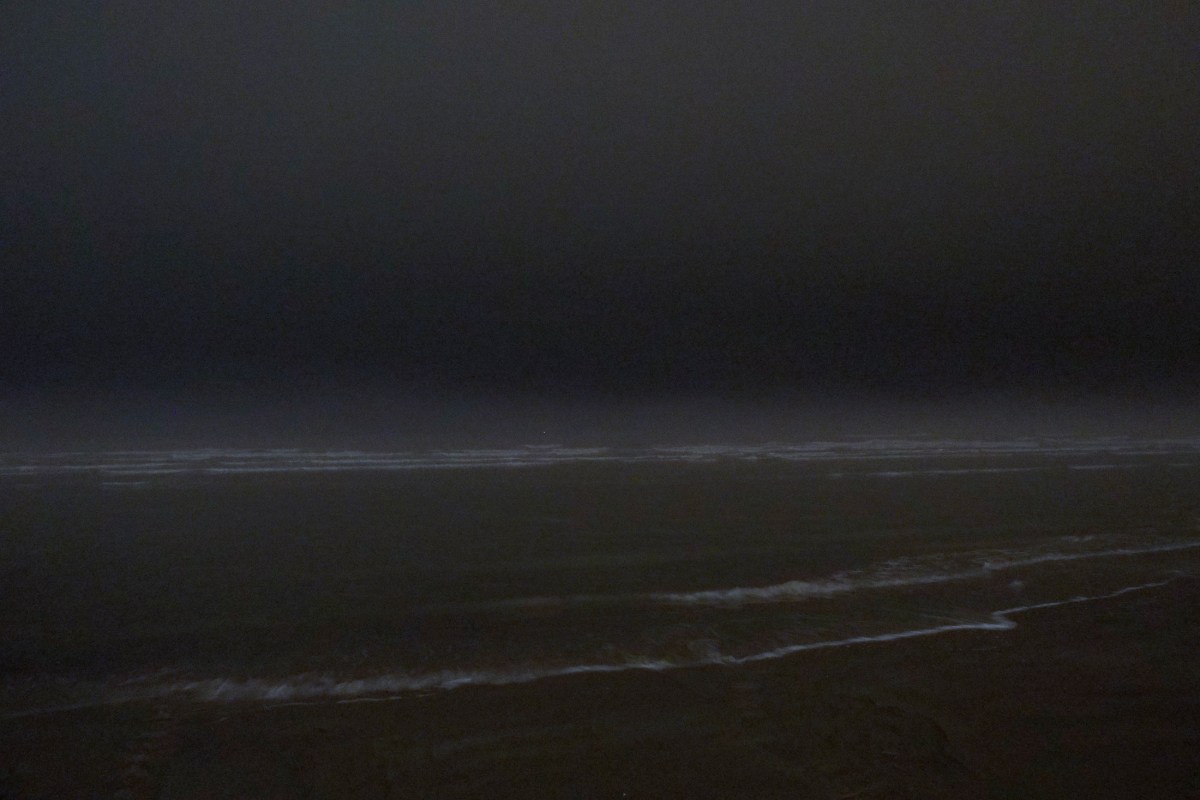
Another truly dismal day largely spent trying to catch up on work. Even though it was only mid afternoon, the light was already fading as I reached the sea front and I half toyed with the idea of just stopping by the café and abandoning any further plans for the day. Then I noticed the fog beginning to creep in from the horizon.
The thing about photographing starling murmurations is that (rather obviously) they are always set against a backdrop of the sky, and if the sky is filled with clouds, then at sunset these can be a rather too beautiful distraction from the spectacle. I’ve never seen starlings gather in fog before, and have always wondered if these weather conditions might actually be the most perfect, where every other element would be pared down to the barest minimum, just the birds, not even a horizon. I didn’t even know if starlings flocked in these conditions. Would I be able to see them? Would they be able to see each other? I set off for the pier to find out.
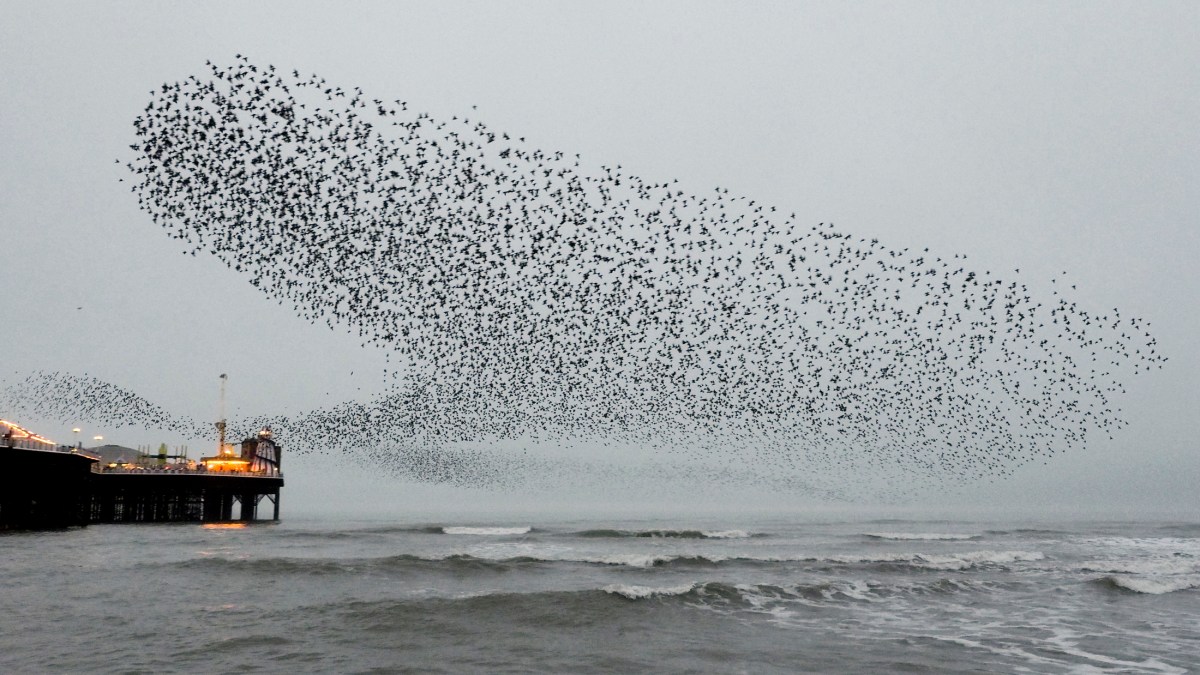
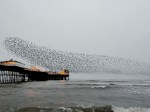
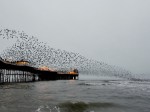
When I arrived I realised that at least the setting was perfect. Not enough mist to obscure the pier structure, but the sky had become a complete blank and the horizon was almost lost. The birds themselves arrived soon enough, in small groups at first, then in bigger flocks than I’ve seen for many years. Silent as always, the only sounds the wash of insignificant waves against the shore, just enough to cover the traffic sounds already muffled by the mist; even the piped music from the pier seemed more distant than usual.
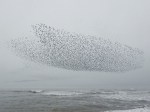
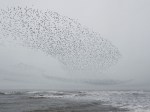
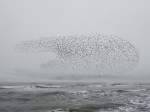
The spectacle was not only magnificent but eerie. Great swarms appeared and receded in the fog forming shapes that would have been familiar if they hadn’t been so huge: for a moment a spoon hanging implausibly in the air, then a writhing caterpillar; on more than one occasion swooping past like some monstrous composite bird with giant slowly beating wings, while in the distance, other, barely visible shapes appeared and dissolved against the whited sky like sentient smoke.
I was surprised to see them flying so high; the murmurations we see in Brighton tend towards the horizontal, often hugging the waves, but these seemed to disappear vertically as well as towards the horizon. I’ve read somewhere among the theories that attempt to explain this spectacle (no one really knows why) is one suggesting that doing so makes them a beacon for other starlings to aim for, a broadcast to all, that here is somewhere safe to spend the night. If this is true then perhaps the size of the display was a direct response to the fog itself, creating a need in each bird to become even more flamboyant to counter the obscurity of the weather.











 Umbrellage