
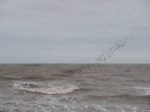
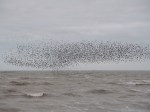
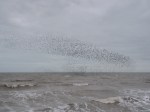
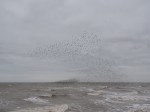
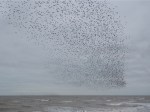
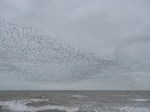
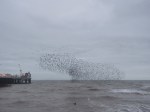
I think I’m getting the hang of this now. It’s generally accepted that starlings hate flying in rain, so that’s one factor that affects their aerial ballet. But I’m now also beginning to realise that the higher the wind, the lower they fly too. When I say lower, I mean that, taking the entire murmuration, while the lowest part of it will always be close to the sea at times, the maximum height varies according to wind speed. So, on days like the foggy one we had on (…), or on other days when there is hardly even a breeze and the light is clear, the murmuration will spread and contract vertically. But the more the wind gets up, the flatter the formation.
I hear there’s another storm on the way, a big one by our standards. If I’m right, when it hits us, if the starlings fly at all, they’ll be almost surfing.








 Umbrellage