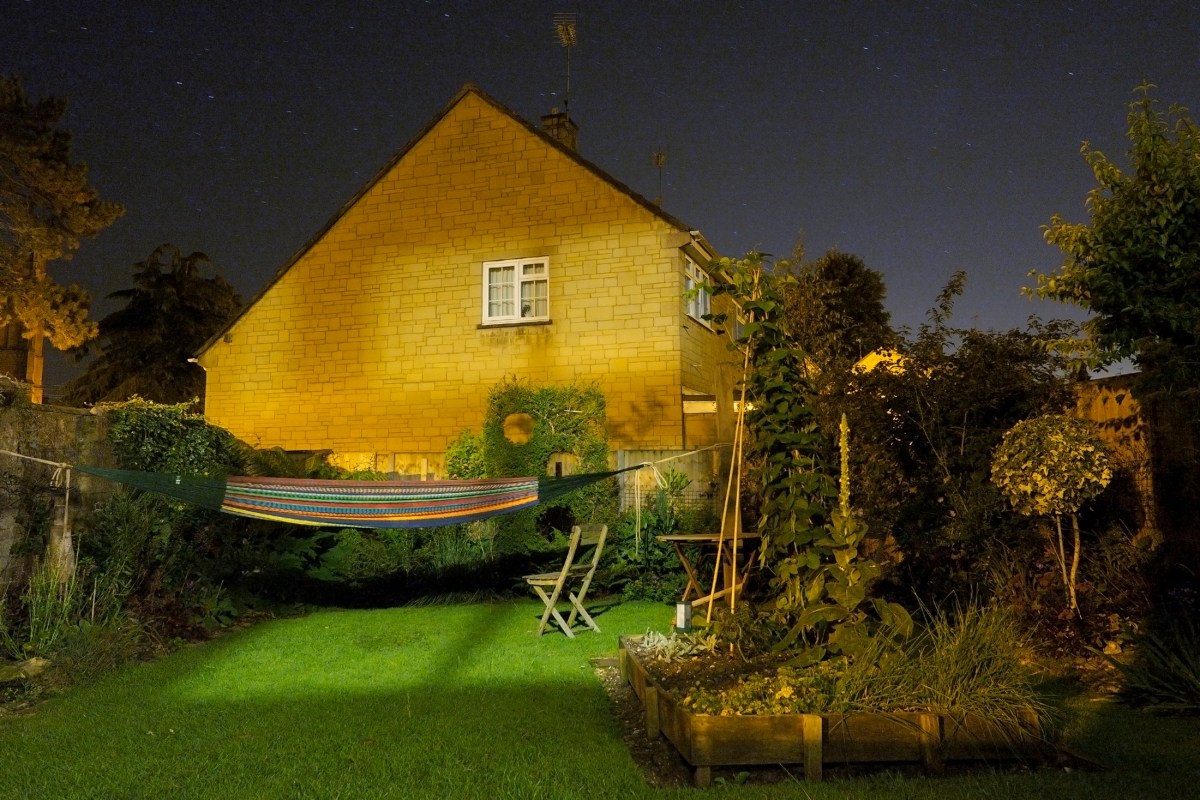
In his novel ‘The turn of the screw’, Henry James describes the special horror of beholding a ghost in daylight (see entry for Tues 17th Feb). The spirits should belong to the hours of darkness, the time when we should be sleeping, when we let go of the rules of logic. Seeing them beyond these confines adds further to the terror of their encounter. Not only are they there, but they have invaded our territory.
The boundaries of darkness are not the only ones we erect to keep the other world at a safe distance. When we imagine the supernatural, they not only belong to the hours of darkness, but we envision them against a backdrop of ancient buildings, ruins, graveyards, behind the scenes at the fairground, the depths of the woods and the wild moors; places we shouldn’t be. I have wondered if we worship our gods in Churches and temples, perhaps as much to keep them safely out of our everyday lives as to honour them with sacred sites.
The horror of the 1982 film ‘Poltergeist’ while transgressing these boundaries by placing the action within a normal suburban setting, at the last moment gives into convention by revealing the cause of this malevolent infestation: that the housing estate where the story takes place is the site of an old graveyard, and the spirits are, therefore, only reclaiming their land. As the last few remains of the housing development are swallowed up by the ground, paradoxically we know that normality has been restored.
Zombie movies, while more often set in the realm of the everyday, and as much in daylight as at night, still fall back on convention: so what if they can eat our brains or turn us into one of them with a scratch or bite, everyone knows we can finish off the walking dead by shooting them in the head. In this respect Zombie movies are more like alien stories: all of these unknowns have weaknesses we can overcome through courage and technology.
So, what about the idea of suburban ghosts? There are films and stories based on these (e.g. the 70s television series ‘Randall and Hopkirk (deceased)’; ‘Truly Madly Deeply’: ‘The Sixth Sense’; ‘Ghostbusters’…) but in each of these cases the ghost is anything but sinister and, more likely than not, either a comic or tragic figure. Carlos Castaneda perhaps comes closest to the idea of the strangeness of the other existing in our own surroundings when he describes a conversation between himself and Don Juan, the Yaqui sorcerer at the centre of his narratives. While walking through a busy street, Don Juan tells Castaneda that most of the people around him are ghosts and that they walk beside us in every situation. Yet this story still has no real horror in it, perhaps because, if this is the case, how can you be terrified of something that is such a part of normal life?
 Umbrellage