An important part of university life is the research of its teaching staff. This is what makes the place of study great and ensures that students studying there receive the best of educations. Research is judged on several criteria, including: ‘originality’ (no copying) ‘academic rigour’ (reading lots and not faking any experiments) ‘peer review’ (what other university lecturers think about what you’re doing) and ‘impact’. This last criterion is still somewhat debated across disciplines but, essentially, it’s how much what you do changes the world; the size of impact your work produces. Of course you have to be careful. Burning down the local hospital would have a great deal of impact and get you a lot of attention in the media, but not necessarily of the right kind. Besides, it would only be deemed local impact and universities want world leaders.
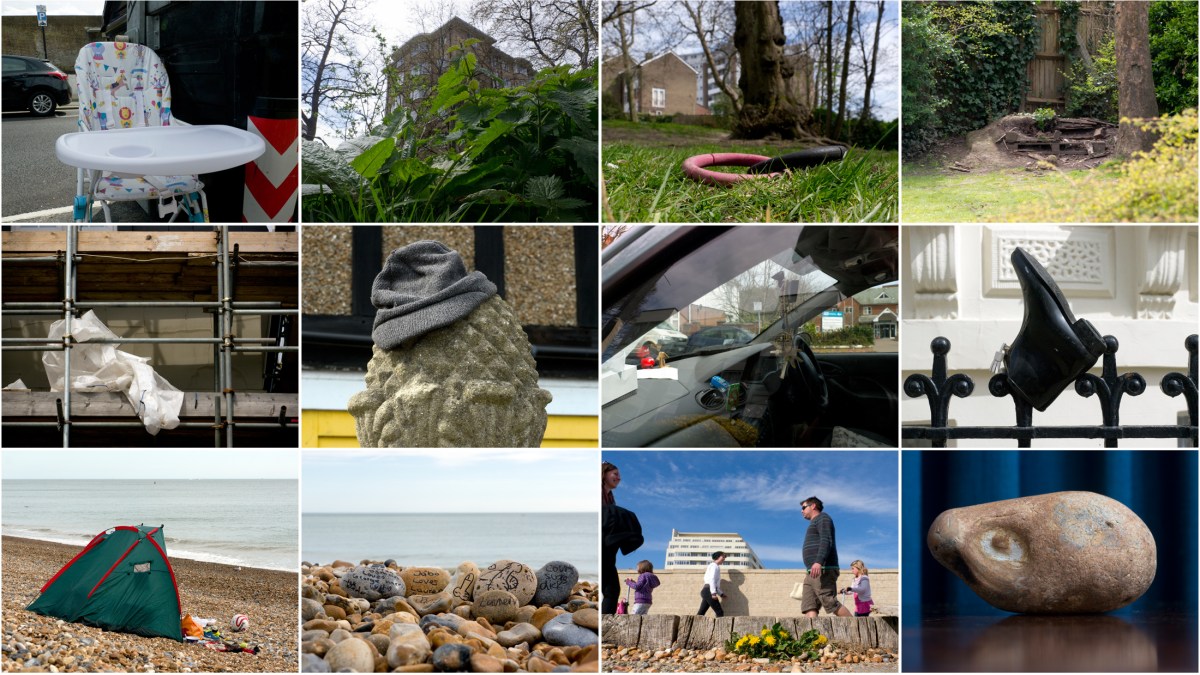
I was thinking of this subject today while on my daily walk when I came across a number of stones with some very unusual patination. On closer inspection I could see that these had not been formed entirely by natural processes; someone, or several someones judging by the different styles, had been writing and drawing on them (see picture in bottom row).
This reminded me of a successful public art initiative that had happened in the area a number of years ago. The project involved local children from all the surrounding schools going to the beach, selecting a stone, drawing a picture on it and then casting it back into the sea. I can’t actually remember what this symbolised (if anything at all) but it was deemed to be a good, indeed a poetic thing, and got a write up in the local paper.
As I mentioned, this was quite a few years ago and the children who had been involved in the event would now be teenagers. Finding today’s inscribed stones has made me wonder: were these drawings made by some of the same people who, as infants, took part in this event? Admittedly the subject matter is very different but it’d be nice to think they were connected, and that their memories of this project had prompted them to revisit the idea. If so, this would be a clear example of impact, albeit still on a local scale.
 Umbrellage