Ghosts – Tues 17th Feb

‘There was an alien object in view — a figure whose right of presence I instantly, passionately questioned. I recollect counting over perfectly the possibilities, reminding myself that nothing was more natural, for instance, than the appearance of one of the men about the place, or even of a messenger, a postman, or a tradesman’s boy, from the village. That reminder had as little effect on my practical certitude as I was conscious — still even without looking — of its having upon the character and attitude of our visitor. Nothing was more natural than that these things should be the other things that they absolutely were not.’

From ‘The Turn of the Screw’ Henry James 1898

The Dark Side – Mon 16th Feb

‘Whatever’s inside that cupboard is so terrible, so powerful, that it amplified the fears of an ordinary little boy across all the barriers of time and space, through crimson stars and silent stars and tumbling nebulas like oceans set on fire; through empires of glass and civilizations of pure thought in a whole terrible, wonderful universe of impossibilities. You see these eyes? They are old eyes. And one thing I can tell you … monsters are real.’

Dr Who: ‘Night terrors’ Series 6 (11th Doctor)

Hubris – Sun 15th Feb

Gore-Tex: marvellous material! I’ve had a pair of trainers made out of the stuff for a few months now. These are the shoes I’ve done most of my expeditions in, in all weathers, and always come home with dry feet, if nothing else.

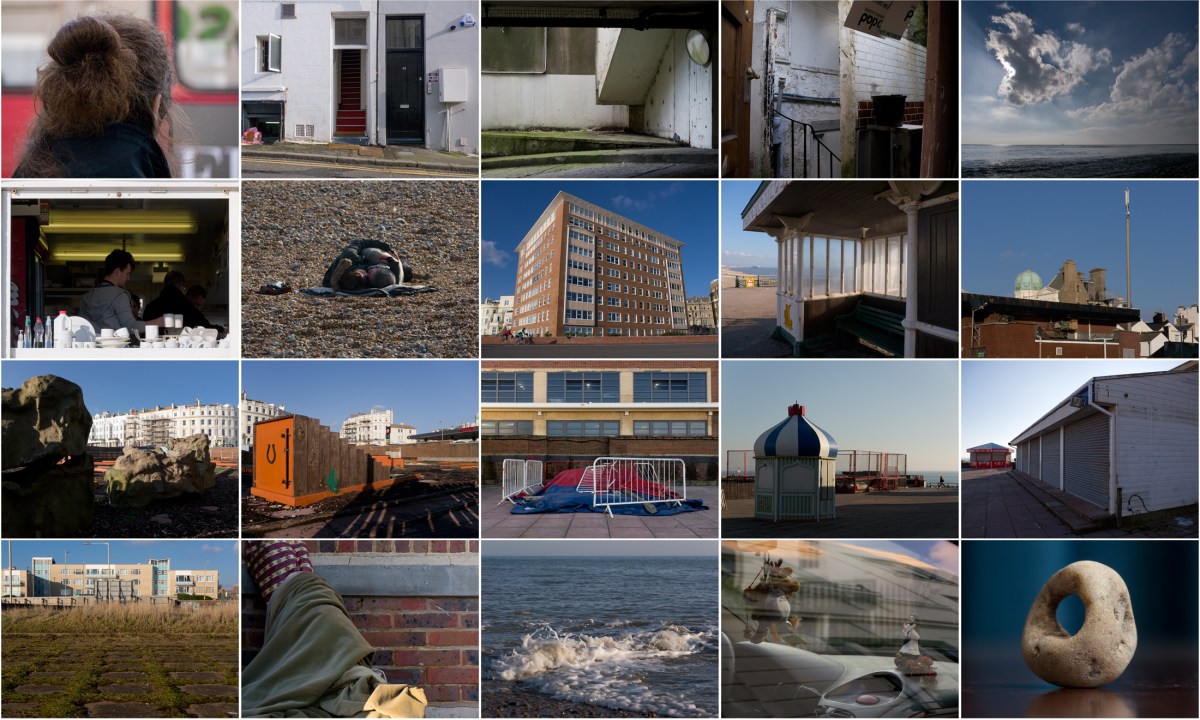
So today I’m looking at the sea and I see this very interesting repeat wave configuration where, as the sea drains back if forms a semi circular crest which folds in on itself and makes this interesting foamy slap, producing some very odd shapes. ‘Aha!’ thinks I. This has the potential for an interesting image and so, confident in being clad in the ideal footwear, I stride down the beach right to the edge of the water. Then, crouching down low for the right angle, I wait…

Of course the thing you forget about waterproof footwear is that shoes will always have two bloody great holes in them. They are at the top, one per shoe; the ones you use to put your feet into. Today I have been reminded that Gore-Tex is also marvellous at keeping the water in, too.

Valentine’s Day special – Thurs 12th Feb

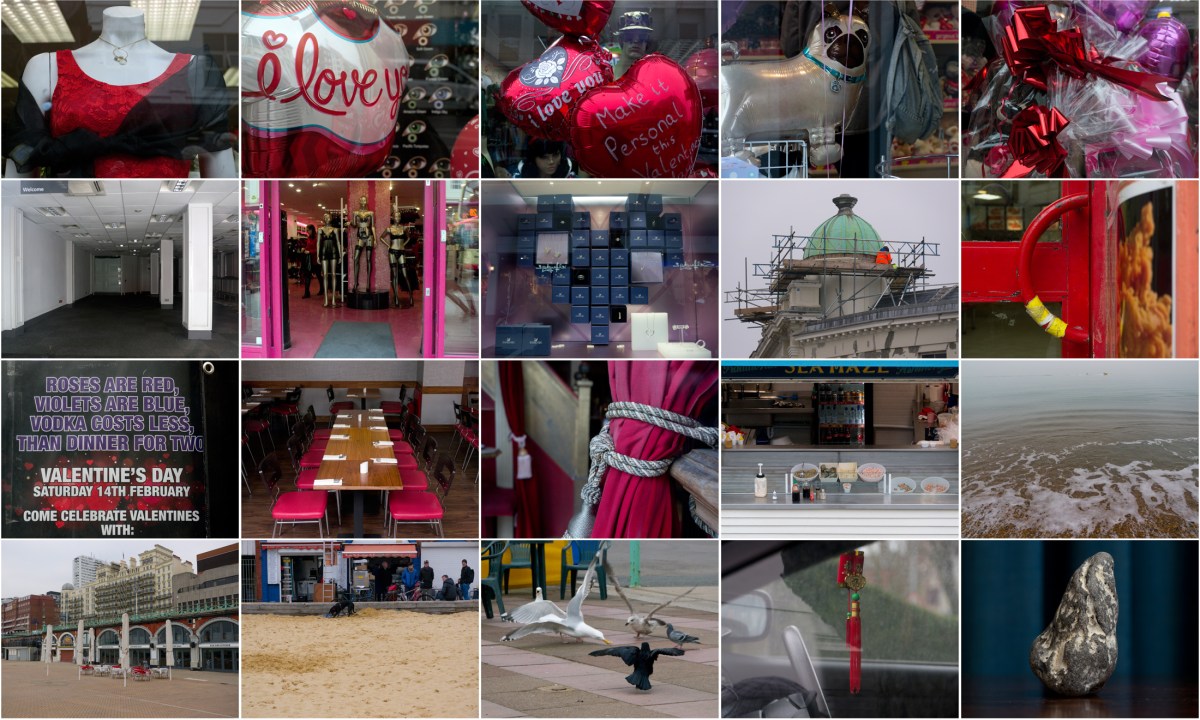
The big day is almost upon us, the day when couples exchange flamboyant cards and cute furry toys to signal their everlasting passion for each other, and then go for a special meal in a restaurant, each table with its own bespoke romantic balloon populated solely by other couples all sitting in reverent silence while, if lucky enough, listening to the collected works of Celine Dion.

Following the huge success of ‘12 tips for Christmas’ (Weds 17th Dec) I have complied ten useful things you might wish to say to your beloved, or intended beloved, to entice him or her to join you for a meal on this most romantic of evenings:

  1. It’ll be just you, me and mother.
  2. If we get the happy meal we can choose our own toy.
  3. We could dress up as Batman and Robin.
  4. I’ve always wanted to go to a lap dancing club and I’ve found one that does a couples night.
  5. I could lie under the table while you feed me scraps.
  6. Meet Dolores, she’s very open minded.
  7. Do as I say.
  8. I love popping balloons and the restaurant will be full of them!
  9. I’m assuming you’re paying.
  10. You don’t need any friends now; you’ve got me.

I do hope the above will help you ‘clinch that deal’ and as always am very happy to accept your messages of gratitude for this advice so do please leave your comments. Happy Valentines day!

Comb-over – Weds 11th Feb

There’s a lot of big metal diggers on the beach at the moment. This is partly because of the developments next to the remains of the West Pier* but also, for a more seasonal reason, as this is the time of year when many seaside resorts rearrange their beaches. Alongside the knickknack shops and cafés getting their annual face-lifts, the stones themselves are being groomed. Some years ago I saw several bulldozers in a line combing the shore between the Palace Pier and the marina and, viewed from the upper promenade, they looked like mechanical Buddhist monks raking a huge Zen garden.

This practice seems cosmetic but is in fact entirely sensible. After a heavy storm, Hove promenade can be buried under beach rubble and many of the groynes become so banked up with stones on the western side that they spill over on to the walkways themselves. And the tides don’t just go in and out, currents also move vast amounts of matter in different directions over time. It’s a constant struggle to stop Brighton beach ending up in Newhaven, while Newhaven’s ends up in Eastbourne. So, while every year, throughout the year, the tides wash stones along the coast, every year in February, contractors are employed to gather up these migrant beaches in great lorry loads and put them all back where they started.

I have seen a more extreme example of this annual ritual in Minehead, a seaside town on the North coast of Somerset, but that’s another story…

* We are to have a new tower of Babel sprouting on the shore, a rotating vertical replacement for the derelict one that, ahem, accidentally burned down a few years ago.

Pseudolithophilia – Tues 10th Feb

In ancient China, the appreciation of stones developed into a highly structured art form called ‘Gongshí’, or ‘scholars rocks’. Over subsequent centuries similar disciplines emerged in both Japan and Korea, named, respectively: ‘Suiseki’ and ‘Suseok’. In India, sacred stones, Shiva Linga, are still a vital part of daily worship. Western Europe saw the prehistoric megalith cultures, and the old and new stone ages. Some sections of modern society still place great store in the curative or talismanic properties of certain stones. Palaeontology deserves a whole book to itself. The 18th century French painter François Boucher prized his collection of objects of ‘natural philosophy’ (an emerging forerunner of modern sciences) including curiously shaped stones and minerals. And in recent decades, artists counting, among many others, Barbara Hepworth and Paul Nash, have had a tendency to collect odd shaped flints and other rocks for their aesthetic or mimetic qualities.

But, today, following my discovery of a mobile cliff face in a car park at the eastern edge of town, what I want to know is this: is there a similar practice that relates to the appreciation of artificial rocks and stones? We have plenty of models to use as a foundation for this new discipline: Star Trek abounds with exquisite examples as does the more esoteric 1957 East German children’s film: ‘The Singing Ringing Tree’ (‘Das singende, klingende Bäumchen’). Further pieces can be found in early episodes of Dr Who and numerous 50s B-movies. Then there are crazy golf courses, theme park rocks, ghost train caves and Christmas grottos, costume jewellery, garden, aquarium and vivarium ornaments, fountain accessories, coal-effect fires, decorative external cladding…

Every time I come up with what I think is a new idea, a quick search on the internet proves someone else has already been holding conferences on the subject, so, on that basis, the practice will surely, by now, be pretty well developed. So what’s it called? What are its rules and codes? Why can’t I find any mention of it? Or is this as yet still an underground movement?

singing ringing tree

Still from The Singing Ringing Tree, 1957, directed by Francesco Stefani

Canis Philosophica – Mon 9th Feb

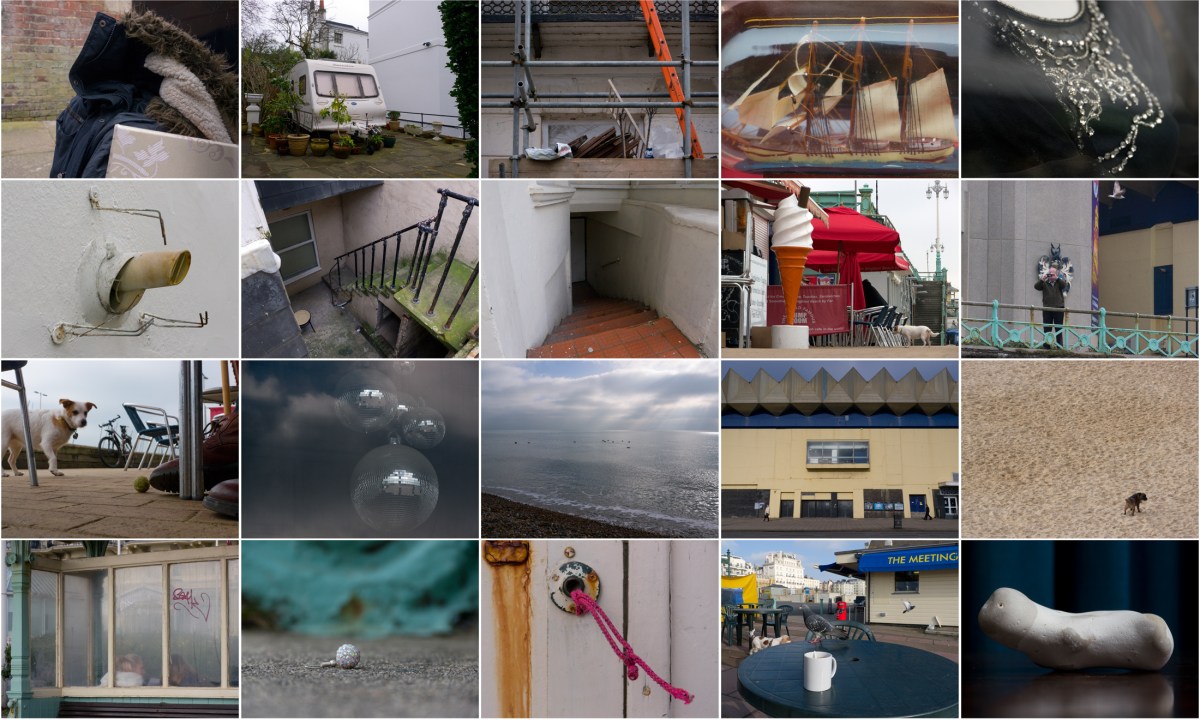
Dogs are great optimists. They are also, by nature, empiricists. Experience has taught them that if they wait long enough, and with sufficient faith (manifest in a particular look which, while not resembling any human equivalent, nevertheless communicates itself to us across the species divide with absolute certainty) that which is believed in will come to pass: the ball will be thrown; the sausage will fall from the table. Dogs are also rarely disappointed. On the few occasions when the above does not work, something more interesting will inevitably turn up that then becomes of crucial importance. In this way, existential crisis is averted. The pigeon may not be caught, but look, there is another!

Of course, it may be that dogs have no intention of catching pigeons or, for that matter, car wheels. It is enough that the pigeon flies away, the car retreats. These too are results.

I spent several years of my childhood living in a bungalow. Down its center ran a hallway, at one end of which was the front door. This was panelled with two moderately sized sheets of patterned glass, one above, one below the letterbox. These panes, while offering privacy, nevertheless allowed us to see visitors approaching the door. Every morning one such visitor was the postman. You could set your watch by the regularity of his appearance, something our small and perky terrier knew only too well, and, as the time approached, Patch would skulk at the kitchen end of the corridor, with eager anticipation badly disguised as nonchalance. At the sound of the postman’s approaching steps the dog would fly down the hallway barking furiously and, a few feet before the door, leap forwards, hitting the glass with a satisfying clang. Equally satisfying would be the sound of the entire family shouting ‘Patch! Stop it!’ accompanied on the other side of the door by muttered curses occasionally augmented with a backwards stumble. It mattered not to Patch that the door prevented any chance of apprehending the intruder. Clearly the defensive manoeuvre had worked and the postman had, once again, been seen off. Happy with his work, our faithful guardian would then trot off and lie on the sofa.

However, over time the glass must have weakened so that, one day, the morning ritual did not culminate in the usual clang but with a great shattering explosion as the glass gave way and Patch, for the first time, found himself in actual physical contact with the postman. Perhaps contact is too strong a word? Bouncing off the postman’s legs Patch ended up seated on the lawn, surrounded by glass, while the postman ran up the garden path shouting ‘you want to watch that bloody dog’. It didn’t occur to Patch to chase the intruder because hitting the glass door had always worked, and now, with this obstacle removed, he found himself in unfamiliar territory. Instead, slightly bemused, he got up and found some very interesting things to sniff around the garden.

Monstroceros – Sun 8th Feb

In 1821 a fossil tooth was discovered by a labourer while quarrying at Cuckfield in Sussex. The tooth came to the attention of Gideon Mantell, the Victorian palaeontologist. Mantell excited by what he believed to be the uniqueness of the find consulted a French comparative anatomist, a certain Baron Cuvier, but Cuvier pronounced it to be merely that of an ancient rhinoceros. Mantell cannot have been entirely convinced by this dismissal because, upon acquiring several more similar remains, he began to search for a living descendant whose teeth might resemble his own growing collection more closely. In his quest he came upon a specimen of iguana from the Galapagos islands. The Galapagos iguana is a herbivorous lizard whose staple diet is seaweed. While its teeth would have been substantially smaller than the petrified equivalents in Mantell’s possession; in every other respect the physical similarities, even down to the patterns of wear, were too similar to be ignored. In 1824 Mantell published these findings in a paper, pronouncing the discovery of a ‘new’ species and naming it Iguanadon, meaning Iguana tooth.

The study of palaeontology in Sussex during the 19th century was fraught with problems. Discoveries were rare and almost invariably incomplete; moreover, not enough was known within this emerging science to provide a framework within which to fit new examples as they came to light. What kind of animal could the teeth have belonged to? From the similar patterns of wear displayed in Mantell’s growing collection, Iguanadon could be established as being a herbivore, but biped or quadruped? Furthermore, of all the other bones that were from time to time dug up, which ones belonged to which? The physical attributes of the tooth collection’s original owners persisted as an enigma for years. Then in 1834 a quarryman in Maidstone found a more complete example of Iguanadon which, while still only partial and scattered, included a similar tooth. Mantell recognised the importance of this find and purchased it. He then set to reconstructing the pieces.

From his knowledge of other ancient and modern skeletons there were few difficulties in the putting together of this strange monster: hip bones, ribs and vertebrae were easily recognisable despite the novelty of the species and a team of technicians and assistants assembled these disparate elements into a semblance of what the creature may have looked like. There was one problem, no one could fathom the placement of a long sharp bone found with the others. Perhaps the earlier meeting with Baron Cuvier had an influence because it was finally decided that this fossil fragment should go on the end of the creatures nose thus giving it a somewhat rhinoceros like appearance.

Illustrations were prepared and the resulting pictures of this exotic beast, when published, stirred the imaginations of the contemporary scientific community. In the great inaugural exhibition of Crystal Palace in London it is recorded that a full sized model of iguanadon was shown, proudly displaying it’s horn.

Several years later in 1878, nineteen more or less complete examples of the dinosaur were exhumed by coal miners in a pit at Benissart in Belgium. In the ensuing excavation organised by Louis Dollo it was discovered that each came with not one but two of the aforementioned pointed bones. In all of the remains their position, when found, corresponded to the places where we might find thumbs on other animals. The illustrations and skeletal reconstructions were subsequently changed.