‘And Jacob said unto his brethren, Gather stones; and they took stones, and made an heap: and they did eat there upon the heap’
Genesis. Chapter31. Verse 46

‘And Jacob said unto his brethren, Gather stones; and they took stones, and made an heap: and they did eat there upon the heap’
Genesis. Chapter31. Verse 46

I wrote this a few years ago, but it still seems to fit, even if today wasn’t a January day:
The January rain came down in sheets fine enough to drift and cling to every surface; persistent enough to penetrate even your bones. The sky, a thick blanket of leaking cloud, was so dark that throughout the day the street lights had stayed on, the drizzle swirling in front of them like effervescence in a murky pint of bitter. Outside, the tarmac hissed with passing car tyres. The throb of an idling vehicle rattled my studio windows, making me stop painting. I looked out.
Facing me was the top of a double decker bus, its glass translucent, running with condensation. The sodden occupants only vaguely visible within, save for a shoulder or arm pressed through the veil of precipitating steam and fog breath.
One of the rear panes showed some sign of activity as a fingertip became visible from the other side, travelling across the surface to make an arc headed by a pink dot. The dot vanished only to reappear in a different part of the glass and form another line, a puncture, a zig zag. Each time a new mark was made, not only more of the image came into being but more of its author. A crude face appeared, evanescently painted onto the glass dripping droplets and runs. The drawing itself disclosed the bored countenance of a drenched adolescent, finally revealed, as, with a wipe of his now visible hand, the picture was obliterated and the bus moved off.
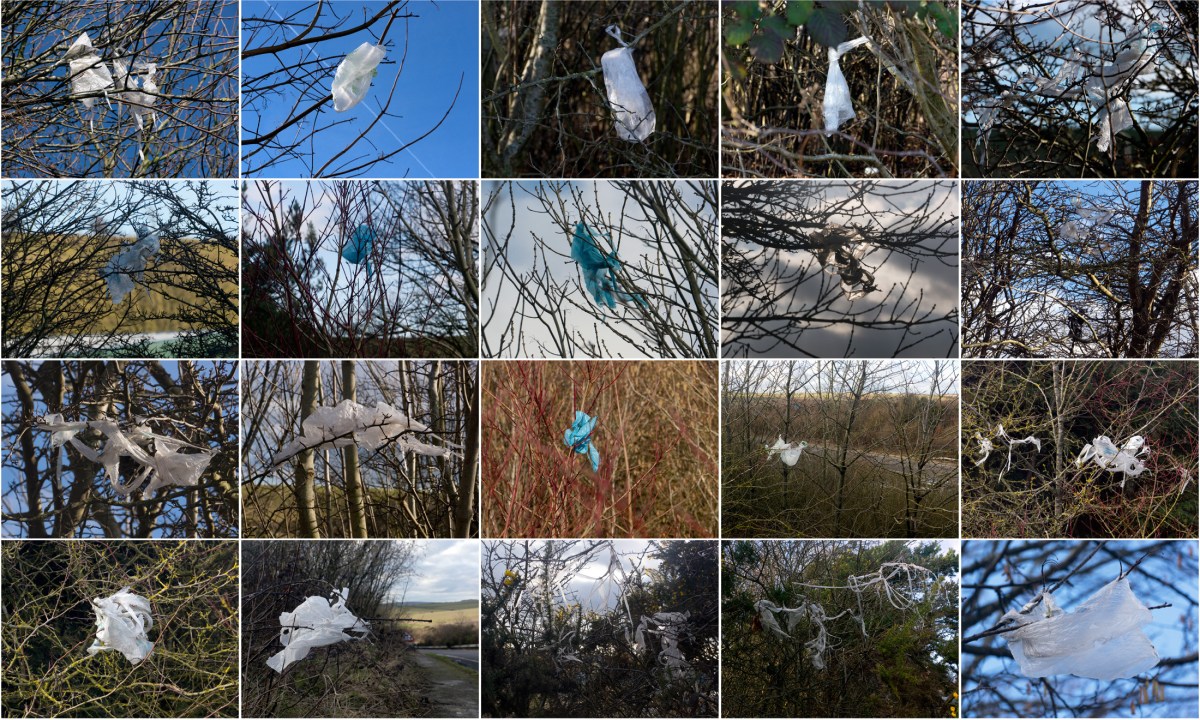
Today I have a work meeting in a place called Hollingbury on the outskirts of town. It’s on the edges of a trading estate and to be honest the area is a bit bleak, but for those of you acquainted with my previous output on this blog, you’ll know that’s fine by me. I take my camera.
En route I see many interesting things but I was not prepared for what I encounter when I arrive. Spring has started early this year! All the trees are in bloom with the most exotic of flowers: mainly white but some a piercing blue, some full-blown, others drifting and tendril-like, all as voluptuous as galleons in full sail. Clearly this early flowering has been going on for a while now because there are many more blossoms under the trees and strewn across the grass verges. I am entranced and hurriedly take a couple of photos on my way in to the meeting. I comment on these to Lesley, my work colleague. Because she works at this site she is familiar with the area.
“Oh, you mean witches knickers?”
I’ve seen several across town before and indeed included them in previous posts, but never so many together in such wild profusion. I am delighted; I now know what they are called too.
Once the meeting is over I spend quite a bit of time documenting all the best examples I can find. Hollingbury is at the top of a steep hill and would have once been rolling downland. Exposed chalk must be their favoured habitat. I notice that they can be found growing among the hawthorn, blackthorn and dogwoods in the area so they are probably parasitic, perhaps related to mistletoe or even some kind of native bromeliad.
Happy with today’s discovery, I head back down the hill towards the bus stop, taking a few more pictures of other things as I go, to give the contact sheet a sense of context. While photographing one particular building, nice industrial 1930s sub-deco, two men in black approach me.
“Excuse me sir, have you been taking photographs of the police station?”
“Oh, is it a Police station?” (Look, I’m an artist, I don’t always look at obvious things like, er, signs)
“Yes, we’ve had a bit of bother at the other branch with someone else doing the same thing and we’d like to know what you’re doing and why? These are troubled times”
I explain about the blog and my daily walks around the city to document the beautiful and the overlooked within the everyday. They take my details. At this point a large blue van draws up and two further officers climb down from the vehicle. Both are dressed in black combat gear. They join the other two, once again ask the same questions, and take my details again: name, date of birth, address, postcode, contact numbers… I am rather charmed to see they still use proper note-books and the officer taking my particulars has nice handwriting. For the benefit of the two newcomers I reply with the same answers, repeating my rationale for the blog. I also offer to show them the other photographs I have been taking and so the five of us go through them together. I comment on their beauty and describe them with enthusiasm. I also offer to delete the photographs of the police station (they aren’t that good anyway) but ask them if perhaps instead I could take a group shot of our boys in blue (ok, black) for the blog? Sadly this suggestion elicits a bit of an ‘old fashioned look’ from one of the officers (I’m not sure the others were listening) appended with a slight raising of the eyes heavenwards in a manner which unmistakeably communicates the words “I didn’t hear that” without any need for the intervention of my ears in this act of communication. I decide not to pursue the request.
Our discussion then ranges across many issues and debates about the age we live in. They are nice chaps, though I was a little disappointed that, when I say to a couple of them that my therapists believe my blog to be a worthwhile venture, the officers seem to draw back somewhat. Nevertheless it’s a pleasant meeting, we have a chat about the virtues of mirrorless cameras versus traditional DSLRs and they thank me for my time and understanding.
I have, for a while now, been pondering one of my favourite quotes of Bertolt Brecht. Here it is:
“You can’t write poems about trees, when the woods are full of policemen”
After today I can honestly say I disagree, though certain buildings seem to be another matter.
‘In February 1948, Communist leader Klement Gottwald stepped out on the balcony of a Baroque palace in Prague to address the hundreds of thousands of his fellow citizens packed into Old Town Square. It was a crucial moment in Czech history – a fateful moment of the kind that occurs once or twice in a millennium.
Gottwald was flanked by his comrades, with Clementis standing next to him. There were snow flurries, it was cold, and Gottwald was bareheaded. The solicitous Clementis took off his own fur cap and set it on Gottwald’s head.
The party propaganda section put out hundreds of thousands of copies of a photograph of that balcony with Gottwald, a fur cap on his head and comrades at his side, speaking to the nation. On that balcony the history of Communist Czechoslovakia was born. Every child knew the photograph from posters, schoolbooks, and museums.
Four years later Clementis was charged with treason and hanged. The propaganda section immediately airbrushed him out of history and, obviously, out of all the photographs as well. Ever since, Gottwald has stood on that balcony alone. Where Clementis once stood, there is only bare palace wall. All that remains of Clementis is the cap on Gottwald’s head.’
Opening paragraphs from: The Book of Laughter and Forgetting, Milan Kundera. Translated by Michael Henry Heim.
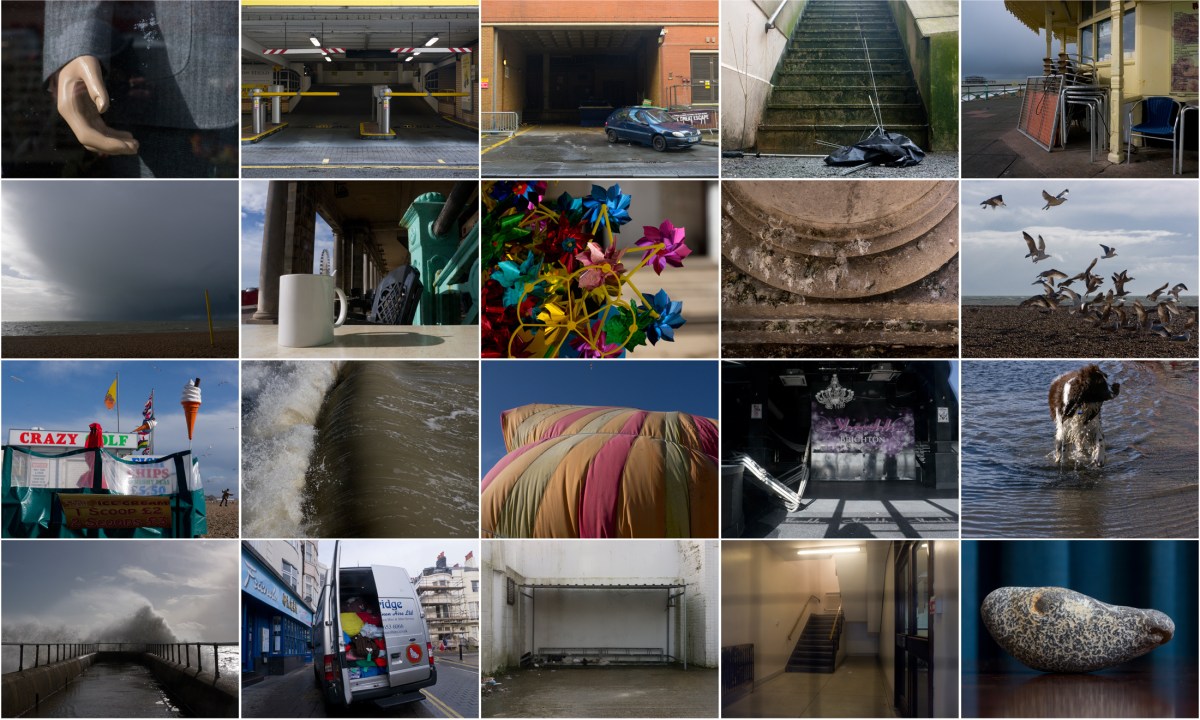
When I was very young I was given a snow globe for Christmas. Inside the plastic dome was a woodland scene in front of which skipped a small likeness of little red riding hood, complete with basket and, pacing in front of her, the wolf. It would be hard to say the monster was menacing, though the modeller had clearly tried to convey this meaning through showing its teeth, lolling tongue and hunched gait. But despite this, the overall appearance gave a wonderful impression of the loneliness of a pine forest in winter, and this strange initial encounter between girl and beast. The tableau entranced me, but I wanted to wander further among the conifers. What was behind the trees? Turning the globe round I was immediately annoyed to find that the back was made out of blue opaque plastic (which, I knew, worked from the front as a clear blue sky) but I found that if you held your eye close to the dome and squinted you could just see behind the trees. Of course what I saw was that all the characters and trees were flat, but this didn’t matter, I knew I was now looking beyond the illusion to its mechanics. Oddly enough this did not spoil the fantasy, but instead made me feel like I’d been let in on a secret, one of the same order as finding out where the tooth fairy lived. A few stray snow-flakes completed this scene beyond, giving it a feeling of abandonment, like a deserted shop, but also a kind of pregnancy, as if something was about to happen, or maybe that whoever had been there had only just left.
For events to be magical, there has to be magical characters making them so, and even the brushes and pots of glue they leave behind them retain some of that enchantment.

‘As I watched, I was filled with an ominous foreboding. What if, after all, we living beings were nothing more than such scraps of paper? Could there not be a similar unseeable, unfathomable ‘wind’ blowing us from place to place and determining our actions, whilst we, in our simplicity, believe we are driven by our own free will? What if the life within us were nothing other than some mysterious whirlwind? The wind of which it says in the Bible, ‘Thou hearest the sound thereof, but canst not tell whence it cometh, and whither it goeth’? Do we not sometimes dream we have plunged our hands into deep water and caught silvery fish, when all that has happened is that our hands have been in a cold draught?’
The Golem
Gustav Meyrink
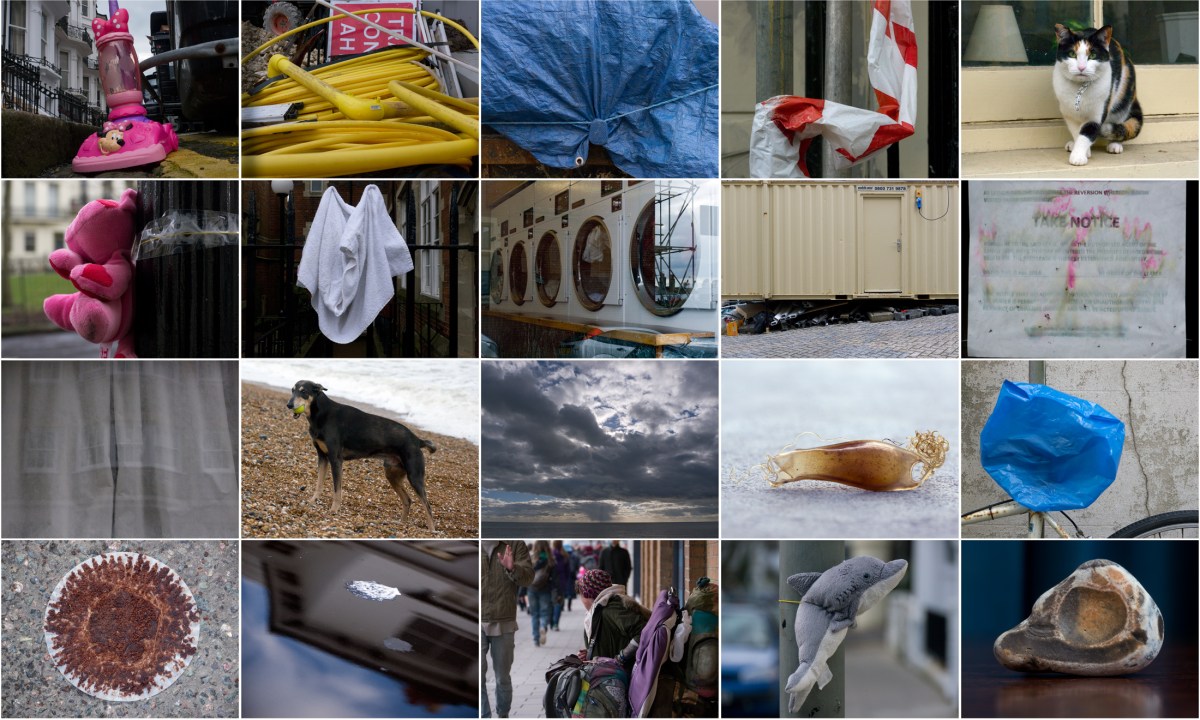
Someone has started strapping soft toys to lampposts. I came across the first one a couple of days ago (see image for 18th Feb) then three more on the way to the pub last night, and then two more today. Why? What’s going on?
Possible explanations:
I’m hoping this last theory isn’t true as the idea has scared me a bit just thinking about it.
‘It strikes, it strikes! Now, body, turn to air,
Or Lucifer will bear thee quick to hell!
O soul, be chang’d into small water-drops,
And fall into the ocean, ne’er be found!’ (1)
‘O, that this too too solid flesh would melt
Thaw and resolve itself into a dew!’ (2)
‘I’ve seen things you people wouldn’t believe. Attack ships on fire off the shoulder of Orion. I watched c-beams glitter in the dark near the Tannhäuser Gate. All those moments will be lost in time, like tears in rain.’ (3)
‘I’m singin’ in the rain
Just singin’ in the rain
What a glorious feelin’
I’m happy again.’ (4)
(1) Christopher Marlowe, ‘Dr Faustus’
(2) William Shakespeare, ‘Hamlet’
(3) Rutger Hauer, ‘Blade Runner’
(4) Arthur Freed & Nacio Herb Brown, ‘Singing in the Rain’
‘Is it safe?’
(Laurence Olivier as Dr. Christian Szell in ‘Marathon Man’)
The naming of products is a fast-developing area of linguistic innovation. Long gone are the days when you named a company after the founder and then appended a descriptive name to the item to be sold. While a few reminders of this practice remain, Wright’s Coal Tar soap being one example, in general, products now seemed to be named after some beast (mythical or real) Egyptian god, exotic place, dance, pseudo-scientific tosh, or often just a string of letters and numbers. Many product names are also simply nonsense.
One of the first to lead in this trend was Kodak. Founded by George Eastman in 1888, the company name was a complete invention, its rationale being that the made up name should be short, easy to pronounce and not be associated with anything else. This last prerequisite turns out to be important. Various companies have found themselves in difficulty because their product name, while sounding grand in the originators native tongue, can have very different associations to overseas markets. Vauxhall had to rename their Cavalier car model for European export because ‘Cavalier’ is the name of a leading brand of condom on the continent. It seems the only people who want be seen driving around in cavaliers are us Brits.
There are other darker stories, albeit apocryphal. Apparently the name of one brand of detergent, even though completely fabricated on the Kodak principle, nevertheless translated in one of the more obscure African dialects, into an insult something along the lines of: ‘your mother has a face like a horsefly sucking lemons’ (I’m afraid I can’t remember the product or the actual insult, but maybe this is just as well). Needless to say though, the product did not do well in the part of the planet.
As a result of these problems, many software development companies and researchers now work on computer programs and services that can produce words which have no meaning in any language. I think this should be recognised as one of the great achievements of our global community.
 Umbrellage